
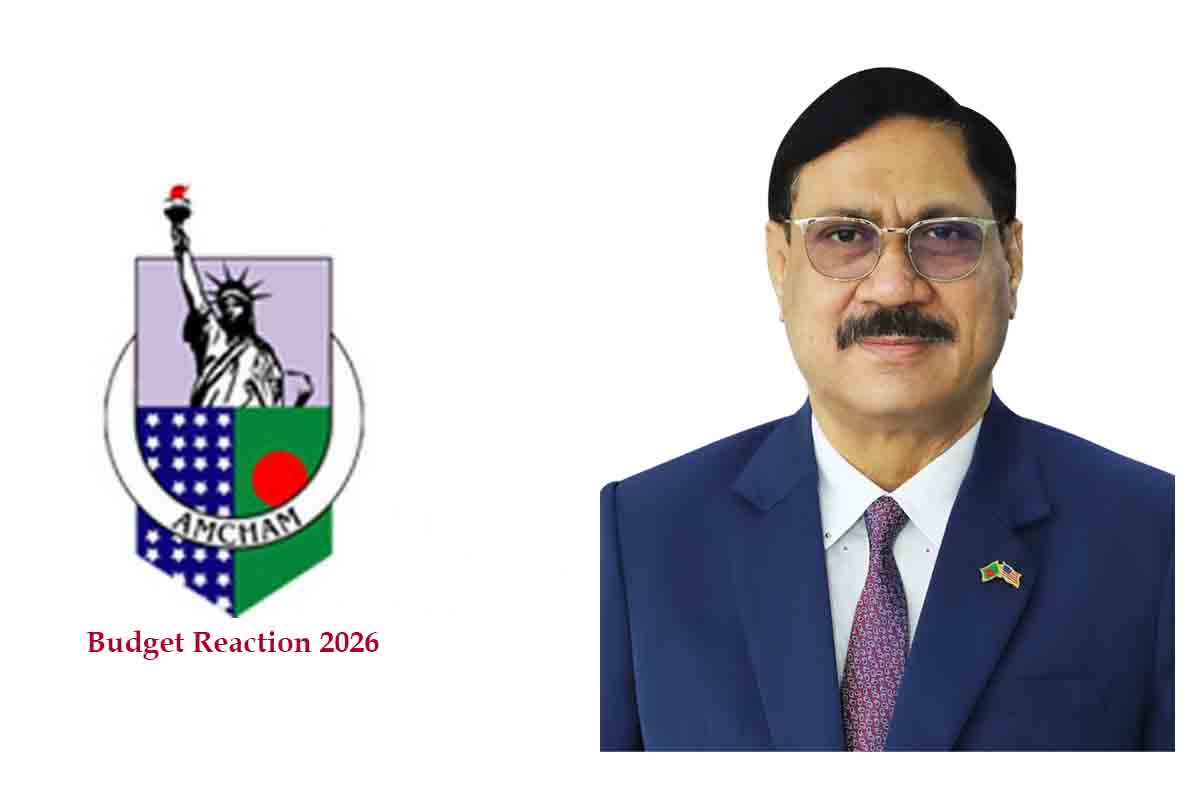
AmCham Welcomes Bangladesh FY2026–27 Budget, Flags Credit Pressure, Tax Reform Needs
The American Chamber of Commerce in Bangladesh (American Chamber of Commerce in Bangladesh) has welcomed the government’s proposed national budget for the fiscal year 2026–27, describing it as a broadly balanced framework aimed at macroeconomic stabilisation, social protection, and long-term growth.
The budget, with a total outlay of Tk 938,000 crore, targets 7.5% inflation and 6.5% GDP growth, reflecting what AmCham called a pragmatic approach amid ongoing global and domestic economic pressures. The chamber noted the government’s effort to maintain fiscal discipline while prioritising human capital development, investment promotion, and support for vulnerable groups.
AmCham observed that the proposed fiscal deficit of 3.55% of GDP appears broadly prudent. However, it cautioned that reliance on domestic borrowing to finance the deficit could put pressure on private sector credit and increase borrowing costs.
The chamber stressed that stronger coordination between fiscal and monetary policy will be essential to ensure macroeconomic stability and support private sector-led growth.
On revenue mobilisation, AmCham described the target of Tk 6.95 lakh crore as ambitious and emphasised the need for comprehensive tax administration reforms.
The organisation welcomed ongoing efforts toward digitalisation, improved compliance, and greater transparency in the tax system, saying these reforms are crucial to expanding the tax base and reducing dependence on borrowing.
It also suggested revisiting broader revenue governance reforms, including the possible separation of tax policy and tax administration functions to improve institutional efficiency.
AmCham praised increased allocations for education, healthcare, and social safety net programmes, including Tk 1.45 lakh crore for social protection.
However, it emphasised that higher allocations must be matched with improved service delivery, governance, and measurable outcomes, particularly in the education and health sectors.
The chamber noted the expansion of the Annual Development Programme (ADP) to Tk 3 lakh crore as a positive step for infrastructure and connectivity development.
At the same time, it highlighted long-standing challenges in project implementation, including delays and cost overruns. AmCham urged stronger project preparation, performance-based monitoring, and rigorous evaluation mechanisms to improve efficiency.
AmCham welcomed measures aimed at improving export competitiveness and trade facilitation, including reductions in certain import and export-related taxes.
As Bangladesh prepares for graduation from Least Developed Country (LDC) status, the chamber stressed the importance of structural reforms, policy predictability, and alignment with post-graduation obligations to maintain global competitiveness and attract investment.
On the energy sector, AmCham appreciated the government’s emphasis on renewable energy, including incentives for solar power and electric vehicles.
However, it also underscored the need to ensure reliable and affordable energy supply through continued investment in domestic energy resources and improved infrastructure efficiency.
Looking ahead, AmCham said the success of the FY2026–27 budget will depend largely on effective implementation, policy consistency, and stronger public–private collaboration.
The chamber reaffirmed its commitment to working with the government and stakeholders to support reforms that enhance competitiveness, attract foreign investment, and promote sustainable economic growth.
