
Call for depoliticised, modern military force
Since its birth through the War of Independence in late 1971, the Bangladesh Army has traversed a long journey. Under the sincere initiative of martyred President Ziaur Rahman, efforts were made to transform it into a professional military force. General Ershad also made significant contributions by following the policies initiated by his predecessor Ziaur Rahman in building it into a professional fighting force.
Senior officers such as Lieutenant General Mir Shawkat Ali (BU), Major General Mohammad Manzoor (BU), Lieutenant General Atiqur Rahman, and Lieutenant General Mohammad Nur Uddin Khan, among others, played vital roles in shaping it into a professional army. Up until 1990, the contributions of Major General Abdul Mannaf, Major General Mozammel Haque, Major General K. M. Abdul Wahed, Major Amjad Ahmed Khan Chowdhury, Major General Abdul Latif, Major General Abdur Rahman, Major General Abdus Samad, and Major General Mohammad Rafiqul Islam are also well documented in the army’s development history.
The period from 1976 to 1990 can be considered the golden era of the Bangladesh Army’s evolution as a professional institution. The Bangladesh Military Academy (BMA) and the Staff College played crucial roles in this development. Commandants and directing staff of the Staff College contributed significantly in developing officers into highly skilled professionals. Similarly, the commandants, chief instructors, and other military and academic instructors at BMA played a vital role in building a professional officer corps.
However, just as the army was progressing toward becoming a modern and professional force, it faced a major setback in early 1991 during the first democratic government. A significant number of highly professional senior officers were compulsorily retired. This ill-considered decision negatively impacted the professionalism of the army. Until the fall of Sheikh Hasina in August 2024, this decline in professionalism continued. During this period, the Bangladesh Army gradually lost its professional capability and became more of a ceremonial force. Promotions, privileges, and numerical expansion were prioritized over genuine professionalism. Many senior officers lost confidence, became entangled in partisan politics, and some succumbed to corruption and personal gain. At the same time, the army also lost its institutional independence.
However, under the current Chief of Army Staff, the Bangladesh Army demonstrated courage by refusing to carry out unlawful orders of an authoritarian regime and stood beside the people, accelerating the success of the July Revolution of 2024. This revolution has changed the overall environment, and the nation now aspires to see the army as a truly professional force capable of defending national sovereignty and independence.
The question of how to transform the Bangladesh Army into an effective fighting force has now become a matter of public concern. This transformation cannot happen overnight; it requires time and well-planned initiatives. The government’s sincerity will play a crucial role in turning this proud institution into a truly professional force capable of defending against external threats.
Considering the evolving geopolitical realities of the region, the model left by Ziaur Rahman may be followed. The core principle of this model is to build a force based on quality rather than quantity, equipped with modern weapons. A citizen force of ten million personnel could also be developed under local military command structures. Ziaur Rahman initiated this concept through the formation of Ansar and VDP.
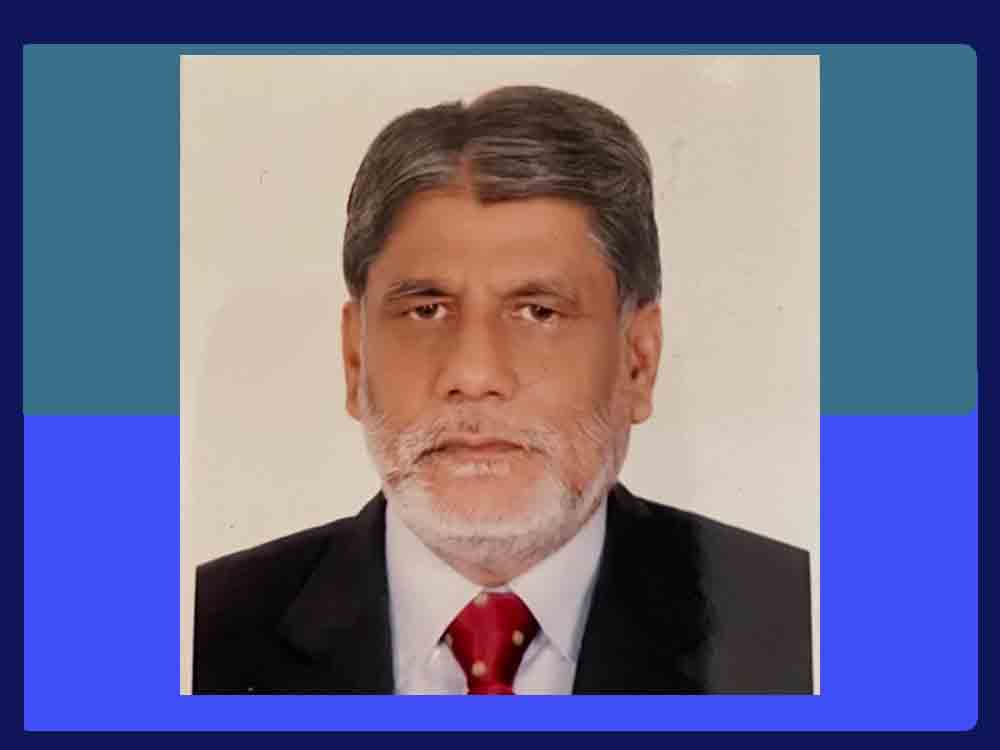
Professionalism in the army essentially means professionalism within its officer corps. Creating a professional officer corps depends largely on proper selection and training modules. Selection should be based on merit and family background. Training is very important and should be reviewed thoroughly, with necessary modifications emphasizing character building. Without faith-based character development, no training can yield the desired results. This should be given top priority in evaluating potential future officers. Character building is a challenging process and requires adequate time. The author had once prepared a research paper on character development of future officers under official instruction, but it was not fully implemented—something we now urgently need.
A military college for prospective officers may be established, with a curriculum from grades 6 to 12 focused on science and faith-based education. The environment should be more civilian than strictly military so that true character can be observed through daily routines. Only those demonstrating strong character should be considered eligible for ISSB.
The training duration at the academy should be three years, where cadets would study science along with Bangladesh history and international affairs. A significant number of officers should later pursue civil and relevant engineering degrees at MIST, which are essential for modern warfare.
Since developing honest and competent officers requires sincere instructors, it may be considered to recruit trainers from the United Kingdom (UK) for a period of ten years. Although this may seem unusual, we have reached a point where our integrity is being questioned. The same applies to the Staff College. The sooner authorities recognize this need, the better it will be for the professional development of the army.
At present, deputation of army officers outside the military should be stopped, and sending officers to RAB should be suspended immediately. The army is not meant for policing duties. Country's education is not the army’s responsibility, and serving officers should not be assigned to such roles. These officers tend to forget their primary responsibility and become more or less comfort loving. If necessary, qualified retired officers may be appointed instead. Professionalism must always take precedence over all other considerations.
Participation in UN missions has become a major aspiration for many, but it is significantly affecting professionalism. Therefore, it should be limited to a reasonable level. Military personnel should have a separate and higher pay scale than civil personnel . The nation must understand that soldiers risk their lives, whereas civil personnel do not. If due honour is not shown to the soldiers professionalism can't be achieved. The current army leadership should be encouraged and supported by the government to operate independently, enabling the Chief of Army Staff to build a truly professional force with confidence and integrity.
Ziaur Rahman is considered the true founder of the Bangladesh Army, and the current government must realize the importance of a politically non-interfered professional military. The nation expects that the future government under Tarique Rahman will take appropriate steps to build a modern and professional army capable of defending sovereignty against any foreign aggression.
The sincerity of the government is crucial in establishing a non-partisan professional force. In the post-revolution era, there is no alternative to a transformative change in the country’s entire defense system.
