
National interest demands balance, not blind friendship.
Bangladesh’s recent official statements on the Middle East ceasefire notably omitted any direct reference to Pakistan, despite Islamabad’s reported role in brokering the two-week truce between the US, Israel, and Iran. Many observers interpret this silence as a deliberate diplomatic signal aimed at earning goodwill in New Delhi, especially as Foreign Minister Dr Khalilur Rahman embarked on a three-day visit to India from April 7-9, 2026.
The timing is telling. Just a day before the Foreign Minister’s departure, Prime Minister Tarique Rahman received Indian High Commissioner Pranay Verma in Dhaka. Reports indicate that Tarique Rahman’s first overseas visit as Prime Minister—originally planned for Umrah and possibly Nepal—has now been rescheduled for early May in Delhi. Discussions reportedly touched on a $200 million assistance package from India, though sceptics question whether it represents genuine aid or a form of compensation linked to stalled connectivity projects.
The Akhaura-Agartala rail link, inaugurated in November 2023, remains a flashpoint. Intended to connect India’s landlocked northeastern states (the “Seven Sisters”) to Kolkata via Bangladesh, the project promised to ease dependence on the vulnerable Siliguri Corridor. For many Bangladeshis, however, it symbolises Indian strategic penetration into their territory. Work on the Bangladeshi side halted completely after the ouster of Sheikh Hasina, amid widespread public protests. Progress now depends on delicate negotiations during the current diplomatic reset.
This is not Foreign Minister Khalilur Rahman’s first engagement with India. At the end of last year, while serving as National Security Adviser in the interim government, he held a closed-door meeting with Indian NSA Ajit Doval. The confidentiality was breached when Indian media reported details, raising eyebrows in Dhaka.
The broader picture raises legitimate concerns. The July 2024 mass uprising was widely celebrated as a rejection of autocratic rule and external hegemony. Yet barely two years later, high-level engagements with India appear to be accelerating at a pace that suggests a swift return to business-as-usual. The new BNP-led government under Tarique Rahman faces the classic dilemma of Bangladeshi foreign policy: how to secure economic and energy support without compromising hard-won sovereignty.
A pragmatic approach is necessary. India remains an unavoidable neighbour and an important trading partner. Energy cooperation, visa facilitation, border management, and water-sharing issues (particularly Teesta and Padma) require dialogue. However, true friendship cannot be built on one-sided concessions or by ignoring public sentiment. The post-revolution generation expects relations based on equality and mutual respect, not “Big Brother” dynamics.
Pakistan, China, the United States, and even Myanmar deserve equal attention in a balanced foreign policy. Over-reliance on any single neighbour risks repeating past mistakes. The government must demonstrate that the July Revolution delivered genuine strategic autonomy, not just a change of faces in power.
Diplomacy is the art of the possible, but it must serve the permanent interests of the Bangladeshi people—economic development without political subordination. As talks in Delhi unfold, Dhaka should prioritise transparency and national consensus over opaque deals that could later fuel public distrust.
The coming weeks will reveal whether this engagement marks a mature reset or a return to old patterns. Bangladesh’s long-term stability depends on getting this balance right.
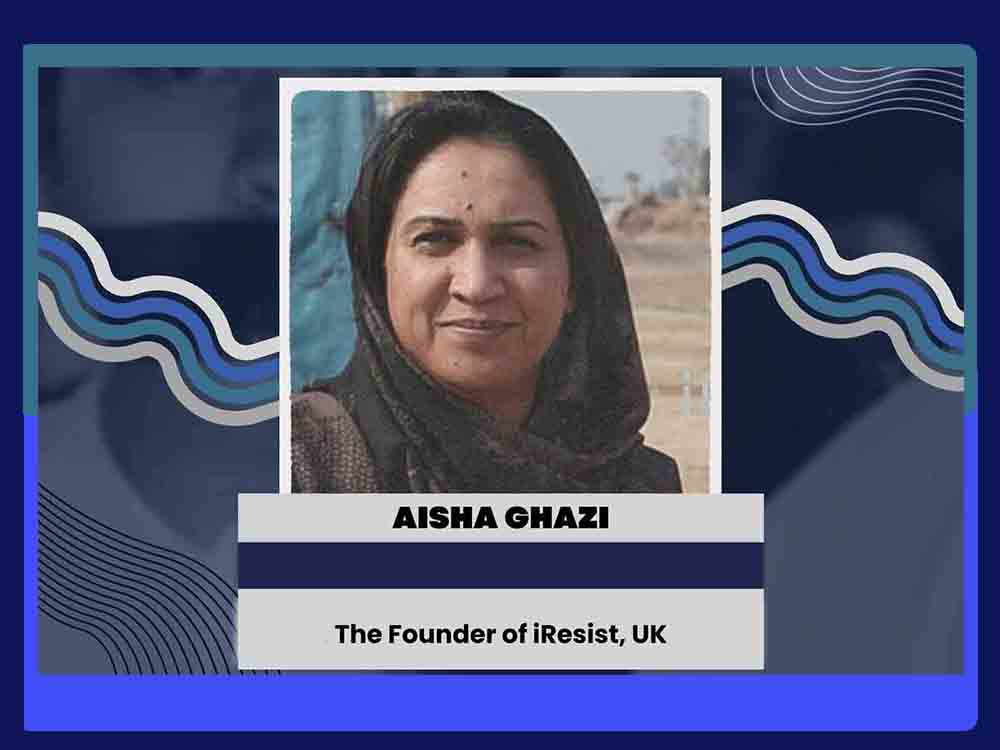
Aisha Ghazi
A prominent Pakistani British Human Activits,
Founder, iResist Global CIC, UK.
