
Middle East war
The ongoing tensions in the Middle East have entered a new phase, extending far beyond conventional military confrontation to encompass the global economy, energy security, and food scarcity. According to Robert A. Pape, Professor of Political Science at the University of Chicago and a specialist in security affairs, the first three weeks of conflict have not weakened Iran. On the contrary, they have made the country more formidable, positioning it as a key player with unprecedented leverage.
Professor Pape’s analysis suggests that within just 22 days, Iran has gained influence over three critical fronts. With the easing of oil sanctions, Iran and Russia have sold roughly $1.5 billion worth of oil through Chinese banks, asserting a new form of economic power. Simultaneously, Iran has gained control over nearly 30 percent of the world’s fertilizer production. Through these dual levers, the country now possesses the capacity to influence both global oil and food prices. This is more than military strength; it is a sophisticated form of geopolitical leverage that Iran appears reluctant to relinquish.
Experts in conflict studies increasingly distinguish between temporary disruption and lasting damage. Disruption can be reversed within weeks, while lasting damage endures for months, rendering recovery difficult, if not impossible. The pressing question is whether the conflict has already crossed the threshold from disruption into irreversible damage. The deployment of ground forces would provide the clearest signal of such a shift.
The current escalation cannot be reduced to a cycle of tit-for-tat attacks. Israel targeted Natanz, a nuclear facility, and Iran retaliated by striking Dimona, Israel’s nuclear site. At the same time, the Trump administration threatened Bushehr. Yet the United States now faces a strategic crossroads where a single misstep could lead to failure. This is no longer a simple matter of reciprocal strikes; it is a complex geopolitical challenge that many analysts have yet to fully grasp.
Adding to the complexity is a fog of uncertainty. On one hand, the U.S. administration uses rhetoric to signal restraint, while on the other, attacks on Bushehr proceed even as ground plans are postponed. Israeli operations continue unabated. This volatile, uncertain, complex, and ambiguous environment—known in strategic studies as VUCA—has become the operational reality. Iran’s responsiveness and speed in adapting to developments have become increasingly evident, further complicating international calculations.
The questions facing policymakers are profound. Is there still a viable off-ramp from this conflict? What will happen if the Houthis formally enter the fray? Can the United States maintain control once ground forces are deployed? The answers are far from obvious, yet they will define the trajectory of the region.
A local anecdote from northern Pakistan illustrates the stakes. In the lower Himalayan foothills, seasonal streams flow down from Kashmir, joining the great rivers of the plains. During monsoon floods, these streams, locally known as dwaaray, bhabar, and bhunder, transform into raging torrents, sweeping away charpoys, livestock, utensils, and even blankets from the uplands. One day, a young man from the plains, eager to rescue a blanket from the flood, leapt into the waters. Despite his struggle, he could not save it. Onlookers shouted at him to let go and save himself. Gasping for breath, he replied, “I am letting go—but the blanket is not letting go of me.” The image resonates with the Middle East today, where powerful forces are in motion yet resist easy relinquishment.
In the coming days, two developments will be particularly crucial. First, decisions regarding ground incursions will determine whether the conflict escalates into a broader global crisis or remains containable. Second, Iran’s next moves will indicate whether it will continue to wield its newfound economic leverage or choose a different course. The current crisis has moved beyond conventional military engagement, intersecting with economic influence, energy politics, and global food security. Iran now negotiates not only from a position of protecting its nuclear assets but also with the capacity to shape the global economy.
The decisions made in the immediate future will determine whether tensions escalate into a new global crisis or whether a difficult off-ramp can still be found. The world is now witnessing a conflict in which strategy, economy, and diplomacy are inseparably intertwined.
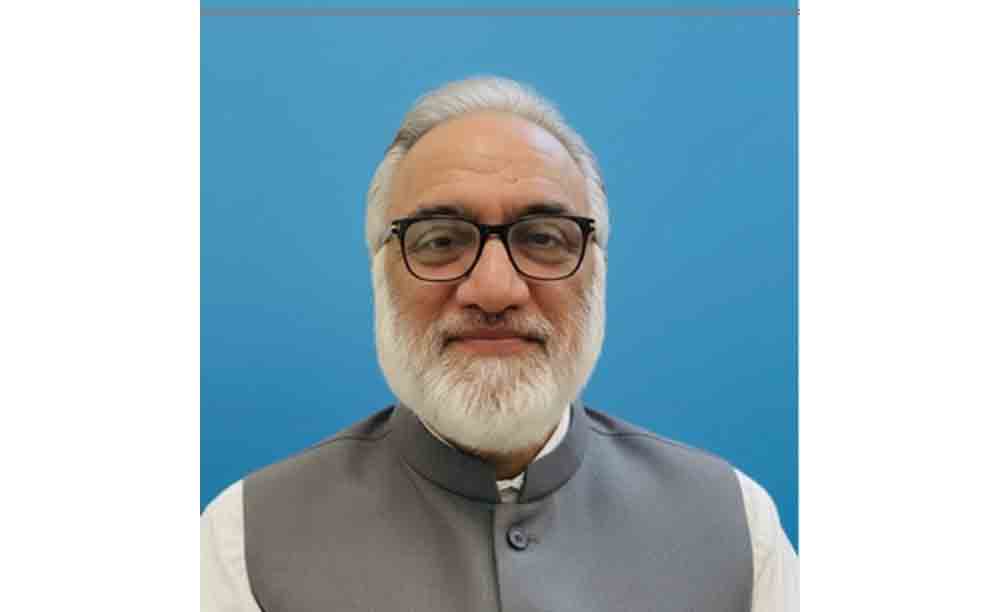
Dr. Zafar Iqbal is engaged in training and practical services in healthcare management, quality, and patient safety. He advocates values-based medical practice and maintains wide-ranging interests in public health, current affairs, international relations, environmental studies, Iqbal studies, literature, and national issues.
