
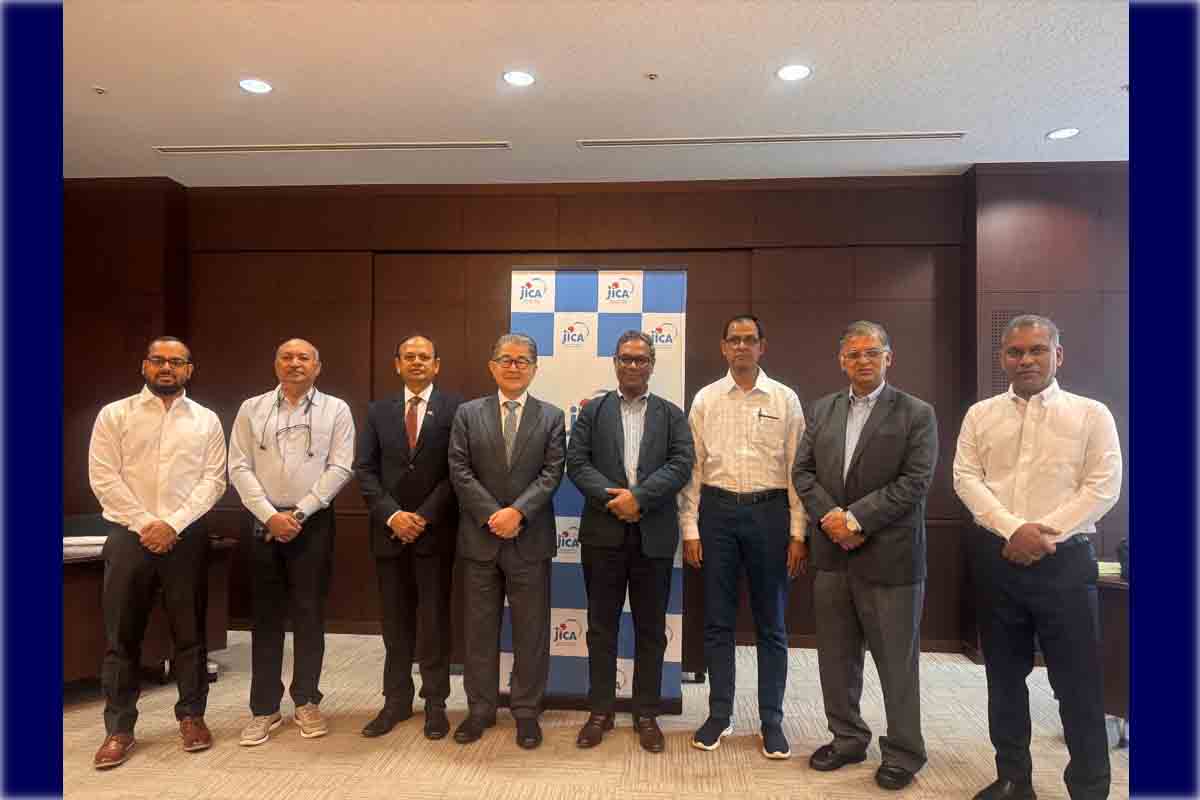
Bangladesh Health Delegation Visited Japan for Knowledge-Sharing on NCD Prevention and Management
A high-level delegation from the Ministry of Health and Family Welfare, Government of Bangladesh, concluded a knowledge-sharing visit to Japan on 3 October 2026. The week-long programme, held from 26 September to 3 October, brought together senior officials from Bangladesh's health sector for meetings, technical sessions, institutional visits and exchanges with Japanese counterparts and healthcare stakeholders.
The delegation was led by M.A. Muhit, State Minister, Ministry of Health and Family Welfare, and included Shah Imam Ali Reza, Additional Secretary, Health Services Division; Professor Dr. Pravath Chandra Biswas, Director General, Directorate General of Health Services (DGHS); Professor Dr. Abdul Wadud Chowdhury, Director, National Institute of Cardiovascular Disease (NICVD); Md Bulbul Kabir, Civil Surgeon, Narsingdi Sadar Hospital; and Md. Sarwar Salam, Personal Secretary, State Minister.
The visit was undertaken as part of the Feasibility Survey for the Integrated Non-Communicable Disease (NCD) Prevention and Management Project. It gave the delegation an opportunity to exchange knowledge and experience with Japanese institutions and professionals on NCD prevention and management, healthcare service delivery, health financing and medical technologies. One of the main objectives was to make Bangladesh's health sector more effective and stronger by applying the experience of Japan's successful healthcare system.
At the Japan International Cooperation Agency (JICA) Headquarters, the delegation attended a briefing on health service delivery and health financing systems in Japan. The delegation also visited healthcare, academic and medical technology institutions, including Terumo Medical Pranex, Fujifilm, the Faculty of Medicine at Teikyo University, Tokushukai Hospital, a private clinic and Riverfield Robotic surgery. These visits allowed for an exchange of perspectives on healthcare practices, clinical services, medical education, diagnostic technologies, and advanced medical solutions.
The programme also included a courtesy call at Japan's Ministry of Foreign Affairs, discussions with relevant stakeholders, and a group discussion involving Nippon Koei and KRC. A highlight of the visit was the Bangladesh Health Business Seminar, co-hosted with the Japan External Trade Organization (JETRO) and the Embassy of Bangladesh in Japan, brought together Bangladeshi and Japanese stakeholders to discuss opportunities for collaboration in the health sector.
Reflecting at the experience of visiting primary, secondary and tertiary level hospitals in Japan, the State Minister pointed out that each level [in the hospitals] has clear role and patients receive care by moving through a referral chain. Appreciating the professionalism, discipline and compassion of Japan’s health workers, particularly nurses, the State Minister said, “technologies can be purchased but a culture of quality and care has to be built, that is perhaps is most important lesson I will take home.”
The knowledge and experience exchanged during the visit are expected to inform ongoing discussions under the feasibility survey and support the exploration of an integrated approach to NCD prevention and management in Bangladesh. The visit also reinforced the longstanding cooperation between Bangladesh and Japan in the health sector and served as a valuable opportunity to explore the potential for further collaboration between the two countries.
