
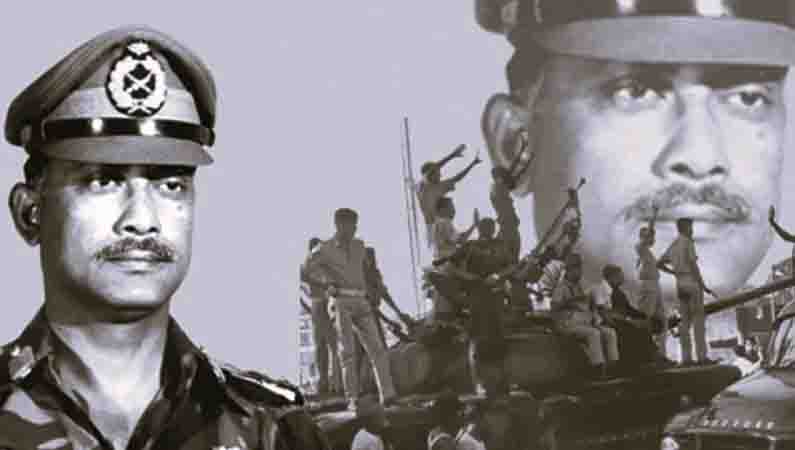
7 November marks a turning point in Bangladesh’s political history amid military unrest and power struggles.
7 November 1975 was the dawn of a turbulent period in Bangladesh's history. Only four years after independence, the war-ravaged country was passing through political instability, economic crisis, shifts in state power and internal conflict within the armed forces. The biggest questions facing the newly independent nation were: which path would Bangladesh take, how would a stable system of government be established, how would the dignity of independence be protected, and how would people's expectations be fulfilled? Amid the events of that uncertain time, 7 November is a day whose influence on Bangladesh's subsequent political history has been far-reaching.
To understand 7 November, we must look back at the preceding months. The killing of Sheikh Mujibur Rahman and most members of his family on 15 August 1975 opened a terrible chapter in Bangladeshi politics. The change in state power did not end the instability. Instead, rivalry between different factions of the armed forces, counter-coups and struggles for control of power made matters still more complicated. After the coup of 3 November, led by Brigadier Khaled Mosharraf, the then Chief of Army Staff, Major General Ziaur Rahman, was placed under house arrest in Dhaka Cantonment. The centre of state power was then caught in a deep whirlpool of uncertainty.
Against this backdrop, a mutiny began in the cantonment at dawn on 7 November. The events, which started with the participation of soldiers of various ranks, gradually came to be known as the sepoy--people's revolution. The then Army Chief, Ziaur Rahman, was freed from confinement. His release changed the balance of power within the military, and he re-emerged as the central figure in state power. However, these events also involved military clashes, loss of life and the killing of several military officers. Thus the history of 7 November is at once a story of liberation and a change of power, and a record of the realities of a volatile time.
Even so, 7 November has acquired a special identity in Bangladesh's political history: National Revolution and Solidarity Day. In the political tradition of the BNP, the day commemorates the sepoy--people's revolution, whose central figure is the Shaheed President Ziaur Rahman. On the other hand, there are also different interpretations of the day's events in the country's political arena. For some, it was a combined uprising of the armed forces and ordinary people; for others, it was just another chapter in a series of military changes of power. We must understand the significance of 7 November by acknowledging these differing readings of history.
The importance of 7 November becomes clearer when we discuss the role of the Shaheed President Ziaur Rahman. He became known nationally through his announcement of independence from the Kalurghat Radio Station at the outset of the Liberation War in 1971 and through his subsequent military leadership in the war. His rise amid the political instability after independence steered the country's state and political structure on to a new course. After being freed from confinement on 7 November, he gradually became the principal figure in state power. Through his later service as President, the founding of the Bangladesh Nationalist Party and changes in political and economic policy, he left his own political legacy in the country's history.
At the heart of the expectations of 7 November were national solidarity, stability, the dignity of sovereignty and the desire to bring the state out of uncertainty. People at the time hoped that the independent country would become a state in which political instability ended, the administration became effective, the economy recovered and ordinary people enjoyed the fruits of independence. The desire to establish order and stability in public life was intense. But the lesson of history is that no coup or change of power can, by itself, guarantee democracy, good governance or people's economic emancipation. Achieving these requires long-term institutional development, accountability and public participation.
Viewed from that perspective, Bangladesh today shows many signs of progress, but the list of unfulfilled expectations is also long. In the more than five decades since independence, Bangladesh has brought about significant changes in agriculture, industry, infrastructure, communications, education, health, women's empowerment and the use of technology. A country that was once struggling to rise from the rubbles of war is now a familiar name in discussions of the international economy and development. People's way of life has changed, communications have expanded, and new opportunities in education and employment have emerged for the younger generation. These achievements are the fruit of the labour, talent and struggle of the people of Bangladesh.
But alongside this picture of development, we still have to search for answers to some fundamental questions. How firmly has political tolerance been established? How independent and effective are democratic institutions? How strong are the rule of law, justice and the guarantee of civil rights? How far have the benefits of economic growth reached all levels of society? How far have adequate employment, quality education and opportunities for a life of dignity been secured for young people? The answers to these questions will determine whether we have achieved only economic and infrastructural progress, or have also moved towards building a just, democratic and humane state.
The question of national solidarity is the most important one here. For those who see the unity of soldiers and people as the chief significance of the events of 7 November 1975, the day is a symbol of overcoming political division to face a crisis of state. But in Bangladesh today, political differences often reach a point where the willingness to accept one's opponent as a fellow citizen weakens. Yet the strength of a country lies not merely in its economy or military capability; it resides in citizens' mutual trust, the impartiality of institutions and a culture of respecting dissenting views. National solidarity does not mean making everyone follow the same opinion; rather, it means ensuring an environment in which people of differing views can live in the same state with equal rights, dignity and security.
The debate over the history of 7 November teaches us the same lesson. Different political parties and organisations in Bangladesh have interpreted the day in different ways. The BNP observes it as National Revolution and Solidarity Day; in other political traditions, the events have been remembered under different names and with different significances. This difference of opinion is a reality of Bangladesh's political history. But disagreement over the interpretation of history should not lead to any event being erased from the public sphere or confined to a single political narrative. History is not the private property of any party; it is the collective inheritance of the entire nation's experiences, achievements, mistakes, sorrows and lessons.
In this context, the history of the cancellation of the 7 November public holiday is also important. During the previous Awami League government, the day's status as a state holiday and its official recognition were abolished, which made the political controversy over the day more intense. For those who regard 7 November as National Revolution and Solidarity Day, the cancellation of the holiday was like removing an important historical memory from the state sphere. In their view, it narrowed the opportunity to present the day's significance properly. On the other hand, differing views also existed on the historical interpretation of the day. But in the governance of a state, the question is not merely a matter of the likes and dislikes of a political party; the question is how the state will recognise the many-sided chapters of its history and preserve the continuity of historical memory despite political differences.
The decision to reinstate the 7 November public holiday under the government led by the current Prime Minister, Tarique Rahman, has gained fresh importance in that context. On 16 April 2026, the cabinet decided to observe the day once again as National Revolution and Solidarity Day and to restore the public holiday. Subsequently, at its meeting on 5 October, the cabinet also announced the decision to observe 7 November as a general holiday every year. As a result, after a long interval, the day has regained state recognition and the status of a holiday. This decision has created an opportunity to re-establish the historical memory of 7 November in the state sphere. The government led by Prime Minister Tarique Rahman can be commended for this.
However, the true significance of this decision should not be confined to the reinstatement of a public holiday alone. Giving a historical day its due dignity means giving the new generation the opportunity to learn about its background, sequence of events and significance. The history of 7 November needs to be presented in a fact-based manner in educational institutions, research institutions, the media and public discussion. At the same time, it is essential that the violence that took place during the events of that day also finds its proper place in the discussion of history. For true respect for history means not merely remembering chapters of glory, but also learning from painful ones.
Today's Bangladesh is not the Bangladesh of 1975. Times have changed, people's needs have changed, and the responsibilities of the state have multiplied. So, to give the expectations of 7 November form in today's reality, we must strengthen the institutional foundations of democracy alongside political stability. Government and opposition must be seen not as adversaries of one another but as essential parts of the democratic system. The administration must be people-oriented and accountable, the judiciary must be independent, and citizens' rights must be placed at the centre of state policy. So that the fruits of development do not remain confined to a few, it is also essential to ensure employment, education, healthcare and social security.
We may differ politically over the significance of 7 November 1975. But if, on the occasion of this chapter of history, we can bring the questions of national solidarity, democratic tolerance, justice and state responsibility to the fore, the commemoration of the day will become more meaningful. Our greatest success will be to transform the emotion of a single day in the past into a practical commitment to building the state of the future.
The gap between the expectations of 7 November and the reality of Bangladesh today cannot, therefore, be measured merely by changes in political power. It will be determined by how well people's rights are protected, how effective democracy is, how impartial state institutions are, and how safe and dignified ordinary people's lives are. The expectation of the government led by Prime Minister Tarique Rahman will be that the decision to reinstate the 7 November holiday becomes part of a broader initiative to strengthen national unity and democratic values, as well as a recognition of history.
The greatest proof of respect for history is not merely to grant a day the status of a holiday, but to learn from the experience of that day and build a Bangladesh in which the dignity of independence remains intact, democracy is effective, justice is for all, and national solidarity, instead of being confined to political slogans, becomes a reality in people's everyday lives. Embracing the historical significance of 7 November, the greatest expectation before Bangladesh today is to rise above the divisions of the past and build a just, democratic, prosperous and humane state for the future.
Author: Vice-Chancellor, University of Naogaon.
