
China, Bangladesh Launch Governance Training to Deepen Strategic Cooperation
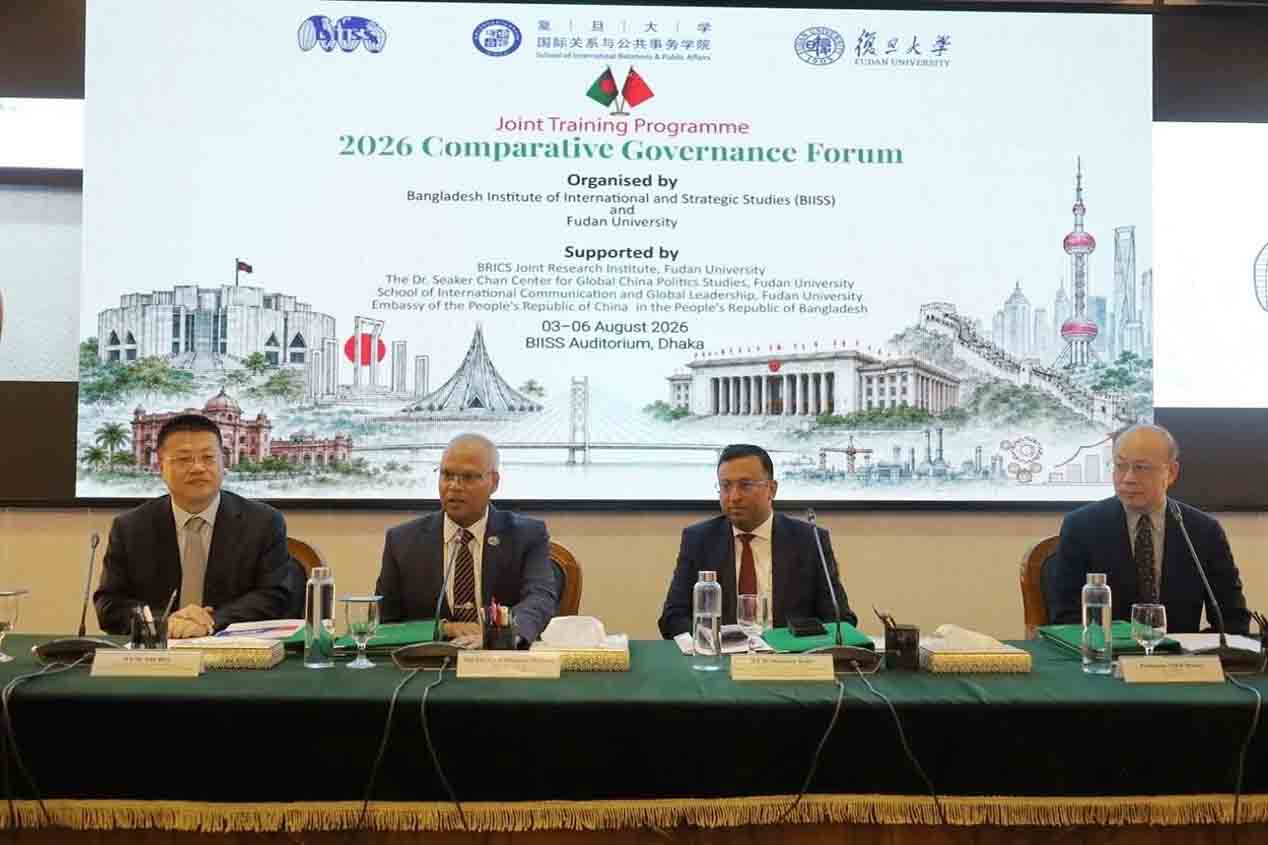
DHAKA, Aug. 4, 2026: China and Bangladesh have taken another step toward strengthening bilateral cooperation by launching the 2026 Comparative Governance Forum Joint Training Programme, an initiative aimed at promoting the exchange of governance experience and supporting the implementation of the two countries' growing strategic partnership.
The opening ceremony, held on Monday, brought together senior government officials, diplomats, academics and strategic affairs experts from both countries, reflecting the increasing importance that Dhaka and Beijing are placing on governance dialogue alongside their expanding economic and development cooperation.
Chinese Ambassador to Bangladesh Yao Wen addressed the inaugural session, describing the programme as a practical outcome of the consensus reached during Prime Minister Tarique Rahman's official visit to China in June.
More than 80 participants attended the event, including Foreign Affairs Adviser to the Prime Minister Humayun Kabir, Vice President of Fudan University Professor Chen Zhimin, Director General of the Bangladesh Institute of International and Strategic Studies (BIISS) Major General Ridwanur Rahman, scholars from leading Bangladeshi think tanks and participants of the training programme.
Addressing the gathering, Ambassador Yao said the two countries had agreed during the high-level visit to elevate their Comprehensive Strategic Cooperative Partnership and jointly build a China-Bangladesh community with a shared future in the new era.
He said both sides had also agreed to expand exchanges on governance experience, making the newly launched training programme an important platform for translating political consensus into practical cooperation.
"The programme will help strengthen mutual learning on governance and contribute to closer institutional cooperation between China and Bangladesh," the ambassador said.
Foreign Affairs Adviser Humayun Kabir praised China's development journey, saying the country's achievements in governance have attracted global attention, particularly in poverty alleviation, infrastructure development, technological innovation and economic transformation.
He said Bangladesh is keen to learn from China's development experience while expanding cooperation in governance, policy research and other practical sectors.
Kabir also thanked the Chinese government and its partner institutions for organizing the programme, expressing hope that such initiatives would create more opportunities for knowledge-sharing between policymakers, researchers and public administrators from the two countries.
Diplomatic observers say governance cooperation has emerged as a new pillar of China-Bangladesh relations, complementing long-standing collaboration in infrastructure, trade, investment, connectivity and development financing.
The launch of the training programme follows a series of high-level engagements between Dhaka and Beijing in recent months, including agreements to strengthen cooperation in economic development, education, healthcare, digital technology, agriculture and people-to-people exchanges.
Analysts believe that academic and policy dialogues such as the Comparative Governance Forum can help broaden bilateral cooperation beyond traditional economic sectors by facilitating institutional learning and capacity-building.
The programme is expected to provide participants with opportunities to exchange views on public administration, sustainable development, economic governance, technological innovation and policy implementation, while encouraging closer collaboration between research institutions and government agencies of the two countries.
Diplomatic sources say the initiative also reflects the growing emphasis both governments are placing on intellectual exchanges as part of their broader strategic partnership, reinforcing long-term cooperation through education, research and governance dialogue.
As Bangladesh continues to pursue its development agenda and China expands its regional engagement, officials from both countries believe sustained cooperation in governance and policy studies will further strengthen mutual trust and contribute to a more comprehensive bilateral relationship.
