
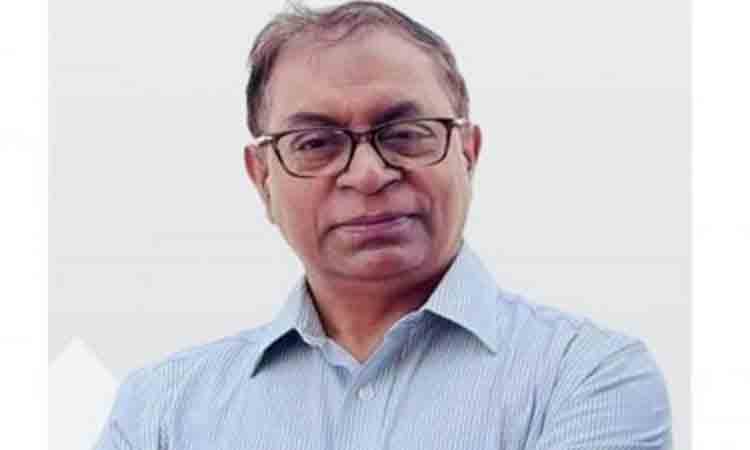
Saiful Haque praises Ziaur Rahman’s multi-party democratic role.
General Secretary of the Biplobi Workers Party (BWP) of Bangladesh, Saiful Haque has said, Ziaur Rahman played a pioneering role in introducing multi-party politics in the country to unite the people an all political parties should learn from him.
“His principal political objective was to unite the people,” he said in an interview with BSS marking the 45th martyrdom anniversary of Shaheed President Ziaur Rahman.
Saiful Haque said, “After assuming the presidency, Ziaur Rahman moved forward the nationalistic ideology. In addition to the Bengali ethnic group, various communities from the hills and plains were included. Everyone’s national identity became Bangladeshi –meaning Bangladeshi nationalism.”
He said, “One of the important principles of state principles in the constitution is ‘Nationalism’. After becoming President Ziaur Rahman gave it a practical political shape.”
He further said that despite being a military ruler, Ziaur Rahman emerged on the political landscape through a series of events and circumstances. “With the abolition of the BAKSAL system, he introduced multi-party politics. He played a major pioneering role in establishing multi-party politics.”
He said Bangladesh had to pass through the Awami League’s misrule from 1972 to 1975, followed by coups, counter-coups and many bloody, painful phases.
“Then uprising of soldiers came on November 7, 1975. Colonel Taher and others tried to seize power with the help of soldiers and people, but failed and ultimately cost many lives,” the left leaning leader said.
“Through these developments, Ziaur Rahman sought to restore discipline within the armed forces,” Haque added.
He said Ziaur Rahman later pursued a political framework that included people from leftist and rightist groups, the Muslim League and secular progressive circles.
“The party he formed by uniting them was not limited to any particular class or group. What the BNP now describes as a ‘rainbow nation’ had its initial roots in Ziaur Rahman’s thinking. His main political task was to unite the people of a state,” he said.
He noted that the country's first ‘yes-no’ vote was held during Ziaur Rahman’s presidency, followed by the parliamentary election of 1979.
“Through this, a multi-party democratic process was initiated. Although, after his tragic assassination in Chattogram on May 30, 1981, that multi-party political process came to an end and the country once again fell under military rule.”
He said that despite his three-and-a-half-year rule, Ziaur Rahman had taken many significant initiatives concerning the state, the armed forces, institutions, national unity and pluralism. These are his achievements and successes.
Saiful Haque said, post-1971 Bangladesh was a war-ravaged country where people’s aspirations born out of the Liberation War allegedly turned into disappointment by 1972. “Instead of unity, more division and violence emerged,” he observed.
He said that subsequently, efforts began to rebuild Bangladesh economically, socially and culturally through a progressive nationalistic and patriotic vision, which led to introduction of the 19-point programme. The Bangladesh Nationalist Party later shaped much of its politics under the shadow of that 19-point programme.
“In 1991, Begum Khaleda Zia formed a government and the 19-point programme entered a new phase and context. Later, the BNP’s 27-point programme of 2022 reflected continuity with the 19 points,” Haque pointed out.
More than three decades have passed since the introduction of the 19-point programme. Now new questions, contexts and challenges have emerged, Haque observed saying “From that perspective, BNP’s 27-point agenda evolved into a 31-point framework through a discussion with the BWP and Ganatantra Mancha during the last movement against Awami League government, and it was the foundation of the our joint movement with BNP,” he claimed.
He said the 19-point programme carried historical significance and relevance, particularly in areas such as infrastructure, education, health, housing and social development.
Saiful Haque said Ziaur Rahman cultivated a hands-on work culture. “As head of state, he travelled across the country promoting canal excavation programmes and succeeded in involving different political stakeholders in this effort.”
He also referred to the Ulshi-Jadunath project in Jashore, popularly known as the GK Project, saying it played a revolutionary role in agricultural advancement in the region.
BNP leader said the South Asian Association for Regional Cooperation (SAARC) was established under Ziaur Rahman’s initiative. “If neighbouring countries work together, difficulties can be turned into opportunities. The SAARC initiative reflected Ziaur Rahman’s farsightedness.”
Saiful Haque said industrial investment expanded after Ziaur Rahman came to power. He created an environment conducive to industrial development of the country.
He added that Ziaur Rahman had envisioned sending Bangladeshi workers abroad and recognised the potential of the ready-made garments sector as a major export-oriented industry.
Terming canal excavation initiative as Ziaur Rahman’s major agricultural initiatives, the BWP leader said though Zia was in power for a short period, but many of his efforts would remain as epoch-making chapters in the history.
Saiful Haque described Ziaur Rahman as a war-field freedom fighter saying Zia had declared independence which inspired, motivated and emboldened the people at a critical time following the March 25 crackdown.
Saiful Haque said Ziaur Rahman as a sector commander had played an extraordinary role in the Liberation War.
He alleged that later, the Awami League reshaped history according to its own narrative. The role of Ziaur Rahman as a sector commander is highly important in the Liberation War, he said adding Ziaur Rahman’s declaration of independence and wartime contributions should not be overlooked.
Saiful Haque claimed that after August 15, 1975, Ziaur Rahman was arrested and imprisoned while the military chain of command collapsed.
The November 3 counter-coup and later attempts led by Colonel Taher to form a revolutionary government ultimately failed, he said.
He said Ziaur Rahman restored the chain of command in the military and played an extraordinary role in rebuilding the armed forces and strengthening their institutional role.
However, he noted that Ziaur Rahman had to confront repeated coups and counter-coups and ultimately embraced martyrdom in a military uprising in Chattogram.
Saiful Haque described Ziaur Rahman as a patriotic leader and symbol of national unity, saying the country needed such a leader for political cohesion following post-independence turmoil.
Describing Ziaur Rahman as an honest statesman, Saiful Haque said, “Even as President, he maintained a simple lifestyle like an ordinary soldier and encouraged colleagues to live modestly. He viewed politics as service to the country.”
He further said, “Later, Begum Khaleda Zia tried to uphold that spirit. Now Tarique Rahman is also trying and I hope he will try.”
Praising the Zia for his extraordinary leadership, Saiful Haque said the main qualities of his leadership were wisdom and foresightedness. During the Liberation War, his revolt demonstrated this, he said.
Paying deep tribute to Ziaur Rahman on his martyrdom anniversary, Saiful Haque said Ziaur Rahman would remain as a source of inspiration forever.
He hoped that leaders of all political parties, not only the BNP, would learn from and understand his positive contribution to the nation.
