
REHAB Demands Withdrawal of 15% Tax on Landowners’ Flats, Calls for Lower Registration Costs
The Real Estate and Housing Association of Bangladesh (REHAB) has expressed deep concern over the proposed imposition of a 15 percent tax on flats received by landowners under joint development projects and the government's decision not to reduce property registration costs in the proposed national budget for FY2026-27.
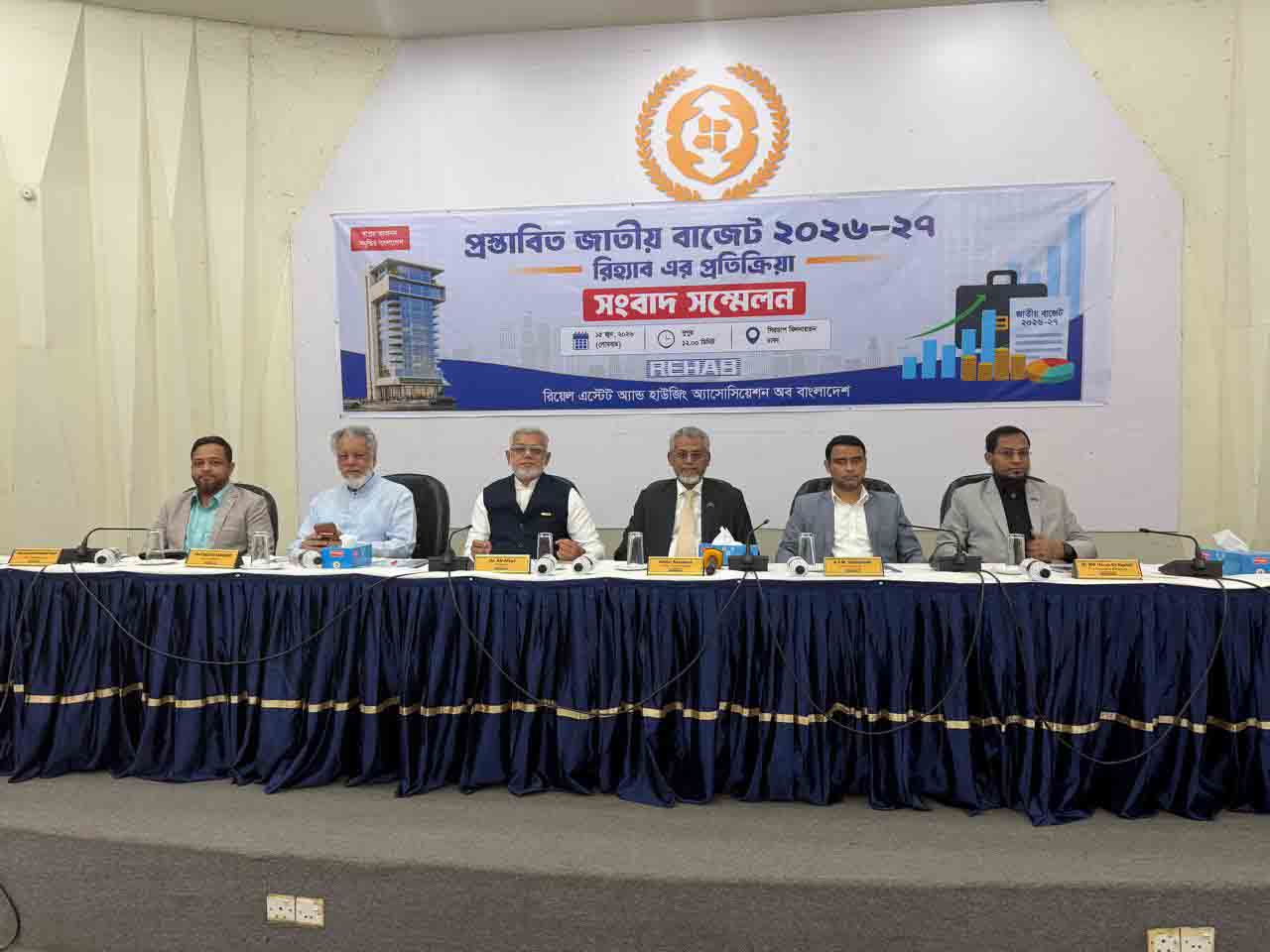
Speaking at a press conference held at the CIRDAP Auditorium in Dhaka on Monday, REHAB President Dr. Ali Afzal said the housing sector is already facing multiple challenges, including a shortage of buyers, rising construction costs, limited access to financing, and policy uncertainties. Imposing new taxes and maintaining high registration expenses, he warned, would further aggravate the sector’s difficulties.
Dr. Afzal noted that landowners currently pay a 15 percent tax on signing money received from developers. Under the proposed budget, an additional 15 percent tax would be imposed on the value of flats allocated to landowners by developers. According to REHAB, this measure would discourage joint venture development projects, reduce new investments, and slow down the growth of the housing sector.
He explained that in a typical 24-unit project, if a landowner receives 12 apartments valued at Tk 120 million, the proposed tax would amount to approximately Tk 18 million. Such additional costs, he said, would ultimately be passed on to apartment buyers, leading to further increases in housing prices.
At the same time, REHAB welcomed the government's decision to allow the declaration and investment of undisclosed money in land, apartments, and buildings upon payment of the applicable taxes. Dr. Afzal thanked the Prime Minister, the Finance Minister, and the Chairman of the National Board of Revenue (NBR) for introducing the provision.
He said a significant amount of undisclosed wealth has remained outside the formal economy for years and that allowing such funds to be invested in productive sectors, including housing, could help increase investment, generate employment, and stimulate economic activity.
However, REHAB emphasized that Bangladesh needs a simple, transparent, and investment-friendly tax regime in the long run to encourage voluntary tax compliance and gradually reduce the creation of undisclosed wealth.
The association also criticized the government's decision to retain high property registration costs. REHAB officials said they had repeatedly proposed reducing registration expenses to 7 percent during consultations with the NBR, Bangladesh Bank, and other government agencies prior to the budget announcement.
Currently, property registration costs exceed 13 percent, which REHAB believes has significantly reduced property transactions. Lower registration fees, the association argued, would encourage legal transactions, improve market transparency, boost property sales, and ultimately increase government revenue over time.
Highlighting the sector's contribution to the economy, Dr. Afzal said the housing industry has linkages with around 269 ancillary industries and directly and indirectly supports the livelihoods of nearly five million people. He urged policymakers to provide greater support to the sector rather than imposing additional tax burdens.
REHAB Senior Vice President Abdur Razzak said several key recommendations submitted by the association were not reflected in the proposed budget. These include single-digit interest rates on home loans, the introduction of a secondary mortgage market, lower registration costs, and housing-friendly tax policies.
REHAB called on the government to reconsider the proposed 15 percent tax on flats received by landowners, reduce registration costs to 7 percent, and adopt investment-friendly policies before the final approval of the FY2026-27 national budget.
The association said a vibrant housing sector would contribute significantly to investment growth, job creation, government revenue generation, and the country's overall economic development.
The press conference was attended by REHAB Senior Vice President Abdur Razzak, Vice Presidents Abu Khalid Md. Barkat Ullah, A.F.M. Obaidullah, Dr. Md. Harun Or Rashid, Mohammad Morshedul Hasan, and other members of the association’s board of directors. REHAB leaders also responded to questions from journalists following the presentation of the written statement.
