
FAO, Bangladesh Forest Department Launch Blue Carbon Initiative for Sundarbans
Khulna, August 22, 2026: The Food and Agriculture Organization of the United Nations (FAO), in collaboration with the Bangladesh Forest Department, has launched a new initiative to assess carbon stocks in the Sundarbans and strengthen scientific evidence for climate action, forest conservation, restoration, sustainable management and carbon-financing opportunities.
The Blue Carbon for the Future (BCF): Enhancing the Role of Sundarbans Ecosystem Services and Conservation of Carbon Stocks initiative is being implemented under the Bangladesh Climate Change Mitigation (CCM) Component of the Bay of Bengal Large Marine Ecosystem (BOBLME) Phase II Project, funded by the Global Environment Facility (GEF).
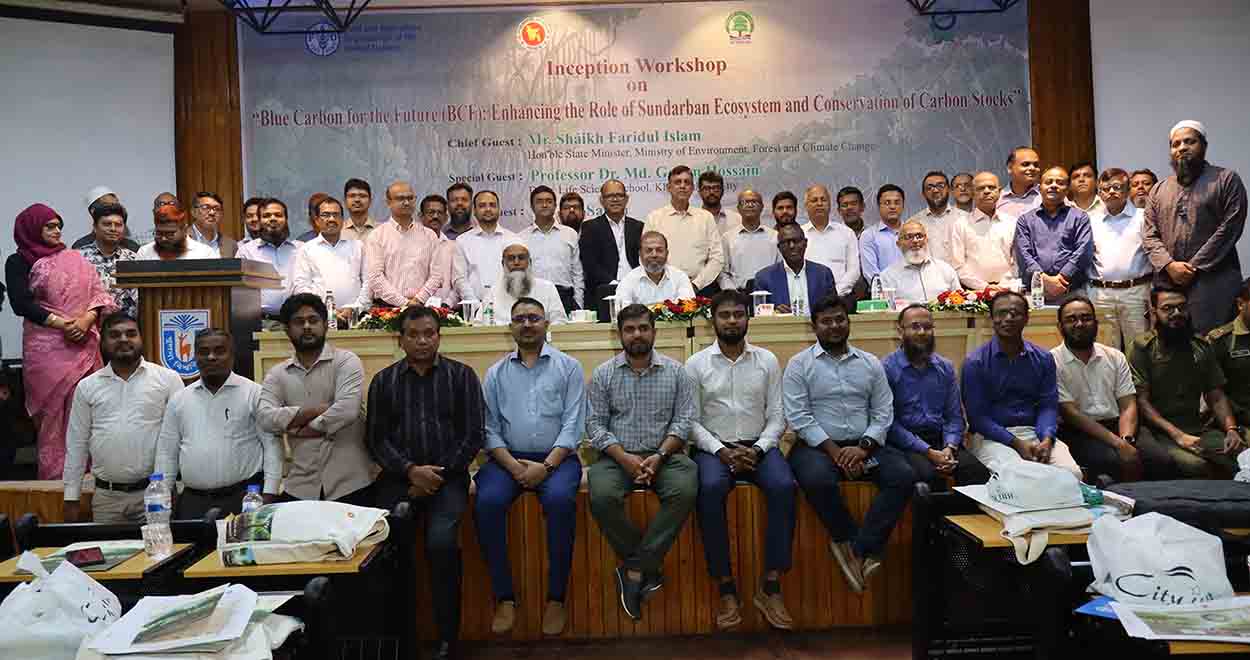
An inception workshop for the initiative was held at Khulna University on August 22, bringing together representatives from the Bangladesh Forest Department, Ministry of Environment, Forest and Climate Change (MoEFCC), universities, research institutions, development partners, civil society organizations and other stakeholders.
State Minister for Environment, Forest and Climate Change Shaikh Faridul Islam attended the event as chief guest, while Imran Ahmed, Conservator of Forests, Khulna Circle, chaired the programme. Dia Sanou, Deputy FAO Representative in Bangladesh, and Professor Dr Md Golam Hossain, Dean of the Life Science School at Khulna University, attended as special guests.
“This is a great opportunity for Bangladesh to understand the soil carbon stock beneath the Sundarbans mangrove forest, which will strengthen our position at the climate negotiation table, help realize the benefits of carbon sequestration and make us unique across the globe,” Shaikh Faridul Islam said.
The workshop included technical presentations on carbon stock assessment, ecosystem valuation and the implementation plan of the BCF initiative. An expert panel also discussed the Sundarbans’ contributions to livelihoods, biodiversity conservation and climate action.
Under the project, soil samples will be collected from 173 sample plots across the Sundarbans. Soil carbon assessments will extend to depths of up to five metres, providing a more comprehensive scientific understanding of carbon stored beneath the forest floor.
The new measurements will be combined with existing National Forest Inventory data to improve estimates of carbon stocks and the carbon sequestration potential of the Sundarbans.
The information generated through the initiative could also support Bangladesh’s national greenhouse gas accounting and climate reporting, including its Nationally Determined Contributions (NDCs) and Biennial Transparency Reports (BTRs). It will also contribute to reporting under the United Nations Framework Convention on Climate Change (UNFCCC) and the Paris Agreement.
More reliable carbon data could strengthen Bangladesh’s evidence base for accessing international climate finance and results-based financing opportunities.
The project will also assess pressures caused by the unsustainable use of forest and aquatic resources and identify more sustainable alternatives. It will promote sustainable non-timber forest products and climate-resilient fisheries practices while strengthening awareness and technical capacity among institutions and stakeholders involved in managing the Sundarbans.
“Today’s workshop is more than a project launch. It marks the beginning of a journey from data to knowledge, from knowledge to decisions, from decisions to action and from action to impact,” Dia Sanou, Deputy FAO Representative in Bangladesh, said.
“The real measure will be whether this knowledge helps us make better management decisions, reduce pressure on the ecosystem, strengthen community resilience, protect biodiversity and maintain the Sundarbans as a powerful natural climate solution,” he added.
The Sundarbans is a vital natural climate asset, a global biodiversity stronghold and an important source of livelihoods for local communities. By improving the measurement, valuation and management of its carbon stocks, ecosystem services and natural resources, the initiative is expected to strengthen the scientific foundation for conserving the world’s largest contiguous mangrove forest and sustaining its benefits for future generations.
