
Swiss graphic design legacy continues to shape visual communication
Switzerland’s distinctive approach to graphic design and typography continues to influence visual communication around the world, from public signage to digital interfaces.
At the beginning of the 20th century, graphic design had yet to emerge as a clearly defined profession. From 1915, schools of arts and crafts in Basel and Zurich began offering courses in applied graphic design and typography, according to the Embassy of Switzerland.
Over the following decades, these institutions trained generations of designers and contributed to the development of Switzerland’s internationally recognised visual communication style.
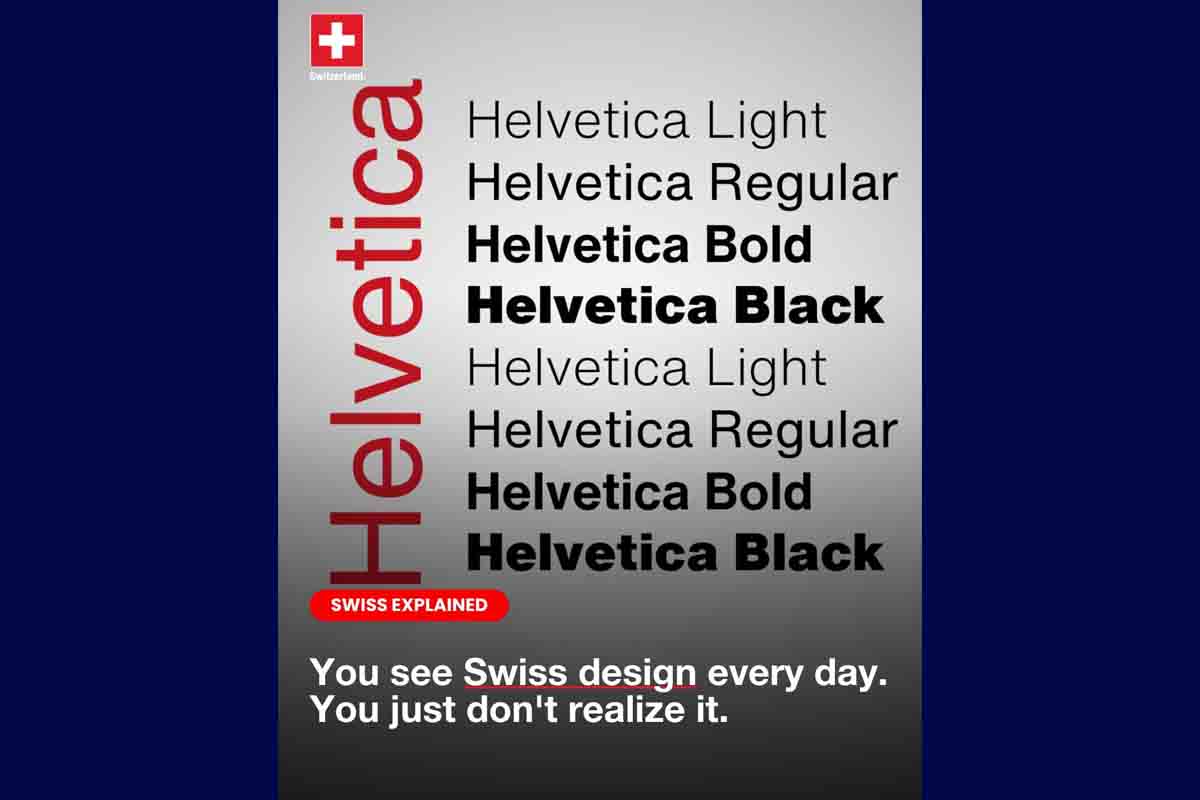
The Swiss design tradition also produced influential typefaces, including Helvetica, developed by Max Miedinger with Eduard Hoffmann, and Univers, designed by Adrian Frutiger.
The typefaces reflected a Swiss emphasis on clarity and readability, principles that continue to influence how information is presented and understood.
Today, the legacy of Swiss graphic design can be seen in transport signage, public information systems, corporate identities and digital interfaces used by millions of people worldwide.
