
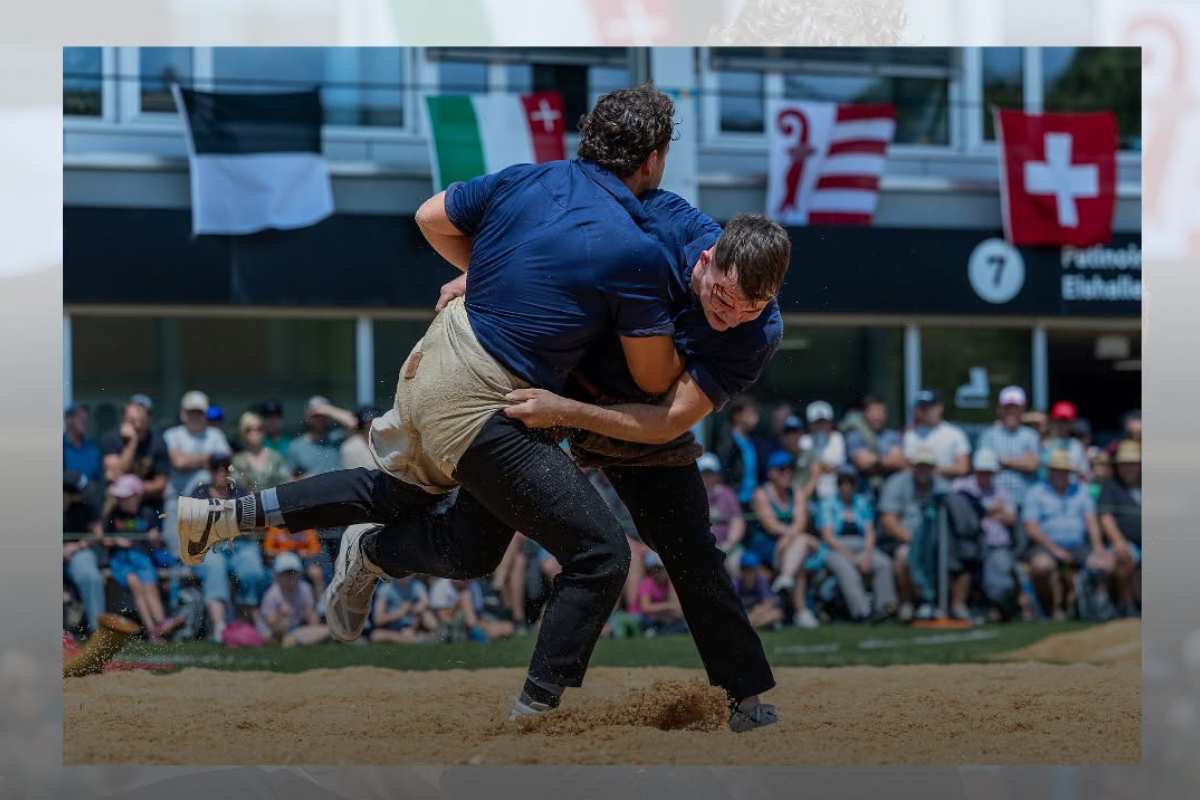
Schwingen, Hornussen and Steinstossen showcase the country's sporting heritage, bringing centuries-old traditions into the modern era
Switzerland's sporting culture extends beyond football, tennis and skiing, with three traditional national sports — Schwingen, Hornussen and Steinstossen — continuing to attract attention for their unique combination of strength, skill and centuries-old heritage.
Rooted in Swiss traditions, the three sports remain an important part of the country's cultural identity and sporting life, offering a glimpse into its rural heritage and community traditions.
Schwingen, a traditional form of Swiss wrestling, involves two competitors attempting to throw each other onto their backs in a sawdust-covered ring. Wrestlers wear specially designed shorts over their clothes and use specific grips to gain control of their opponents.
Hornussen, another distinctive Swiss sport, combines elements of batting and fielding. Players use a long flexible rod to launch a small puck, known as a Nouss, into the air at high speed, while opposing teams attempt to intercept it using large wooden or plastic paddles.
Steinstossen, meanwhile, is a traditional stone-throwing competition that tests competitors' strength, technique and precision. Participants attempt to throw heavy stones over the greatest possible distance, with some competitions featuring stones weighing as much as 83.5 kilograms.
These traditional disciplines take centre stage every three years at the Federal Wrestling and Alpine Games Festival, known as the Eidgenössisches Schwing- und Älplerfest (ESAF).
The festival brings together athletes and spectators from across Switzerland, celebrating traditional sports alongside music, folk culture and other elements of Swiss heritage.
Despite the growing popularity of modern sports, Schwingen, Hornussen and Steinstossen continue to preserve a distinctive sporting legacy, connecting contemporary Swiss society with traditions passed down through generations.
