
Bangladesh Introduces National Chinese Language Skill Framework
DHAKA, August 25, 2026: The National Skills Development Authority (NSDA) has developed a national Competency Standard (CS) and Course Accreditation Document (CAD) for the Chinese language for the first time in Bangladesh, as demand grows for Chinese-speaking skilled professionals amid expanding economic, commercial and diplomatic ties between Bangladesh and China.
The framework has been developed with the participation of local and foreign experts to make Chinese language training more modern, quality-driven and aligned with domestic and international labour market requirements.
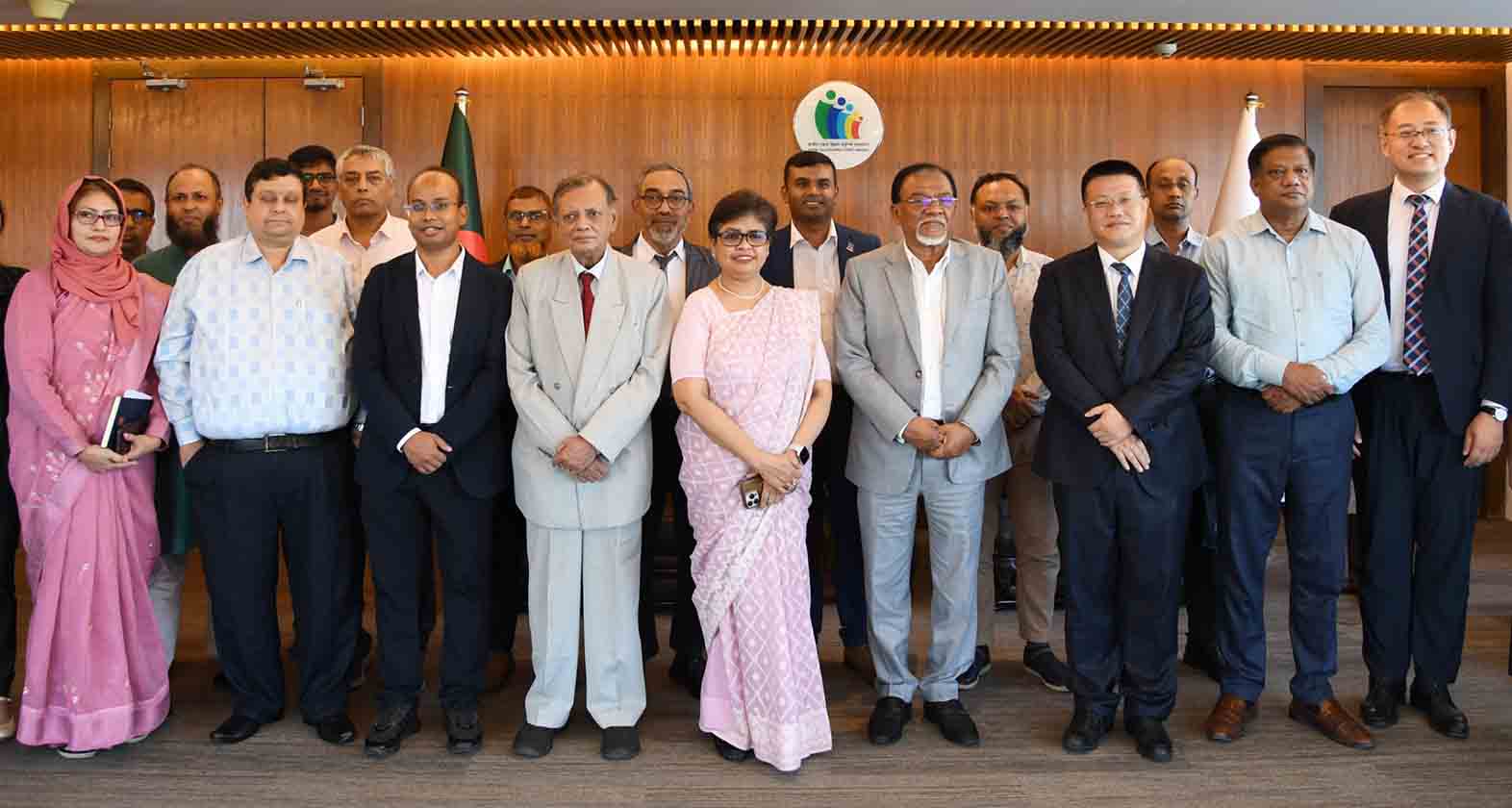
The development was announced at the closing ceremony of a validation workshop held at the NSDA conference room in Dhaka on Tuesday. The workshop reviewed the relevance, quality and labour market applicability of the newly formulated competency standard and curriculum.
Public Administration Adviser Md. Ismail Zabiullah, with the status of a minister, attended the programme as chief guest, while Chinese Ambassador to Bangladesh Yao Wen was present as guest of honour.
NSDA Executive Chairman and Secretary Dr. Nazneen Kawshar Chowdhury chaired the event. Bangladesh-China Friendship Association (BCFA) President Advocate Najmul Haque Nannu and Informal Sector Industry Skills Council Chairman Mirza Nurul Ghani Shovon attended as special guests.
The initiative seeks to establish Chinese language proficiency not merely as a communication skill but as a distinct occupational competency linked to employment and professional development.
Under the framework, learners will acquire not only language skills but also the knowledge, technical abilities and competencies required for specific workplace environments.
Speaking as chief guest, Adviser Md. Ismail Zabiullah said China's rapid advancement in areas such as robotics, artificial intelligence and modern technology creates new opportunities for Bangladesh to deepen cooperation with the country.
He said strengthening Bangladesh-China relations is important in view of Bangladesh's national interests and the changing global geopolitical landscape.
The adviser identified job creation as a major priority of the government and stressed the need to equip young people with market-oriented skills to access both domestic and international employment opportunities.
He also called for wider access to Chinese language learning through online, hybrid and technology-based platforms, allowing students, professionals and skilled workers from Dhaka to remote areas to acquire the language.
Chinese language proficiency, he noted, could also facilitate opportunities for Bangladeshi students seeking higher education in China.
Emphasising that language provides a gateway to a country's culture, history, values and civilisation, Zabiullah proposed greater Bangladesh-China cultural cooperation through films, documentaries, books and digital content.
He said historical stories of China-Bengal trade and cultural exchanges could be presented through modern creative media to further strengthen people-to-people ties.
Chinese Ambassador Yao Wen said education is one of the most important areas of cooperation between Bangladesh and China and expressed confidence that bilateral cooperation in the sector would continue to expand.
He noted that employment opportunities are emerging for Bangladeshi citizens at the Chinese Economic Zone in Chattogram, making Chinese language proficiency increasingly important for local workers.
According to the ambassador, Chinese language skills will enable Bangladeshi youth and professionals to communicate more effectively with Chinese companies and investors and help them benefit from expanding economic cooperation between the two countries.
In her presidential address, NSDA Executive Chairman Dr. Nazneen Kawshar Chowdhury said the growing cooperation between Bangladesh and China in trade, investment, technology, industry, education and human resource development is driving increased demand for Chinese-speaking manpower.
She said Chinese language proficiency should therefore be considered an important skill for employment, professional communication and access to international labour markets.
The competency-based curriculum was finalised after receiving feedback from Chinese language experts from Bangladesh and abroad, Chinese enterprises, industry representatives and other stakeholders.
Dr. Nazneen stressed the importance of strengthening partnerships with Chinese institutions, language schools and training organisations operating in Bangladesh to connect Chinese language training more directly with employment opportunities.
A four-day development workshop was held from August 16 to 19 to formulate the Competency Standard and Course Accreditation Document. The subsequent validation workshop incorporated feedback from experts, industry representatives and other stakeholders before finalising the framework.
The initiative will enable NSDA-registered training institutions to introduce Chinese language courses under a nationally recognised framework.
Trainees will be assessed according to the competency standards and awarded nationally recognised certificates, which NSDA expects will improve their employment prospects in Bangladesh and overseas.
The workshop also discussed the possibility of signing Memorandums of Understanding (MoUs) with several Chinese universities for joint certification programmes.
NSDA has additionally taken steps to develop a skill framework for the Chinese Language occupation aligned with Levels 2 and 3 of the Bangladesh National Qualifications Framework (BNQF), corresponding to Chinese Language Test (HSK) Levels 1 and 2.
The initiative is expected to create a stronger institutional foundation for Chinese language training in Bangladesh while supporting employment, education, trade and people-to-people connectivity between the two countries.
Members and directors of NSDA, consultants, industry representatives, training institution delegates and other stakeholders attended the closing ceremony.
