
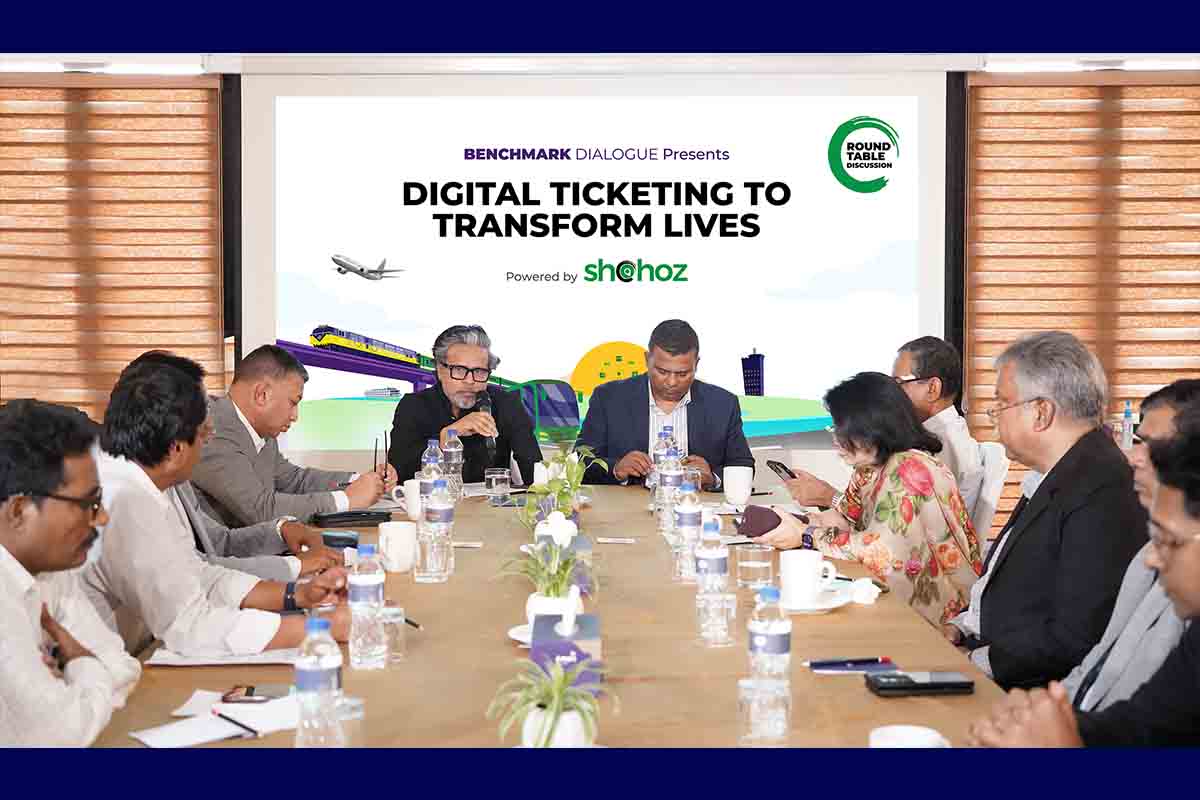
Stakeholders call for all-out adoption, integrated approach, and stronger partnerships
Dhaka, September 16, 2026: Digital ticketing could go well beyond replacing paper tickets, helping make Bangladesh’s public transport system more transparent, accountable and data-driven, while improving passenger services and transport planning, policymakers and sector stakeholders said today.
They said digital systems could bring greater transparency to fare collection, reduce revenue leakage for government and generate reliable data on passenger movement, peak travel periods and route demands. Such data, they noted, could help authorities and operators make better decisions on routes, fleet deployment, infrastructure and services.
But to unlock these benefits, Bangladesh will need more than technology, they said. Interoperability among different transport and payment platforms, secured transactions, appropriate policies and coordinated efforts among government agencies, transport operators and private-sector service providers will be crucial.
The observations came at a roundtable titled “Digital Ticketing to Transform Lives” took place in Dhaka on Wednesday, presented by a newly launched policy exchange platform, Benchmark Dialogue, and powered by Shohoz, the country’s leading online ticketing platform. Benchmark Dialogue Chairman Ashraf Kaiser moderated the discussion.
The discussion brought together representatives from government agencies, transport operators, technology and financial service providers, passenger rights organisations, business bodies and policy stakeholder. Colonel (Retd.) Md. Aminul Haque, CEO of Shohoz, delivered the welcome address on digital ticketing. In addition, Shohoz’s Director (Ticketing) Shakil Joad Rahim spoke about the current state of digital ticketing.
Need for an integrated approach
Rajat Ghosh, director of Shyamoli Paribahan, said the transport sector has remained largely unstructured because of its constantly changing nature. “Bringing ticketing fully under a digital system can help introduce discipline to the sector,” he said.
Although online ticket demand increases during Eid and other festivals, many passengers still buy tickets from counters during normal times, Ghosh said. A terminal-based system instead of scattered ticket counters could help complete the shift to digital ticketing, he added.
Fazlul Hoque, entrepreneur & administrator of the Federation of Bangladesh Chambers of Commerce and Industry (FBCCI), said there was no major policy barrier to moving towards online ticketing.
The government is already active on the issue, with the commerce ministry also involved, he said.
He identified fare bargaining at counters as one of the challenges to digital adoption. The opportunity to negotiate fares encourages some passengers to continue using physical counters, creating an uneven competitive environment, he said.
The transition also involves more than regulation, as cash movement and transaction management need to be addressed, Haque added.
Sukdev Dhali, deputy general manager of Bangladesh Road Transport Corporation (BRTC), said efforts to digitise its operations, particularly ticketing, had been underway for years.
“Fully online ticketing has already been introduced on the Pink Bus service,” he said.
Digital payments can increase passengers’ confidence that fares are properly accounted for and deposited with the government, thereby improving transparency and accountability, Dhali said.
Kazi Saifun Newaz, assistant professor at BUET’s Accident Research Institute, said Bangladesh was not lagging significantly in digitalisation but lacked an effective digital ecosystem.
“Simply collecting data will not be enough. We need to analyse and use that data,” he said.
Digital ticketing could generate information on passenger demand by route and time, allowing operators to adjust services and the government to identify routes where additional transport is needed.
Such data could also contribute to improving passenger safety and security management, he said.
Priority on Passenger Convenience and Data Security
Economist Dr Fahmida Khatun, distinguished fellow at the Centre for Policy Dialogue (CPD), said the transport sector should keep pace with the digitalisation of banking, tax payments and government services.
“Digital systems can make mobility much easier and more hassle-free,” she said.
But digitalisation must be inclusive, she added, stressing the need to ensure accessibility, data security, simple procedures, proper pricing and logistics.
AHM Shafiquzzaman, president of the Consumers Association of Bangladesh (CAB), said past scams in the e-commerce sector had demonstrated the importance of accountability in digital systems.
Ticketing and related processes should be automated as much as possible, he said. Running digital and analogue systems side by side for an extended period could discourage people from fully shifting to digital services.
Protecting passengers’ personal information should also be a priority, while consumer interests must remain central to the digital transition, he said.
Sharif Rafiquzzaman, president of Jatri Kalyan Samity, called for insurance coverage for passengers, an end to overcharging and improved service quality.
Digital ticketing alone would not resolve the sector’s problems, he said, stressing the need to improve overall transport management, particularly in Dhaka.
Md Nabir Uddin, senior system analyst at the Digital Governance and Implementation wing of the ICT Division, called for an integrated ticketing system that would allow citizens to access different transport services through a single platform.
“A citizen should know and use a single system instead of having to become familiar with multiple separate platforms,” he said.
Multiple service providers and payment methods could operate in the backend, he added. In the future, ticketing could also be combined with other services.
He stressed the need for effective data management, particularly the protection of sensitive information.
Brig Gen Moahammad Khaled Kamal, director general of Business Division-7 of Sena Kalyan Travels and Tours, said Bangladesh was gradually moving towards automation, with the railway and several road transport operators already adopting digital ticketing.
However, many passengers remain hesitant because of concerns over whether they will actually receive their seats after purchasing tickets online, he said.
Speakers therefore stressed that digital ticketing must be simple, reliable and accessible, particularly for passengers who are less familiar with digital technology.
Maj (retd) Maksudur Rahman Adnan, managing director of Fantasy Island Amusement Park, said similar unified digital systems could eventually be expanded beyond transport.
He said a unified card or platform could allow consumers to access different services through a single system, with platforms such as Shohoz potentially integrated into it.
Kamrul Islam, general manager of public relations at US-Bangla Airlines, said Bangladesh’s aviation sector also needs stronger domestic planning and digital initiatives.
Digital ticketing provides an opportunity to replace manual processes with simpler and more modern services, he said.
They recommended moving towards full digital ticketing across buses, trains, launches and airlines. Besides making travel more convenient and potentially safer, they said, a unified system could improve fare collection transparency, increase government revenue, reduce leakage and provide transport operators with better business data.
More reliable passenger data could also help authorities plan routes and services more effectively, ultimately contributing to a more modern, efficient and data-driven public transport system.
The Benchmark Dialogue roundtable sought to bring key stakeholders together to explore how digital ticketing could make everyday travel easier while improving transparency, efficiency and the use of data in public transport management. It’s the beginning of a series of dialogues on digital ticketing, and there will be a few more coming concerning the government’s better revenue collection, passenger safety, and the roadmap for growth for the public transportation sector.
Benchmark Dialogue:
Benchmark Dialogue is a policy discussion platform that brings together policymakers, private-sector leaders, think tanks, researchers, experts and other key stakeholders to discuss critical national and sector-specific issues. Through evidence-based discussions and knowledge sharing, the platform aims to generate practical, informed and actionable policy recommendations and foster meaningful connections between stakeholders for better policy development and implementation.
Shohoz:
Shohoz's journey started back in 2014 with one goal in mind – to make Bangladeshis’ lives easier. Today, Shohoz is one of Bangladesh’s largest ticketing platforms, dedicated to empower people by solving and simplifying their travel needs. Shohoz initially revolutionized the country’s travel sector with convenient online bus ticketing, it has since then expanded its offerings to include Ferry/Launch, Events, Entertainment, Rail and Air ticketing. Bangladesh’s only platform to have all ticketing solutions. Guided by an ethos of simplicity and innovation, Shohoz continues to redefine mobility, e-commerce, and on-demand services for consumers and businesses alike in one of the world’s fastest-growing markets. Learn more at https://www.shohoz.com/
