
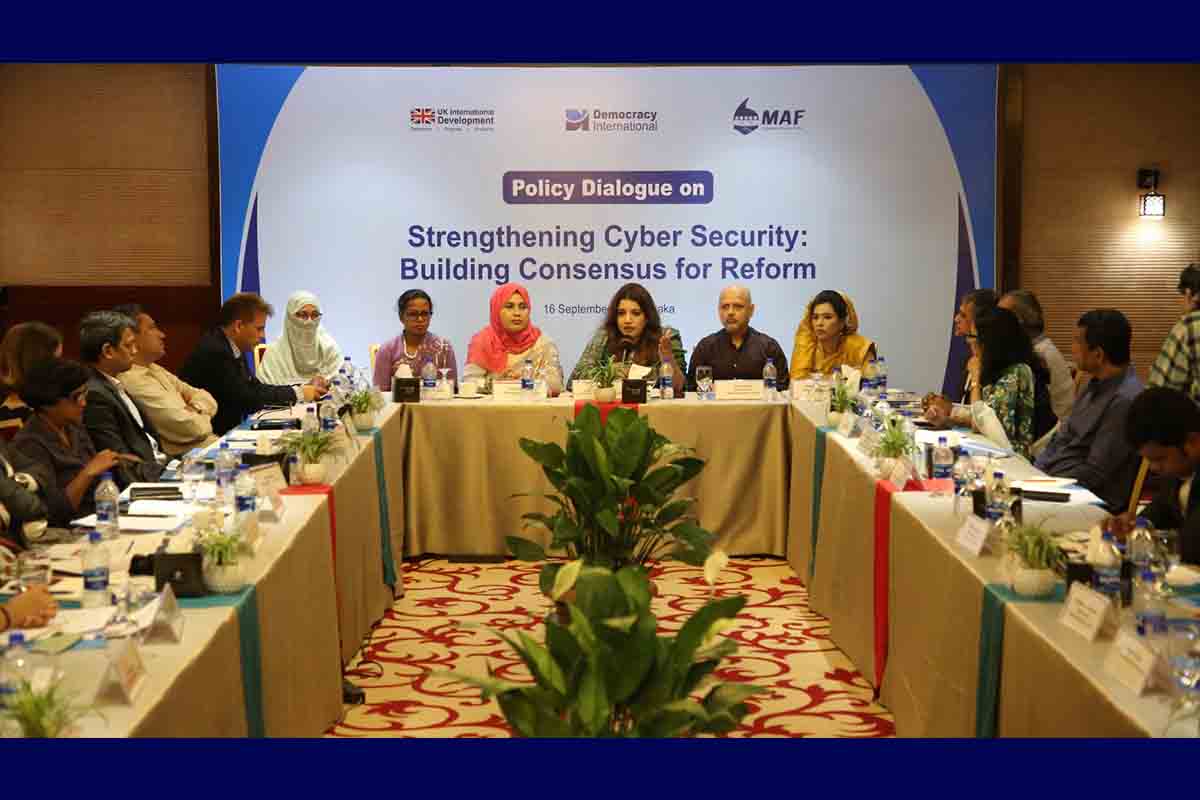
Call for Clear Definition and Remedy Provisions on Technology-Facilitated Gender-Based Violence in Cyber Security Act
DHAKA, September 16, 2026: State Minister for Foreign Affairs-2 Shama Obaed Islam has called on the international community to strengthen efforts to protect women from technology-facilitated gender-based violence and ensure greater safety in cyberspace.
“ We want to create an environment where women are safe in cyberspace and the safety of all citizens is ensured,” she said.
The state minister made the remarks while addressing a policy dialogue organised by Democracy International (DI) at a hotel in Dhaka on Wednesday.
Leaders of political parties, members of parliament, government officials, civil society representatives, journalists and experts from national and international organisations attended the dialogue, which focused on proposed amendments to the Cyber Security Act, 2026.
Participants called for incorporating a clear definition of, and effective remedies for, technology-facilitated gender-based violence (TFGBV) into the draft law.
The dialogue was organised by the Dhaka Multiparty Advocacy Forum at the initiative of DI under the B-SPACE project, funded by the UK's Foreign, Commonwealth and Development Office.
DI reviewed the draft cyber law at the event and presented 26 recommendations.
Shama said the government has formed an inter-ministerial committee to update the law and assured participants that the draft would not be finalised without consulting relevant stakeholders.
She agreed with most of DI's recommendations and urged officials of the law and ICT ministries present at the dialogue to take the recommendations forward to the policymaking level.
“The problem is common to all communities, and governments should raise public awareness while ensuring strict enforcement of the law,” she said.
Speakers said the existing cyber security law lacks clear definitions of several cyber offences, including consent, making it difficult to identify and prosecute certain forms of online abuse.
They also pointed out that platform algorithms can amplify TFGBV-related content, while the law does not contain clear provisions for the swift removal of harmful material or adequate platform accountability.
The discussants called for a human-rights-centred accountability framework and specific provisions to facilitate the prompt removal of harmful content.
They also cautioned against a repeat of the alleged misuse of provisions under the Digital Security Act, saying clauses relating to defamation and misinformation should be drafted carefully to prevent similar abuse.
Alongside legal reform, the speakers stressed the need for greater public awareness, digital safety education and specialised training for law enforcement officers involved in investigating cybercrimes.
BNP MPs Helen Jerin Khan, Nadia Pathan Papon and Sultana Jesmin Jui, Jamaat-e-Islami MP Marzia Begum, Law and Justice Division Additional Secretary SM Arshadul Alam, CID Cyber Security Centre Additional DIG Md Zahidul Islam, ICT Division's National Cyber Security Agency Director (Operations) Md Hossain Bin Amin and BTRC Deputy Director SM Taifur Rahman, among others, spoke at the dialogue.
Democracy International Senior Director Lipika Biswas moderated the event, while its Chief of Party Aminul Ehsan delivered the welcome and closing remarks.
Arafat Billah Khan, project implementation secretary of Dhaka MAF, and its member Injamul Hoque Ramim presented the recommendations.
