
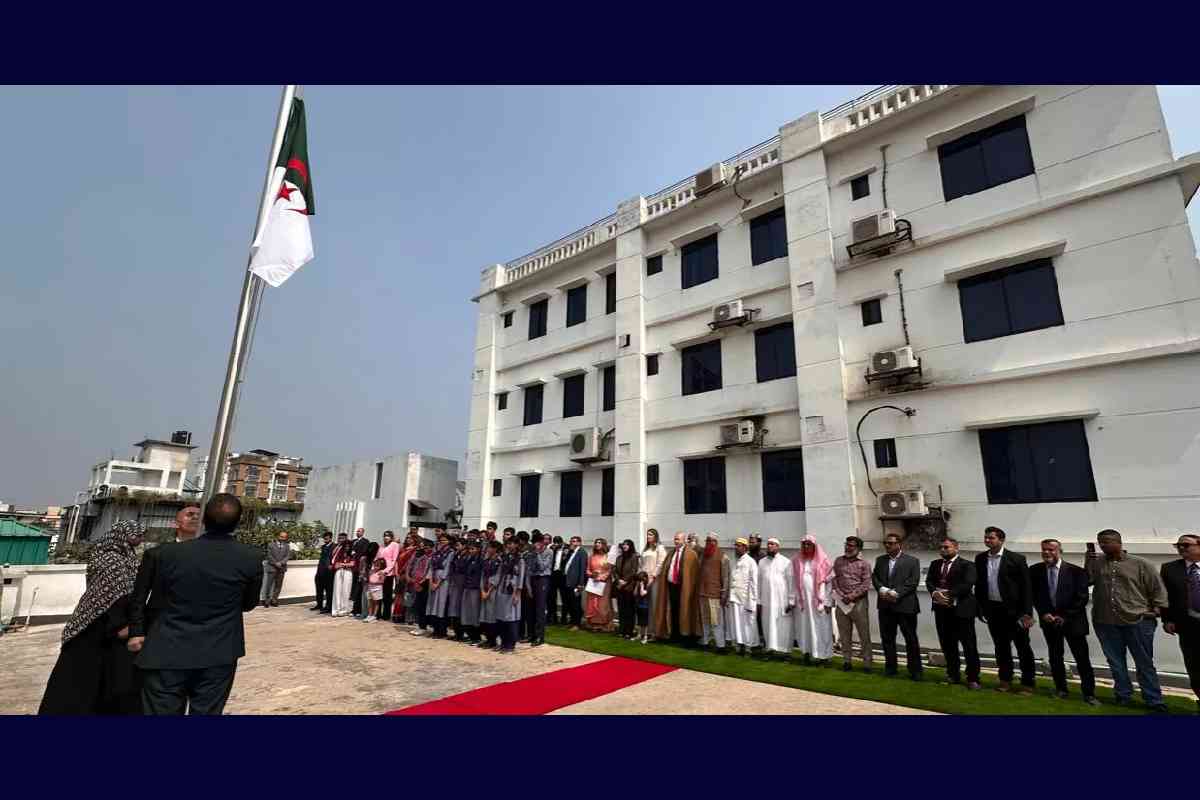
Algerian Ambassador Abdelouahab Saidani commemorates the 1961 Paris massacre in Dhaka, highlighting historical ties between Algeria and Bangladesh.
DHAKA, October 17, 2026 — Algerian Ambassador to Bangladesh Abdelouahab Saidani has highlighted the historical parallels between Algeria’s struggle for independence and Bangladesh’s fight for freedom and human dignity, stressing the importance of preserving historical memory in the pursuit of justice and human rights.
He made the remarks while paying tribute to the victims of the 1961 Paris massacre at a commemoration marking its 65th anniversary at the Algerian Embassy in Dhaka on Saturday.
“The shared struggles and profound solidarity” between the peoples of Algeria and Bangladesh reflect their historic fights against colonial oppression, Saidani said, describing the common experiences as a source of lasting affinity and mutual respect between the two countries.
“Both nations confronted severe colonial and systematic oppression, propelled by an unyielding commitment to justice and independence,” he said.
The ambassador expressed hope that the victims’ legacy would continue to inspire both countries to work towards a peaceful and prosperous future.
The anniversary is observed in Algeria as National Emigration Day, honouring the martyrs of the massacre and recognising the sacrifices of Algerians living abroad during the country’s liberation struggle.
Saidani said Algerian President Abdelmadjid Tebboune instituted the annual observance in 2021. The commemoration includes a minute of silence across Algeria and at the country’s diplomatic missions abroad to pay tribute to the victims.
This year’s theme, “From Deep Memory to Future Horizons,” highlights the importance of transforming historical trauma into a foundation for justice, dignity and human rights, he said.
On October 17, 1961, French police violently suppressed peaceful demonstrations by Algerians protesting a discriminatory curfew imposed specifically on the Algerian population in Paris.
The crackdown left numerous people dead and thousands injured. Some victims were reportedly tortured or drowned in the River Seine, according to the ambassador’s speech.
The massacre remains a significant episode in Algeria’s struggle against French colonial rule, which ended with the country gaining independence in 1962.
Reflecting on efforts to establish historical justice, Saidani said sustained advocacy by activists, historians and human rights organisations had helped bring greater international attention to the massacre and encouraged France to acknowledge the gravity of the events.
He described October 17, 1961, as a defining moment in Algeria’s national consciousness, symbolising resilience, sacrifice and dignity.
The ambassador also highlighted the contribution of the Algerian diaspora to national development, pointing to the establishment of the High Council of the National Scientific Community Abroad as a mechanism to mobilise the expertise and knowledge of Algerians living overseas.
The commemoration also highlighted the historical connection between Algeria and Bangladesh, where the 1971 Liberation War remains central to the country’s national identity.
Saidani said the shared experiences of colonial rule and struggles for self-determination could help strengthen ties between the two countries and reinforce their commitment to freedom, justice and human dignity.
