
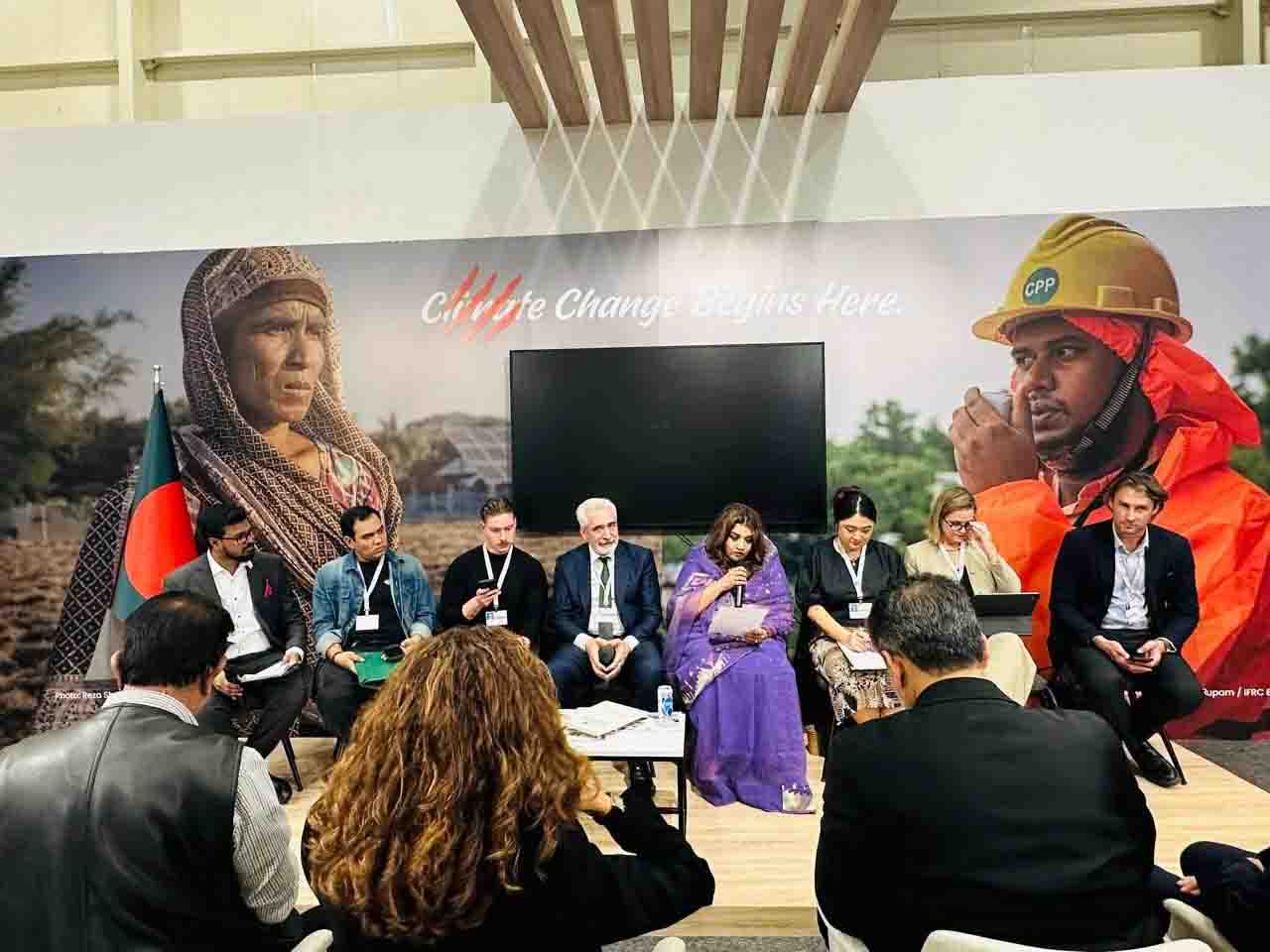
Bangladesh showcases jute as sustainable alternative to plastic at COP31.
Bangladesh has showcased jute as a renewable,
biodegradable and commercially viable alternative to plastic at COP31 in
Türkiye, highlighting the golden fibre's potential to support global climate
action, sustainable production and green economic growth.
State Minister for Foreign Affairs Shama Obaed Islam presented Bangladesh's
jute sector as a practical solution to global environmental challenges while
chairing a high-level side event at the Bangladesh Pavilion in the Blue Zone
of COP31 in Antalya on Friday.
The event, titled "Natural Fibres, Zero Waste and Frugal Adaptation: Jute as
a Solution from Bangladesh for the COP31 Action Agenda," brought together
policymakers, international organisations and environmental experts, said a
foreign ministry press release issued here today.
For the first time at a UN climate conference, Bangladesh has established a
dedicated Jute Pavilion, showcasing approximately 550 kilograms of jute
products in 130 varieties.
The initiative seeks to position Bangladesh's traditional golden fibre as a
global solution to plastic pollution while promoting export diversification,
sustainable manufacturing and climate-friendly economic opportunities.
In her welcome address, Shama thanked the government and people of Türkiye and
the COP31 Presidency for their hospitality, emphasising that Bangladesh
possesses the agricultural resources, industrial capacity and technical
expertise to produce sustainable jute products on a commercial scale.
"The materials we choose today will shape the planet our children inherit
tomorrow," she said.
Highlighting jute's environmental benefits, the state minister said natural
fibres and zero-waste initiatives could work together to reduce plastic
pollution and promote a circular economy.
She praised Türkiye's Zero Waste movement and shared Bangladesh's experience in
affordable climate adaptation, including floating gardens, early warning
systems and saline-tolerant crops.
The event was organised by the ministries of Foreign Affairs, Textiles and
Jute, and Agriculture in partnership with Türkiye's Zero Waste Foundation, the
United Nations Office for Project Services (UNOPS) and the Global Center on
Adaptation (GCA).
Chairman of the Environment Committee of Türkiye's Grand National Assembly
Mehmet Galip Ensarioglu praised Bangladesh's expertise in jute, describing it
as a valuable example for developing environmentally sustainable industries.
He said climate policies should balance environmental objectives with the
development priorities of individual countries.
UNOPS Asia-Pacific Regional Director Sara Austin Netzer highlighted
Bangladesh's capacity to connect natural resources, farmers, designers and
manufacturers to develop sustainable products.
She reaffirmed UNOPS' commitment to supporting Bangladesh in green
construction, climate-resilient infrastructure and implementation of its
third Nationally Determined Contribution (NDC 3.0).
Threading Change founder Sophia Yang stressed the need to replace plastic-
based synthetic textiles with natural fibres, identifying Bangladesh as an
important source of sustainable materials for the global fashion industry.
Kosovo's Minister of Environment and Spatial Planning Fitore Pacolli
expressed interest in Bangladeshi jute products and potential collaboration
with designers to develop eco-friendly alternatives.
Aroha founder Matthew McKinnon described Bangladesh's Jute Pavilion as a
demonstration of the fibre's versatility and potential contribution to
international climate action.
GCA specialist Dr Feisal Rahman also expressed interest in expanding
cooperation with Bangladesh on locally led adaptation and sustainable
development.
