
Finance Minister Seeks Youth Input Before Budge
Finance and Planning Minister Amir Khosru Mahmud Chowdhury stated at a seminar that the current government is focusing on building a creative economy to boost the Gross Domestic Product (GDP) and increase state revenue and expand the tax net.
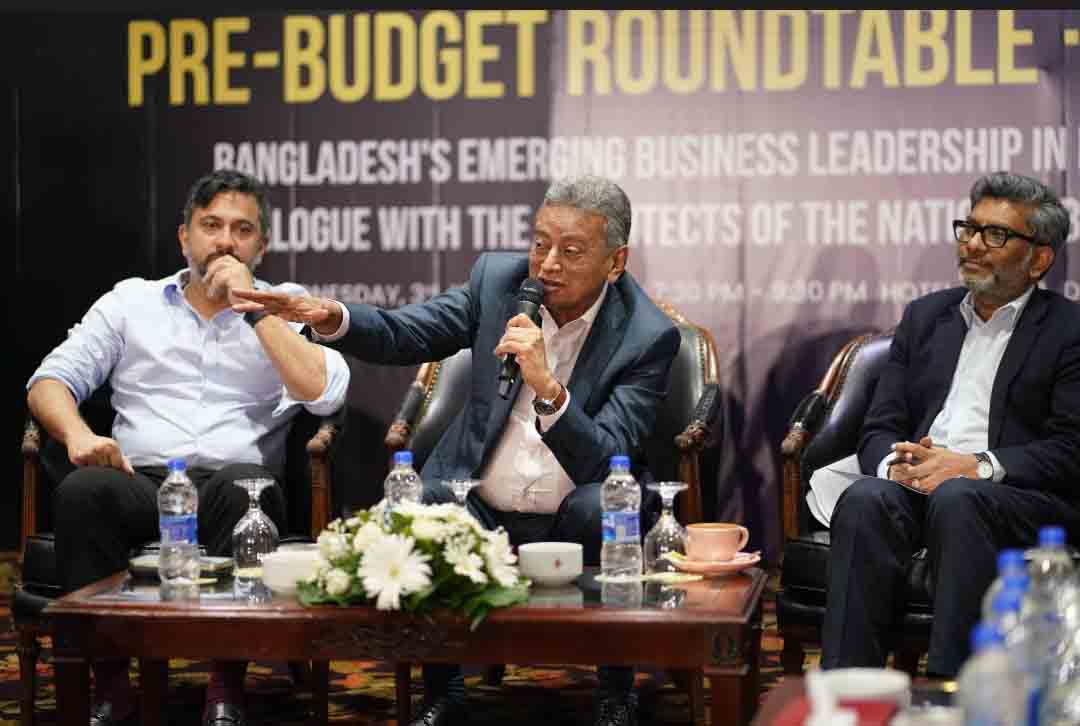
The minister was told in an exclusive pre-budget roundtable with emerging business leaders, entrepreneurs and investors, seeking private-sector recommendations ahead of the national budget for FY2026-27 was held at a city hotel on Wednesday night.
Dhaka Forum Initiative (DFI) organised Pre-Budget Roundtable to discuss Bangladesh’s economic priorities, investment climate and long-term growth strategy.
The event created a rare platform for direct engagement between government policymakers and young business leaders at a crucial time before the announcement and implementation of the national budget. A significant number of second-generation entrepreneurs and emerging business executives participated in the dialogue, sharing their perspectives, concerns and aspirations regarding the country's economic future.
Besides the finance minister, Special Assistant to the Prime Minister for Investment and Capital Market Affairs Tanvir Ghani attended the event as special guest. Israfil Khosru, Ad Hoc Committee Member of the Bangladesh Cricket Board and a BNP member involved in shaping the party’s economic outlook, also took part in the discussion.
The session was moderated by Ashfaq Zaman, Chief Strategist of the Dhaka Forum Initiative, who underscored the need for stronger collaboration and trust between policymakers and the next generation of entrepreneurs.
Discussions focused on private-sector competitiveness, regulatory and investment reforms, business ecosystem development, capital market expansion and opportunities in the creative, green and blue economies. Participants also exchanged views on strategies to support Bangladesh’s ambition of becoming a trillion-dollar economy by 2034.
Addressing the gathering, Amir Khosru Mahmud Chowdhury reaffirmed the government’s commitment to a participatory and partnership-driven governance model, where entrepreneurs, innovators and private-sector stakeholders play an active role in shaping economic policy.
He stressed the importance of creating a more inclusive, business-friendly and opportunity-driven economic environment that promotes innovation, competitiveness and broad-based economic participation.
The minister highlighted the government's focus on deregulation, including reducing unnecessary regulatory barriers and simplifying business procedures to unlock private-sector growth and entrepreneurship. He also emphasized increasing women's participation in entrepreneurship and expanding economic opportunities across society.
Amir Khosru further pointed to the growing importance of non-traditional sectors such as frugal innovation, the creative economy, artificial intelligence and Digital Public Infrastructure (DPI), describing them as key drivers of Bangladesh’s future competitiveness and sustainable economic growth.
Business leaders welcomed the opportunity to engage directly with policymakers and offered recommendations on improving the investment climate, reducing regulatory obstacles, strengthening institutional support for startups and emerging enterprises, and incorporating business-friendly measures into the upcoming budget.
Representatives of the Dhaka Forum Initiative said sustained dialogue between policymakers and the private sector is essential for building a resilient and globally competitive economy. They noted that the recommendations and insights generated during the roundtable would contribute to broader discussions on economic reforms and national development priorities.
The event concluded with a networking dinner, allowing participants from both the public and private sectors to exchange ideas and explore opportunities for future collaboration.
