
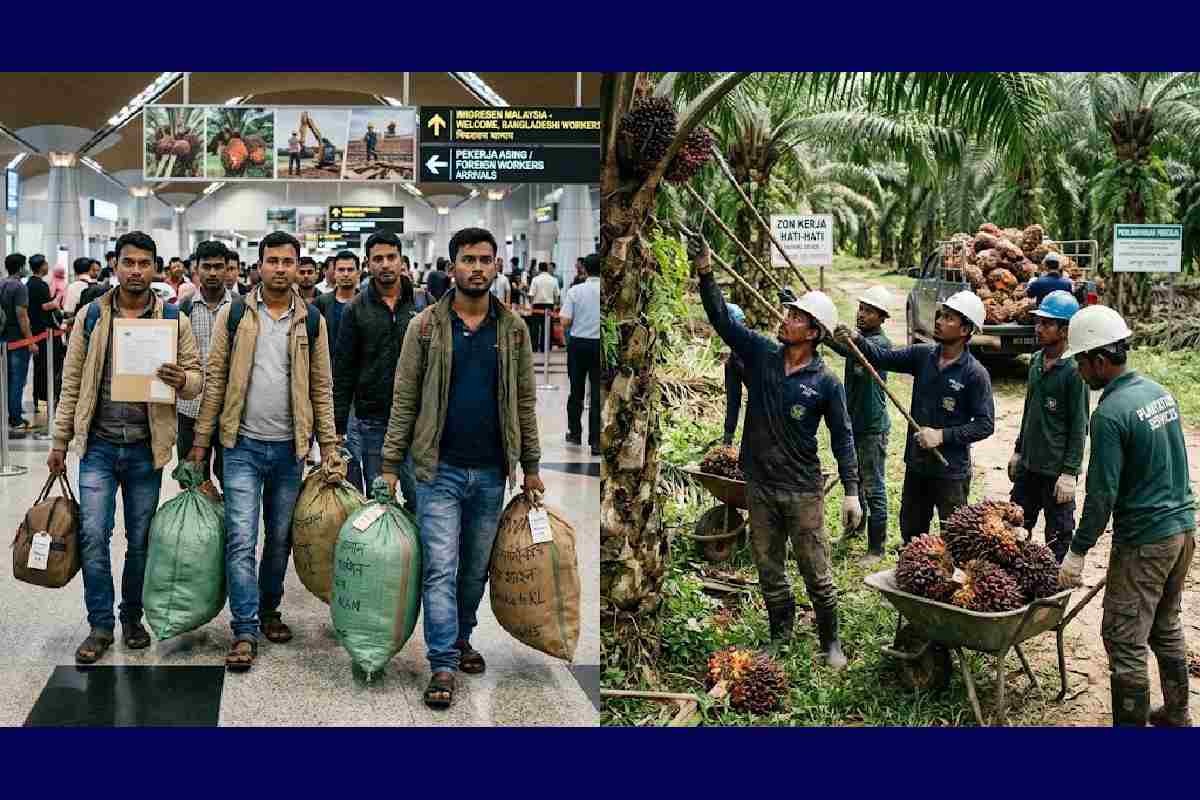
338 agencies to get access to labour market under new arrangement
Bangladesh has announced the start of the recruitment process for workers seeking employment in Malaysia, with 338 Bangladeshi recruiting and processing agencies set to participate under a new arrangement.
Malaysia has also agreed in principle to recruit 10,000 Bangladeshi workers at zero cost following a special request from the Bangladesh government, according to an official statement. Details of the recruitment timeline, sectors and the costs covered under the arrangement have yet to be disclosed.
Under the new system, 312 recruiting agencies, 25 processing and service agencies, and the state-owned Bangladesh Overseas Employment and Services Limited (BOESL) will be included in the arrangement, subject to Malaysia’s eligibility criteria.
The government said the initiative aims to reopen and expand access to the Malaysian labour market, broaden participation by eligible recruiting agencies and protect migrant workers from excessive recruitment costs.
The announcement marks a significant step towards restoring one of Bangladesh’s major overseas employment destinations, although the effectiveness of the new system will depend on transparent recruitment, enforcement of regulations and safeguards against worker exploitation.
Under the arrangement, the 312 listed recruiting agencies will be able to approach Malaysian employers independently to collect job orders or recruitment demands and select workers in Bangladesh in accordance with the country’s laws and regulations.
BOESL and the 25 listed processing and service agencies will assist with administrative procedures, including calling visas, e-visas and other required documentation.
Once the necessary Malaysian procedures are completed, the recruiting agency responsible for the workers will be able to obtain clearance from the Bureau of Manpower, Employment and Training (BMET) using its own recruiting licence.
The government said the system would preserve the responsibilities and accountability of individual recruiting agencies while allowing them greater operational independence.
The arrangement is intended to reduce dependence on a limited number of intermediaries and widen opportunities for eligible agencies to participate in recruitment.
However, the government has yet to provide a detailed breakdown of the recruitment fees, service charges and other expenses workers may face under the new system.
The latest arrangement follows a memorandum of understanding signed between Bangladesh and Malaysia on December 18, 2022.
Under the MoU, Malaysia’s Ministry of Human Resources is responsible for selecting and listing Bangladeshi recruiting agencies based on its eligibility requirements.
During the interim government’s tenure, the process of assessing agencies against Malaysian criteria began. A list of 423 agencies, accompanied by supporting documents, was subsequently sent to the Malaysian authorities.
After taking office, the current government made reopening and expanding overseas labour markets a priority, with Malaysia receiving particular attention.
The prime minister selected Malaysia for his first official foreign visit after assuming office and discussed reopening the labour market for Bangladeshi workers with his Malaysian counterpart, according to the government’s account.
Dhaka subsequently continued negotiations with Malaysian authorities to expand participation by eligible Bangladeshi agencies while respecting Malaysia’s regulations and the existing MoU.
Under the latest arrangement, Malaysia has agreed to list BOESL, 25 processing and service agencies and 312 recruiting agencies, bringing the total to 338.
The government said the arrangement would create a more competitive and participatory recruitment system.
The approval of medical centres for prospective migrant workers remains a key outstanding issue.
Under the existing MoU, Bangladesh and Malaysia share responsibility for finalising the list of approved medical centres.
The government said Bangladesh had requested changes to the existing list to facilitate an early reopening of the labour market. Malaysia has agreed to begin operations using the remaining centres listed on its relevant website after excluding centres considered controversial or associated with irregularities, according to the official account.
A joint delegation from Malaysia’s ministries of health, human resources and home affairs is expected to visit Bangladesh to inspect the centres and prepare a comprehensive list under the revised guidelines.
Bangladeshi authorities will also monitor the centres’ compliance with local regulations and take action against those found to have committed irregularities. Additional centres may be included after the required verification and approval.
The government said no single medical centre would be given exclusive control over health examinations for Malaysia-bound workers.
Malaysia is one of Bangladesh’s most important overseas labour markets, employing a large number of Bangladeshi migrant workers whose earnings contribute significantly to remittances.
However, recruitment costs, intermediary involvement and allegations of irregularities have remained major concerns for workers seeking employment in the country.
The government said the new arrangement would prioritise affordable recruitment, transparency and wider participation by legitimate agencies.
It has urged recruiting agencies to collect job orders and create employment opportunities while complying with national laws and protecting workers’ interests.
The proposed zero-cost recruitment of 10,000 workers could offer relief to prospective migrants, but its practical impact will depend on the implementation details, including the allocation of jobs, the definition of zero cost and the mechanisms used to prevent workers from being charged indirectly.
The government thanked the Malaysian prime minister, the Ministry of Human Resources and other relevant authorities for their cooperation.
With recruitment now announced, the immediate priorities are to operationalise the system, finalise medical arrangements and ensure that workers can access jobs without excessive fees or exploitation.
