
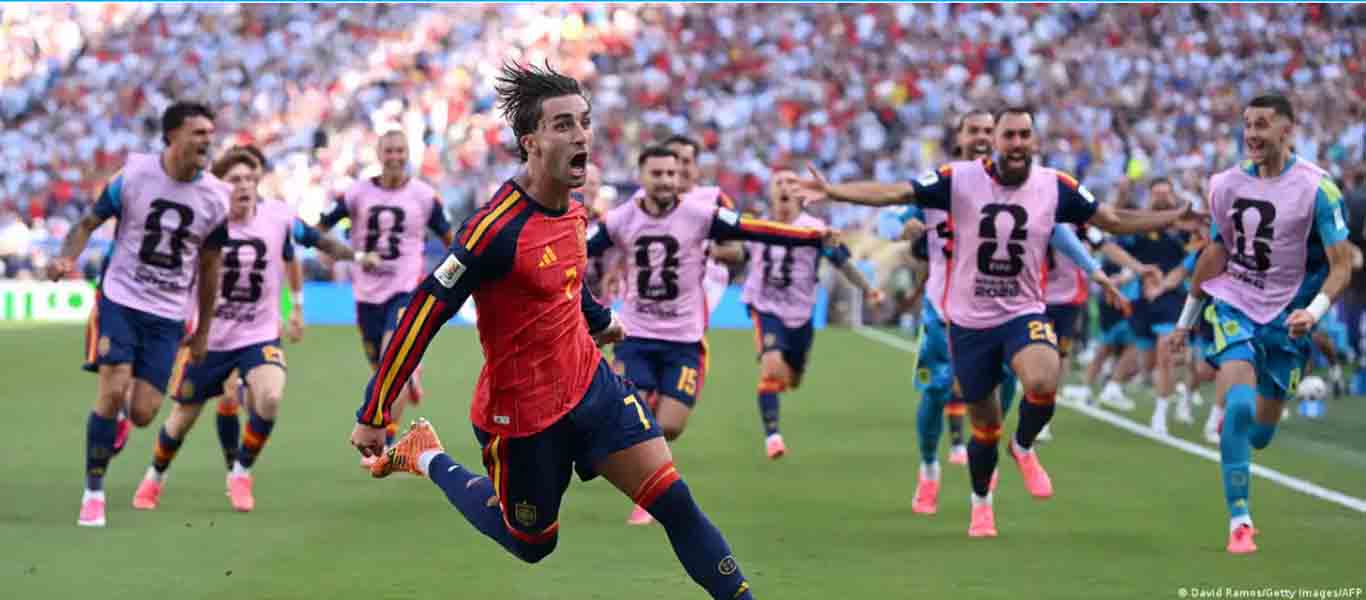
Spain beat Argentina hardly in extra time
Spain captured their second FIFA World Cup title after defeating defending champions Argentina 1-0 in extra time in a tense final at MetLife Stadium, ending Lionel Messi's hopes of signing off his World Cup career with consecutive titles.
Just as they did in the 2010 final, Spain needed extra time to settle the contest, with substitute Ferran Torres emerging as the match-winner in the 106th minute.
The breakthrough came after sustained Spanish pressure throughout the match. Right-back Pedro Porro delivered a pinpoint cross to Nico Williams, whose intelligent headed pass found Torres inside the penalty area. The substitute made no mistake, driving his finish beyond Argentina goalkeeper Emiliano Martinez to spark Spanish celebrations.
Spain dominated possession and created the majority of the chances, while Argentina struggled to threaten throughout the contest. The reigning champions failed to register a meaningful attacking spell for long periods, with veteran captain Lionel Messi largely kept under control by Spain's disciplined defence.
Messi, 39, endured one of his quietest performances of the tournament. Closely marked whenever he received the ball, the Argentine captain found little space to influence the game as Spain dictated the tempo from midfield.
Argentina's challenge suffered a major setback late in normal time when midfielder Enzo Fernandez was shown a second yellow card and sent off following a reckless challenge on Spain defender Pau Cubarsi. Reduced to 10 men, Argentina were forced deeper into defence as Spain intensified their attacks.
Spain thought they had taken the lead earlier in extra time, but the goal was ruled out following a foul on defender Nicolas Otamendi. However, the setback did little to slow Luis de la Fuente's side, who continued to press until Torres finally broke the deadlock.
The victory capped an outstanding tournament for Spain. They finished with the tournament's best defensive record, conceding only one goal, while combining disciplined defending with an attractive, possession-based style of football.
Spain also overcame a difficult knockout path, eliminating Belgium in the quarter-finals, France in the semi-finals and finally Argentina in the championship match to lift football's biggest prize.
For Argentina, the defeat brought a disappointing end to their title defence and likely marked the conclusion of Messi's remarkable FIFA World Cup journey. The eight-time Ballon d'Or winner was unable to inspire another historic comeback as Spain maintained control until the final whistle.
With the triumph, Spain become FIFA World Cup champions for the second time, adding the 2026 title to their historic victory in South Africa in 2010 and reaffirming their place among world football's elite.
