
Home Minister says safe Rohingya repatriation key to lasting crisis solution
Home Minister Salahuddin Ahmed today said sustainable, safe and dignified repatriation of Rohingya refugees to their homeland in Myanmar remains the only viable path towards a lasting solution to the protracted Rohingya crisis.
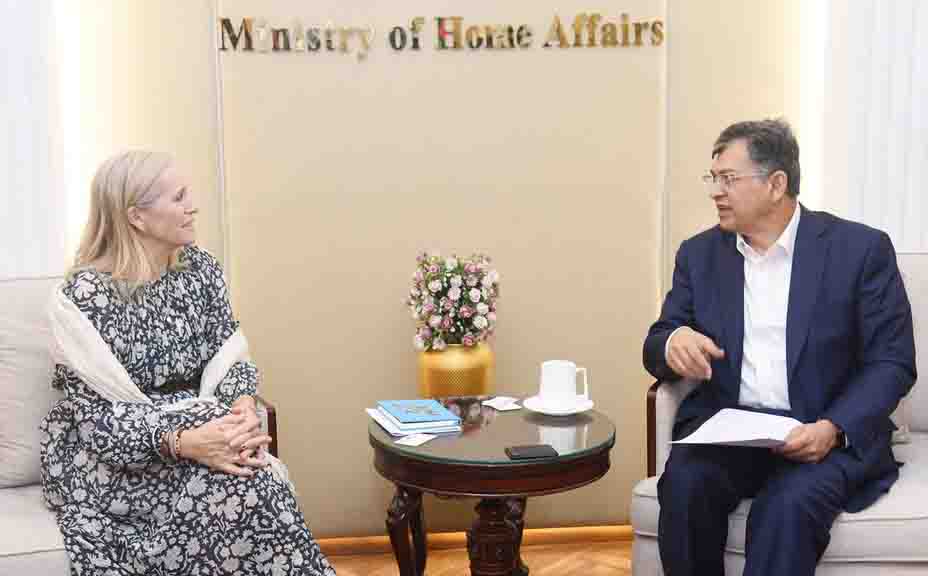
The minister made the remarks during a courtesy meeting with Kelley E. Currie, United Nations Special Rapporteur on the human rights situation in Myanmar, at his office at the Ministry of Home Affairs in Secretariat.
During the meeting, the two sides discussed Myanmar's prevailing political and human rights situation, the repatriation of Rohingya refugees sheltered in Bangladesh, border security and the overall law and order situation in Rohingya camps.
The home minister said that although official records indicate a lower figure, more than 15 lakh Rohingyas are currently living in Bangladesh.
Hosting such a large displaced population for an extended period has placed a significant economic and social burden on the country, he remarked.
The minister stressed that all international efforts should focus on ensuring the safe, voluntary and dignified return of Rohingyas to Myanmar, with their fundamental rights and security guaranteed.
Referring to the Rohingya genocide case at the International Court of Justice (ICJ), scheduled for a verdict on November 19, 2026, the minister called upon the international community to play a responsible and proactive role following the court's decision.
Kelley E. Currie highly appreciated Bangladesh's continued humanitarian assistance and shelter for displaced Rohingyas over the years.
Highlighting the longstanding human rights violation against the Rohingya community in Myanmar, she said the United Nations and its international partners were working to create conditions conducive to repatriation while ensuring citizenship rights and fundamental freedoms for the Rohingya people in their homeland.
The meeting also discussed strengthening the capacity of law enforcement agencies to tackle drug trafficking, arms smuggling and cybercrime in and around Rohingya camps.
Both sides held positive discussions on providing necessary training, capacity-building initiatives and modern technological assistance to enhance security.
The home minister also underscored the importance of coordinated diplomatic engagement by influential countries and international partners, including China, India, the United States and the European Union, to exert effective pressure on Myanmar to create a conducive environment for the safe and sustainable return of Rohingyas.
The meeting was attended, among others, by Thomas Hunecke, member of the UN Special Rapporteur's delegation, Additional Secretary of the Political and Immigration Wing of the Ministry of Home Affairs Dr Ziauddin Ahmed, and Joint Secretary of Political-1 Wing Rebeka Khan.
Bangladesh reiterated that the Rohingya crisis cannot be resolved through prolonged humanitarian assistance alone.
A sustainable solution requires the restoration of the Rohingyas' rights, security, citizenship and dignity in Myanmar, paving the way for their voluntary and safe return.
