
Legal reforms proposed to repeal special provision, set uniform marriage age of 18 for both sexes and give girls the right to annul child marriages
DHAKA, November 24, 2026: Bangladesh needs stronger legal safeguards and effective enforcement to accelerate efforts to end child marriage, as a UNFPA–UNICEF review has identified significant gaps in the existing law that leave girls vulnerable to early marriage and limit their access to justice.
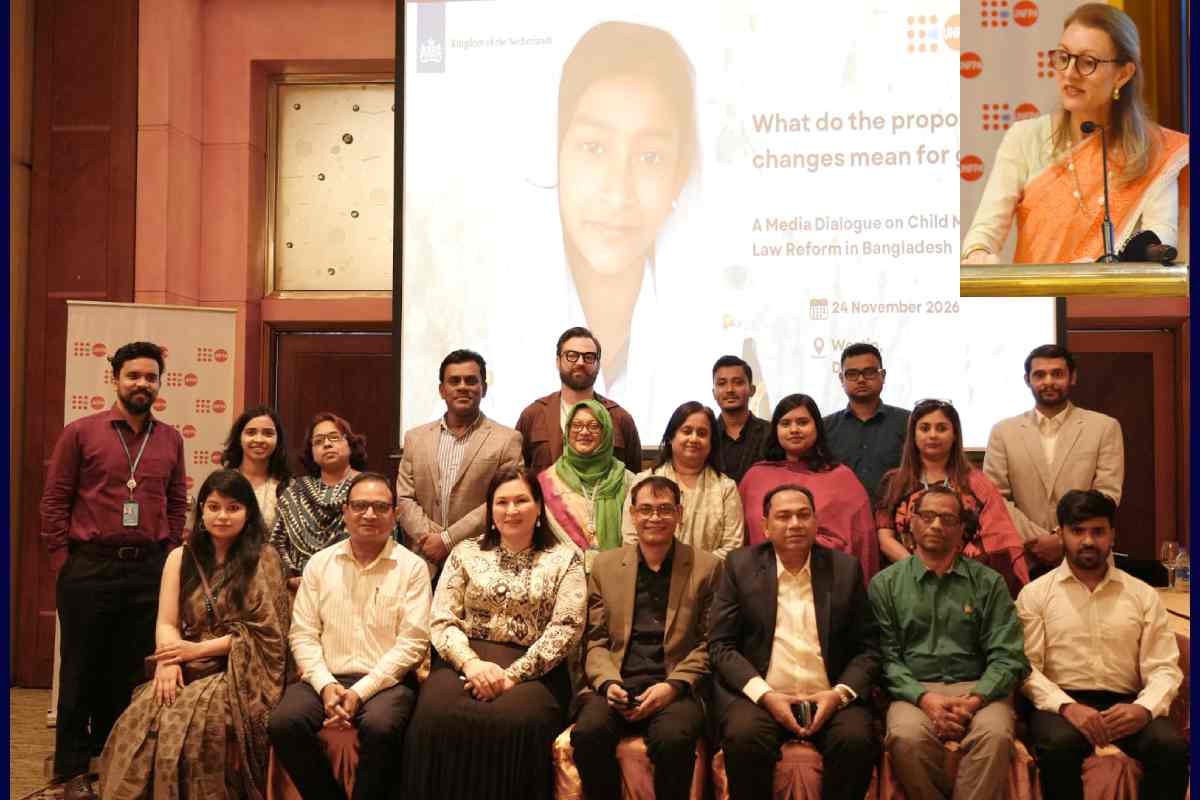
The United Nations Population Fund (UNFPA) raised the issue at a dialogue with senior editors and journalists in Dhaka on Tuesday, focusing on proposed reforms to the Child Marriage Restraint Act (CMRA) 2017 and their implications for girls across the country.
The discussion came ahead of the inaugural International Day for the Elimination of Child, Early and Forced Marriage on November 27. It brought together media professionals from newspapers, television channels, online news portals and news agencies to examine the latest evidence, proposed legal changes and the media's role in preventing child marriage.
According to the Bangladesh Multiple Indicator Cluster Survey (MICS) 2025, 47.2 per cent of women aged 20–24 were first married before reaching 18, down from 51.4 per cent in 2019.
However, the proportion of girls aged 15–19 who are currently married increased from 32.9 per cent to 38.9 per cent over the same period, raising concerns about the pace of progress in addressing the practice.
"Bangladesh has a law against child marriage, but a law only protects girls if they are aware of it, and if the justice system is accessible and fully accountable," said Catherine Breen Kamkong, UNFPA Representative in Bangladesh.
She stressed that accurate media reporting on the Child Marriage Restraint Act 2017 and the lived realities of girls married as children could help policymakers understand the urgency of legal reform.
Such reporting would also raise public awareness about the importance of enabling girls to complete their education and build their own futures rather than becoming mothers while they are still children, she added.
The joint UNFPA–UNICEF legal review found that although the 2017 Act criminalises child marriage, it does not automatically invalidate such marriages.
Under the existing law, the minimum legal marriage age is 18 for women and 21 for men. More controversially, Section 19 allows marriage below the prescribed age under "special circumstances" with a court order, without specifying a minimum age or providing adequate safeguards.
The review also highlighted a major legal gap: girls married as children have no direct mechanism under the Act to annul their marriages. Instead, they must rely on applicable personal laws, which often provide limited or no legal remedies.
Other implementation challenges include weaknesses in birth and marriage registration systems, forged birth certificates, marriages conducted through affidavits, inactive child marriage prevention committees and limited prosecutions.
To address these shortcomings, UNFPA and UNICEF have recommended repealing Section 19 and establishing a uniform minimum marriage age of 18 for both women and men.
Their recommendations also include making child marriages voidable at the option of the child, removing criminal liability for children, extending the time limit for filing complaints to six years and clarifying the jurisdiction of courts, including mobile courts, in handling child marriage cases.
UNFPA is working with the Ministry of Women and Children Affairs to advance legal reform. It is also partnering with the government and other stakeholders to keep girls in school, improve adolescents' access to sexual and reproductive health information and services, and challenge harmful social norms that perpetuate child marriage.
At Tuesday's dialogue, participating media professionals committed to strengthening evidence-based and ethical reporting on child marriage and playing a more active role in accelerating its reduction as part of broader national efforts.
The media dialogue was organised by UNFPA in partnership with the Embassy of the Kingdom of the Netherlands in Bangladesh.
