
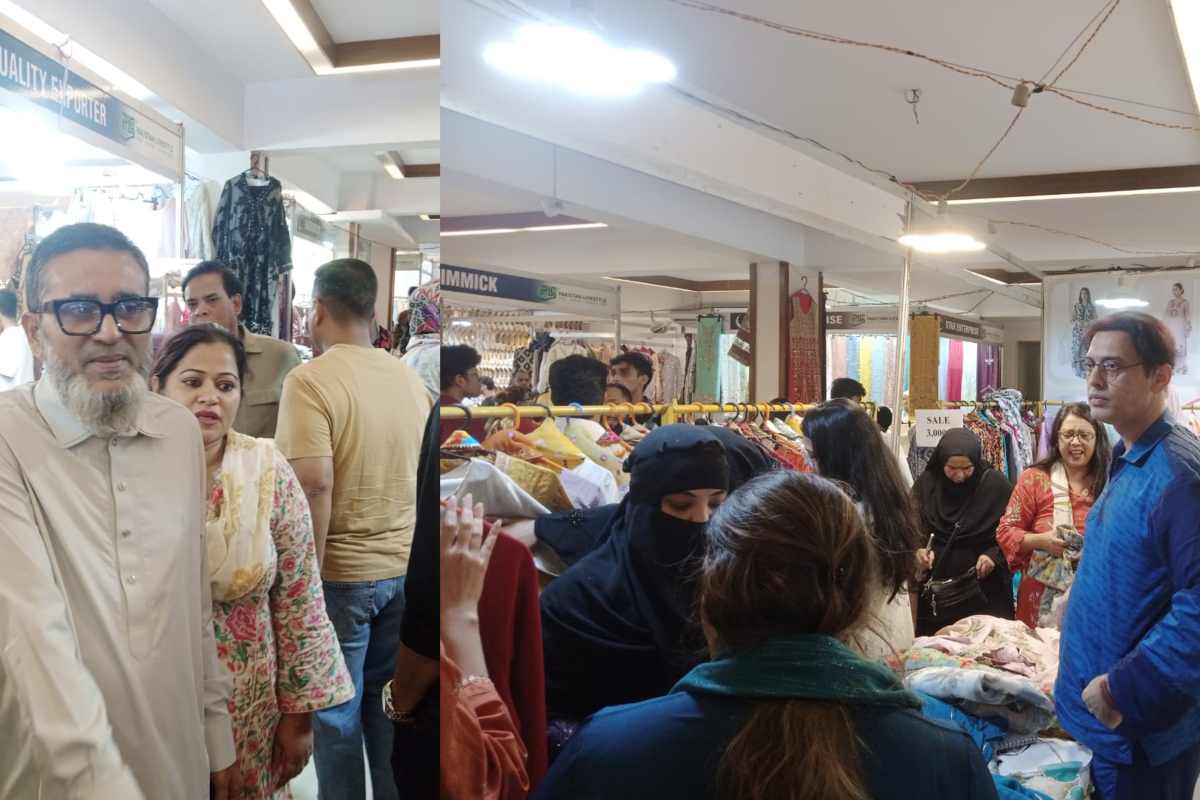
Pakistani businesses eye investment, joint ventures and local manufacturing as five-day exhibition concludes in Sylhet
DHAKA, 9 November, 2026: A five-day-long Pakistani Fashion, Wedding and Food Festival has concluded in the city amid a strong public turnout, creating opportunities for Pakistani businesses to explore the Bangladeshi market and strengthen bilateral trade and commercial ties.
The next sixth edition of the exhibition will be held at Amanullah Convention Centre in Sylhet from November 11 to 15, bringing together around 100 Pakistani exhibitors, including five textile manufacturers, alongside small and medium-sized enterprises (SMEs) and fashion designers.
Pakistan Lifestyle Owner and Chief Executive Officer Shagufta Bakht told The Shuttle Times that the event had attracted significant public interest and provided Pakistani businesses with an opportunity to assess market demand and establish commercial connections in Bangladesh.
She said the seventh edition would take place at Khulshi Convention Centre in Chattogram from November 18 to 22.
The exhibitions showcase Pakistani textile fabrics, fashion collections, bridal and wedding wear, authentic Pakistani cuisine and cultural activities, offering Bangladeshi consumers an opportunity to experience Pakistan's fashion and lifestyle products.
Pakistan Lifestyle Co-Founder and Operational Manager Khalid Hussain said the participation of a significant number of SMEs would enable businesses to promote and sell their products directly to consumers while exploring opportunities to expand their presence in Bangladesh.
He said the exhibitions were also designed to facilitate business-to-business (B2B) meetings, enabling companies from both countries to identify potential partners, establish commercial links and explore new markets.
For several Pakistani entrepreneurs, the exhibition has become more than a product showcase, serving as an opportunity to assess Bangladesh as a potential investment and manufacturing destination.
Salman Ali, owner of Kanwal Zainab, said he had travelled to Bangladesh to assess the local market and understand business opportunities.
He said the response from Bangladeshi consumers had been encouraging and expressed interest in investing in the country in the future.
Addel Iqbal Khan, owner of Aadiz Collection Private Limited, said he was pleasantly surprised by the hospitality and respect he received from Bangladeshi people and immigration officials, particularly as a Pakistani business visitor.
He said the positive experience had encouraged him to continue doing business in Bangladesh and explore opportunities to establish a commercial presence in the country.
Fashion designer and entrepreneur Afshan Durrani said she was considering setting up a manufacturing facility in Bangladesh to reduce production costs and make her products more affordable for local consumers.
She explained that importing finished fashion products into Bangladesh involves substantial customs duties. Establishing a factory locally and importing Pakistani textiles as raw materials could therefore offer a commercially viable alternative.
"If we manufacture our products in Bangladesh using Pakistani fabrics as raw materials, it will be more profitable, and the finished products will be more affordable for local consumers," she indicated.
Similarly, Syeda Saman Kazmi, owner and chief designer of Azal Studio, said she was gathering information about the feasibility of establishing a factory in Bangladesh.
She expressed satisfaction with the growing interest among Bangladeshi consumers in Pakistani fabrics, particularly lawn fabrics, which she said could create further business opportunities.
Kazmi said she initially preferred to enter the Bangladeshi market through a joint venture with a local business partner before considering establishing her own retail outlet in the future.
The growing interest in local manufacturing, joint ventures and retail expansion indicates the potential for a broader commercial partnership between Bangladeshi and Pakistani businesses beyond traditional consumer trade.
The exhibitions are expected to provide a platform for Pakistani companies to understand Bangladesh's consumer preferences, identify local business partners and explore opportunities in the country's growing fashion and textile market.
For Bangladesh, such partnerships could also create opportunities for investment, employment and technology and design exchange, while allowing consumers greater access to Pakistani fashion products at competitive prices.
The upcoming Sylhet and Chattogram edition is expected to provide another opportunity to deepen business engagement and explore the prospects of expanding Pakistan-Bangladesh trade relations through private-sector cooperation.
