
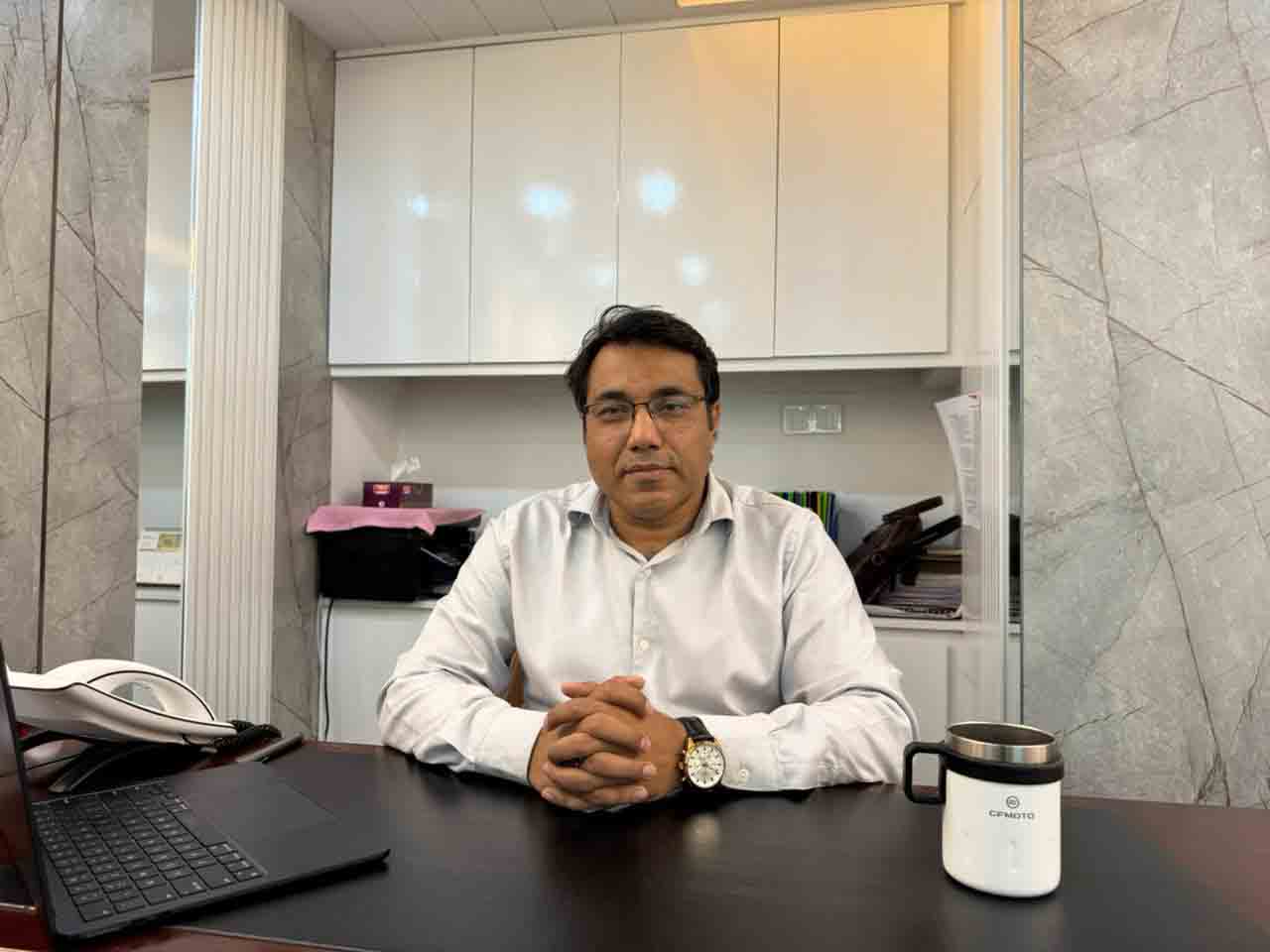
EV Boom and Future of Electric Motorcycles
At a pivotal moment for Bangladesh’s evolving mobility sector, electric vehicles are emerging as a practical solution to rising urban congestion and fuel costs. In an exclusive conversation, CFMOTO Bangladesh CEO Rezaul Karim shares his vision for a cleaner, smarter automotive future—and the critical steps needed to turn Bangladesh into a regional EV hub.
Rezaul Karim: The Man Behind the Wheels of Bangladesh’s EV Future
Bangladesh’s automobile industry is currently at an important turning point. With rapid urbanization and a growing demand for affordable and efficient mobility, the way people think about transportation is evolving. Electric vehicles are gradually becoming part of this shift—not only in cars, but also in motorcycles and three-wheelers. While challenges remain, it is clear that the industry is moving toward a more modern, efficient, and sustainable future.
This makes it a timely opportunity to hear from someone deeply involved in the sector—Mr. Rezaul Karim, CEO of CFMOTO Bangladesh.
Mr. Karim has built extensive experience across leading companies such as CFMOTO and Runner Automobiles PLC. In this conversation, we look to gain his insights on the future of the automobile and EV industry in Bangladesh, the opportunities ahead and the steps needed to unlock its full potential.
1. Bangladesh’s mobility landscape is evolving rapidly. How do you envision the automobile industry transforming over the next decade?
Mr. Karim: Over the next decade, I believe Bangladesh’s automobile industry will move toward smarter, cleaner, and more efficient mobility. As cities become more congested and fuel costs continue to rise, electric mobility will become increasingly relevant.
In that transition, EV 2Ws will play a very important role because they are practical, affordable, and highly suitable for our market. We will also see stronger digital integration, better financing access, and more demand for connected mobility solutions. In my view, long-term leadership will rest with companies that can translate technological capability into solutions that are genuinely relevant to the local market.
2. Drawing from your leadership experience what structural changes are needed for Bangladesh to emerge as a regional automotive hub?
Mr. Karim: To become a regional automotive hub, Bangladesh needs policy consistency first. Investors need long-term clarity, and the industry needs confidence that the market is moving in a stable direction. At the same time, we must strengthen our supplier ecosystem, improve logistics, and develop more technical talent.
I believe EV 2Ws can be one of the most practical starting points, as they reduce dependence on fuel, ease pressure on the energy system, and offer a faster path toward more sustainable mobility. If we build this foundation properly, Bangladesh has every opportunity to become a serious regional player.
3. What unique opportunities and challenges does Bangladesh face in accelerating EV adoption compared to other emerging markets?
Mr. Karim: I agree that all three—affordability, infrastructure, and policy support—are essential for mass adoption. At the same time, I would also emphasize superior product quality and stronger features as equally important triggers in building customer confidence.
In Bangladesh, consumers respond not only to cost, but also to durability, reliability, comfort, and modern technology.When a vehicle offers clear everyday value through better quality and smarter features, adoption becomes much easier and more sustainable. Once that confidence is established in the market, infrastructure and policy support can accelerate growth much more quickly.
4. What do you see as the tipping point for mass EV adoption in Bangladesh; affordability, infrastructure, or policy support?
Mr. Karim: I agree that all three—affordability, infrastructure, and policy support—are essential for mass adoption. At the same time, I would also emphasize superior product quality and stronger features as equally important triggers in building customer confidence. In Bangladesh, consumers respond not only to cost, but also to durability, reliability, comfort, and modern technology.
When a vehicle offers clear everyday value through better quality and smarter features, adoption becomes much easier and more sustainable. Once that confidence is established in the market, infrastructure and policy support can accelerate growth much more quickly.
5. How critical is local manufacturing in building a sustainable EV ecosystem in Bangladesh and what steps should be taken to strengthen it?
Mr. Karim: Local manufacturing is absolutely critical if Bangladesh wants to build a sustainable and competitive EV ecosystem. Without it, the industry remains dependent on imports, vulnerable to currency pressure, and limited in technology transfer and long-term value creation.
At the same time, strong government policy support is essential to make this transition viable through incentives, regulatory clarity, industrial infrastructure, and consistent quality standards. The right path is phased localization, especially in EV 2Ws, batteries, plastics, electronics, and assembly-related systems.In the long run, a successful EV ecosystem will be one where policy and industry work together to create jobs, skills, and a stronger local supply chain.
6. Charging infrastructure is still a major barrier, what scalable and realistic solutions do you believe can work in the Bangladesh context?
Mr. Karim: I think Bangladesh needs a practical charging model, not an overly complicated one. For EV 2Ws, home charging, workplace charging, and small commercial charging points can already serve a large share of market demand.
In some segments, especially delivery and urban fleet use, battery swapping can also be highly effective. Rather than waiting for a perfect nationwide system, we should expand through dealer networks, service points, and existing retail infrastructure. Scalability will come from convenience, density, and solutions that fit the way people actually use vehicles every day.
7. If you were advising policymakers, what are the top three actions the government should prioritize to accelerate EV growth?
Mr. Karim:
First, the government should establish a clear and stable EV policy with long-term direction, tax support, and consistent regulatory backing.
Second, it should accelerate charging and battery ecosystem development through faster approvals, infrastructure incentives, and private-sector participation.
Third, I would strongly emphasize the need for bank-led EMI facilities supported by government policy, because financing access is critical for mass-market adoption. Alongside that, local assembly and manufacturing should be encouraged so EV growth also creates industrial value within Bangladesh. Good policy should make EVs easier to finance, easier to use, and easier to build locally.
8. How is consumer behavior in Bangladesh shifting when it comes to vehicle ownership and adoption of new mobility technologies?
Mr. Karim: Consumer behavior is definitely changing. People are becoming more value-conscious, more technology-aware, and more focused on the total ownership experience rather than just the purchase price.
Younger consumers especially are showing greater openness to electric mobility when the product feels modern, practical, and financially sensible. This shift naturally supports EV 2Ws because they offer innovation in a format that is still highly accessible. Overall, I would say the market is moving from traditional buying habits toward much smarter mobility decisions.
9. What is your strategy for entering and expanding in the Bangladesh market?
Mr. Karim: Our strategy is to enter the Bangladesh market with a premium, technology-driven mobility offering and then scale through customer trust and network strength. We want to differentiate through advanced products, strong after-sales support, and a clear long-term brand position.
ZEEHO gives us that advantage with features like a 6.2” TFT display, advanced radar, ABS and TCS, smart OTA capability, and 0–50 km/h in ≤ 4.0 seconds. Its unique single swingarm design also strengthens the product’s premium and futuristic appeal. From there, growth will come by proving that high-quality, feature-rich EV 2Ws represent the future of urban mobility in Bangladesh.
10. What innovations, such as battery swapping or smart mobility, do you think will define the next phase of the automotive industry here?
Mr. Karim: The next phase of the industry will be defined by useful innovation rather than unnecessary complexity. Battery swapping, connected vehicle functions, app-based diagnostics, and smart fleet management are all expected to become increasingly important in Bangladesh.
The biggest impact will come from innovations that improve uptime, enhance user experience, and reduce the total cost of ownership. That is why EV 2Ws are such a strong platform, because they can adopt and scale these innovations much faster. In fact, many of these features are already available today, and ZEEHO is already offering them to the market.
11. If you had to define one bold vision for Bangladesh’s mobility ecosystem by 2035, what would it look like and what needs to happen today to achieve it?
Mr. Karim: My vision for 2035 is a Bangladesh where clean, connected, and locally built mobility becomes part of everyday life. I see EVs becoming mainstream, with EV 2Ws leading urban mobility because they are the most practical and efficient fit for our market. I would like to see strong local manufacturing, capable supplier networks, reliable charging access, and globally competitive standards.
But to achieve that, we need to act now with policy clarity, industrial investment, and stronger consumer awareness. If we move decisively today, Bangladesh can become both a leading EV market and a respected mobility producer.
