
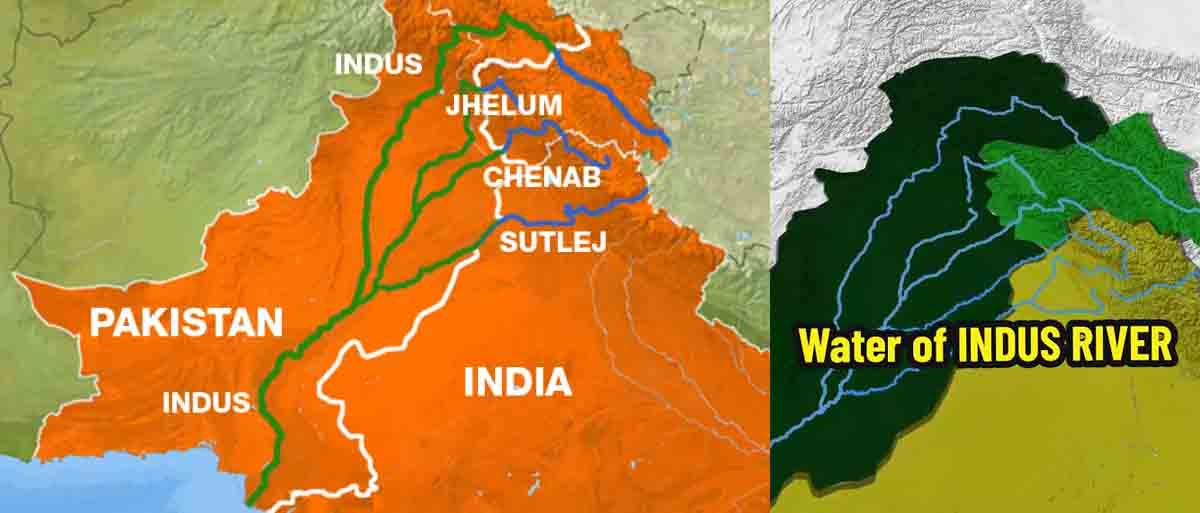
Kashmir-Indus Water Dispute Escalates, Raising Global Concerns Over South Asian Stability
DHAKA, July 27, 2026 — The decades-old dispute between India and Pakistan over Kashmir and the Indus river system has entered a new phase, with growing diplomatic tensions, competing legal claims and international concern raising questions about the future of one of the world's most enduring water-sharing agreements.
The 1960 Indus Waters Treaty (IWT), brokered by the World Bank, has survived multiple wars and prolonged political crises between the two nuclear-armed neighbors. However, recent developments suggest the treaty is facing its most serious challenge since it was signed more than six decades ago.
India has recently hardened its position, arguing that the treaty can no longer function in its existing form because of changing security realities and what New Delhi describes as Pakistan's continued support for cross-border terrorism.
Indian officials have stated that the agreement requires a complete renegotiation, maintaining that the geopolitical circumstances under which the treaty was signed in 1960 have fundamentally changed. They also reiterated that India's position on the treaty remains unchanged following recent diplomatic exchanges at the ASEAN Regional Forum.
New Delhi has also defended the acceleration of hydropower and water infrastructure projects in Jammu and Kashmir, saying such projects comply with India's interpretation of the treaty and are intended to maximize the country's legitimate utilization of river resources.
Pakistan has strongly rejected India's position, accusing its neighbor of attempting to use water as a strategic weapon.
Speaking at an international seminar in Islamabad, Pakistani Foreign Minister Ishaq Dar warned against what he described as the "weaponization of water," arguing that unilateral actions affecting river flows violate international commitments under the Indus Waters Treaty.
Islamabad has also intensified its diplomatic campaign by seeking international support, including from Canada and other partners, to preserve the treaty and encourage renewed dialogue. Pakistani officials maintain that water should never become an instrument of political pressure or regional conflict.
The dispute has increasingly moved beyond bilateral diplomacy.
During the recent ASEAN Regional Forum, Pakistan raised both the Kashmir issue and the Indus Waters Treaty before regional partners, while India strongly objected, insisting that Kashmir and related water issues remain strictly bilateral matters and should not be internationalized.
Analysts say the growing international discussion reflects broader concerns over regional stability, food security and climate resilience in South Asia.
Experts warn that the dispute is no longer solely about geopolitics.
The Indus Basin supports nearly 300 million people, providing irrigation, drinking water and hydroelectric power across both countries.
Rapid glacier melt in the Himalayas, changing monsoon patterns, declining groundwater reserves and increasing water demand are creating additional pressure on one of the world's most important transboundary river systems.
International water experts argue that without greater cooperation, climate change could significantly increase the risks associated with future water shortages and regional instability.
Several Indian hydropower projects on the Chenab and other western rivers remain at the center of the dispute.
Pakistan argues that some of these projects could affect downstream water availability during crucial agricultural periods, while India maintains they are fully consistent with the treaty's provisions governing non-consumptive use and hydroelectric generation.
The disagreement continues through legal and technical mechanisms established under the treaty, although recent political tensions have complicated those processes.
The escalating dispute has attracted widespread attention from major international news organizations.
Reuters has previously described the Indus dispute as one of the world's most significant examples of water becoming intertwined with geopolitical rivalry, particularly in the context of Kashmir. The Associated Press (AP) recently reported Pakistan's warning against the "weaponization of water" and concerns over the treaty's future. International broadcasters including BBC, CNN, Al Jazeera, The New York Times, Financial Times, and The Guardian have also continued to monitor developments surrounding Kashmir, regional security and the Indus river system.
Policy experts believe the future of the Indus Waters Treaty will have implications far beyond India and Pakistan.
The agreement has long been regarded as one of the world's most successful examples of transboundary water cooperation. However, rising geopolitical tensions, increasing water demand, infrastructure expansion and climate change are testing its resilience.
With diplomatic rhetoric intensifying and both countries maintaining sharply different interpretations of the treaty, analysts say continued dialogue and adherence to international water-sharing principles will be essential to preventing the Indus Basin from becoming a larger source of regional instability.
