
Kaspersky Identifies Barcode Scanner Vulnerabilities Threatening Warehouses
October 29, 2026: Modern warehouses are complex technological ecosystems, with global e-commerce sales nearly doubling since 2019 to over $6 trillion. Kaspersky Security Services researchers have identified a cyberattack vector exploiting a vulnerability in a barcode scanner model from a major manufacturer, with implications for warehousing, retail and other sectors.
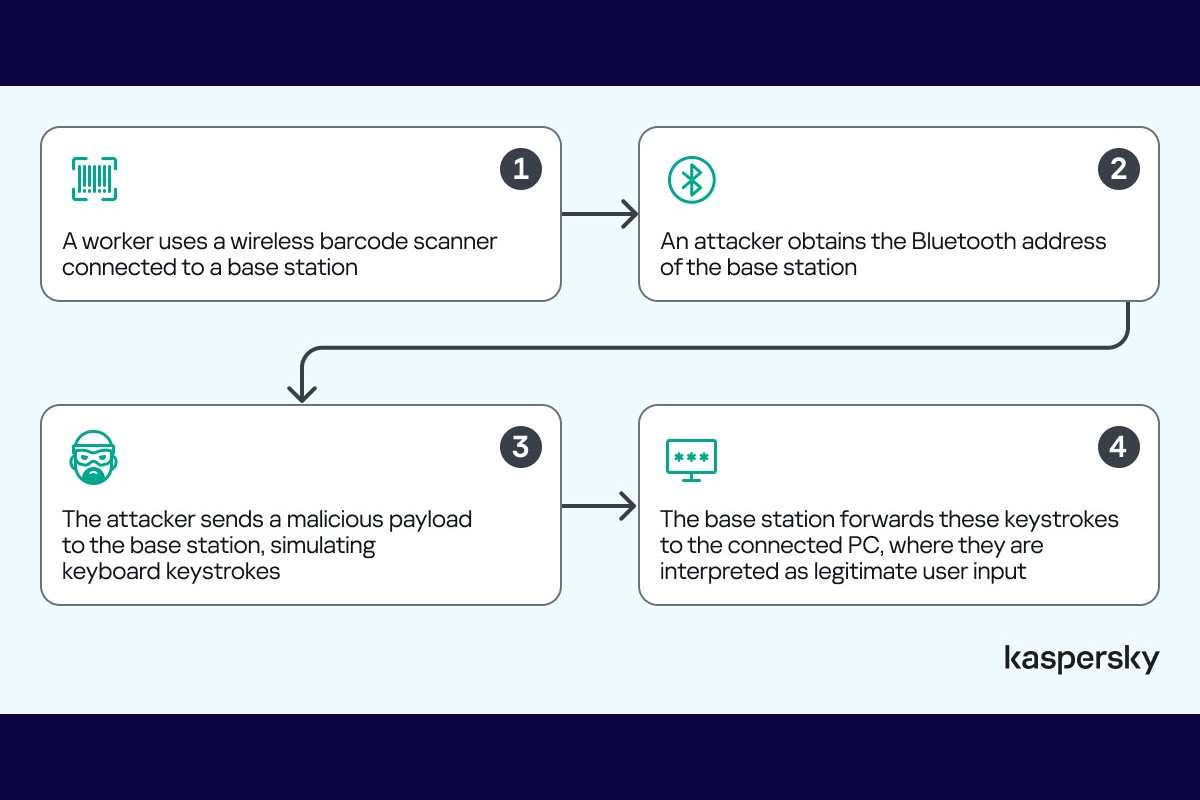
Typically, handheld scanners communicate with a base station connected to a workstation or business system. Researchers found that the lack of authentication between scanners and base stations could allow attackers within wireless range to inject keystrokes and potentially achieve remote code execution without user interaction.
In a hypothetical attack, an attacker obtains the base station’s Bluetooth address through passive eavesdropping and sends a malicious payload simulating keyboard inputs. The base station forwards these inputs to a connected PC, where they may execute unauthorised commands. Similar attack patterns were observed across devices from multiple vendors.
This could provide an initial foothold within the warehouse network, potentially exposing critical operational systems. Similar scenarios may affect Portable Data Terminals (PDR) and thermal printers, enabling access to Warehouse Management Systems (WMS).
“Modern retail and logistics are profoundly digital, from enterprise-wide management platforms down to every device in a worker’s hands. This pervasive connectivity means that any technology at any tier can become an entry point for a cyberattack capable of destabilizing the entire ecosystem — as our research shows, even a single barcode scanner. The warehouse sector, and the broader retail industry, should treat cybersecurity as a top priority across every layer of their operations,” said Sergey Sidorov, Head of Industrial Security Services at Kaspersky.
Kaspersky recommends verifying devices before network connection, disabling unused Bluetooth interfaces, enforcing strong authentication, segmenting networks, promptly applying security updates, restricting account permissions and conducting regular attack-path exercises, including insider-threat scenarios.
Kaspersky ICS Security Assessment identifies vulnerabilities in industrial control systems (ICS), operational technology (OT) and networked devices, evaluating configurations and access paths without disrupting operations. Kaspersky Industrial Cyber Security (KICS) further strengthens infrastructure visibility and protection for industrial organisations, including logistics companies, without compromising system availability.
Read the full security audit of the warehouse digital ecosystem on the Securelist.com.
