
Youth Voices Drive Policy Change in Bangladesh Research Summit
The Gender and Adolescence: Global Evidence (GAGE), supported by the UK Government’s Foreign, Commonwealth and Development Office (FCDO), in partnership with United Nations Population Fund (UNFPA) and the University of Chittagong, is advancing evidence-based policy and programming to improve adolescent and youth wellbeing in Bangladesh.
A week-long series of events was held across Chattogram, Cox’s Bazar and Dhaka, including an international academic conference, Rohingya youth community feedback sessions, and United Nations briefings focused on strengthening adolescent-responsive policies and programmes.
Bangladesh is home to around 36 million adolescents aged 10–19, nearly one-quarter of its population. While the country has made notable progress in education and social development, challenges persist, including school dropouts, high rates of child marriage, and limited access to adolescent sexual and reproductive health information. The situation is further complex in refugee contexts, with around 1.2 million Rohingya refugees living in Cox’s Bazar, many of them young people facing uncertainty and limited opportunities.
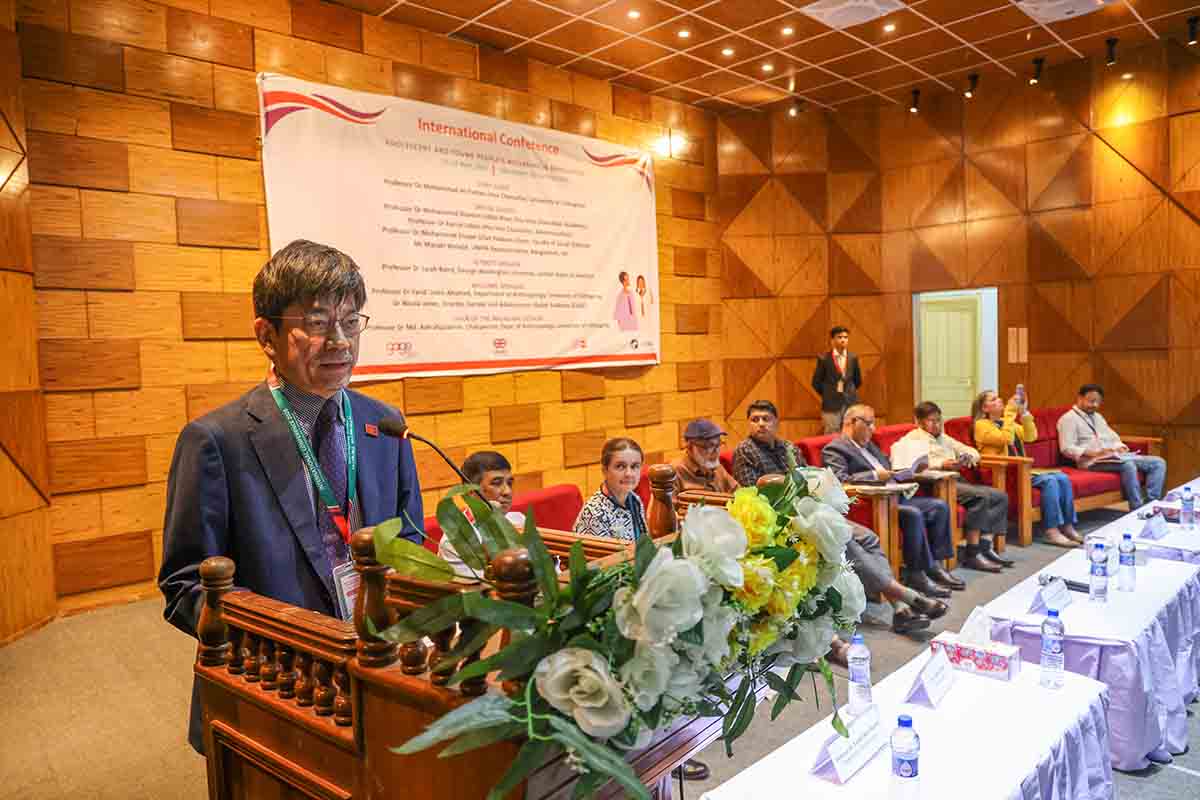
The International Conference on Adolescent and Young People’s Wellbeing in Bangladesh, held on 11–12 May 2026 at the University of Chittagong, brought together more than 300 researchers, students, and development practitioners.
Discussions focused on education and employment, health and sexual and reproductive health rights, psychosocial wellbeing, and cross-cutting issues such as climate resilience, digital access, and humanitarian challenges.
Speaking at the conference, Professor Dr. Mohammad Al-Forkan, Vice Chancellor of the University of Chittagong, said:
“Let us harness the insights of researchers, practitioners and policymakers to ensure that every adolescent in our country has the opportunity to thrive.”
British High Commission Dhaka Social Development Adviser Tahera Jabeen highlighted the importance of evidence-based policymaking, stating that strong research is essential to shape effective policy and improve adolescent outcomes.
Masaki Watabe, Officer-in-Charge, UNFPA Bangladesh, emphasized youth participation in decision-making, saying initiatives for adolescents must be created “with them, not just for them,” and that young people should move from consultation to leadership roles.
As part of the programme, GAGE conducted two capacity-building workshops for early-career researchers on quantitative data analysis and participatory qualitative methods, aiming to strengthen national research capacity and improve understanding of adolescent experiences in Bangladesh.
On 13 May 2026, partners held community feedback sessions in Cox’s Bazar with Rohingya adolescent girls and boys, sharing research findings and ensuring youth participation in interpreting the results of the study.
The programme concludes with a UNFPA-hosted briefing in Dhaka titled “Growing up in Bangladesh: Longitudinal Evidence on Adolescent Wellbeing and Transitions 2016–2026,” focusing on education, health, mental wellbeing, and protection from gender-based violence.
The series underscores a growing consensus among policymakers, researchers, and international partners: young people’s voices are essential in shaping evidence-based development policy and long-term solutions in Bangladesh.
