
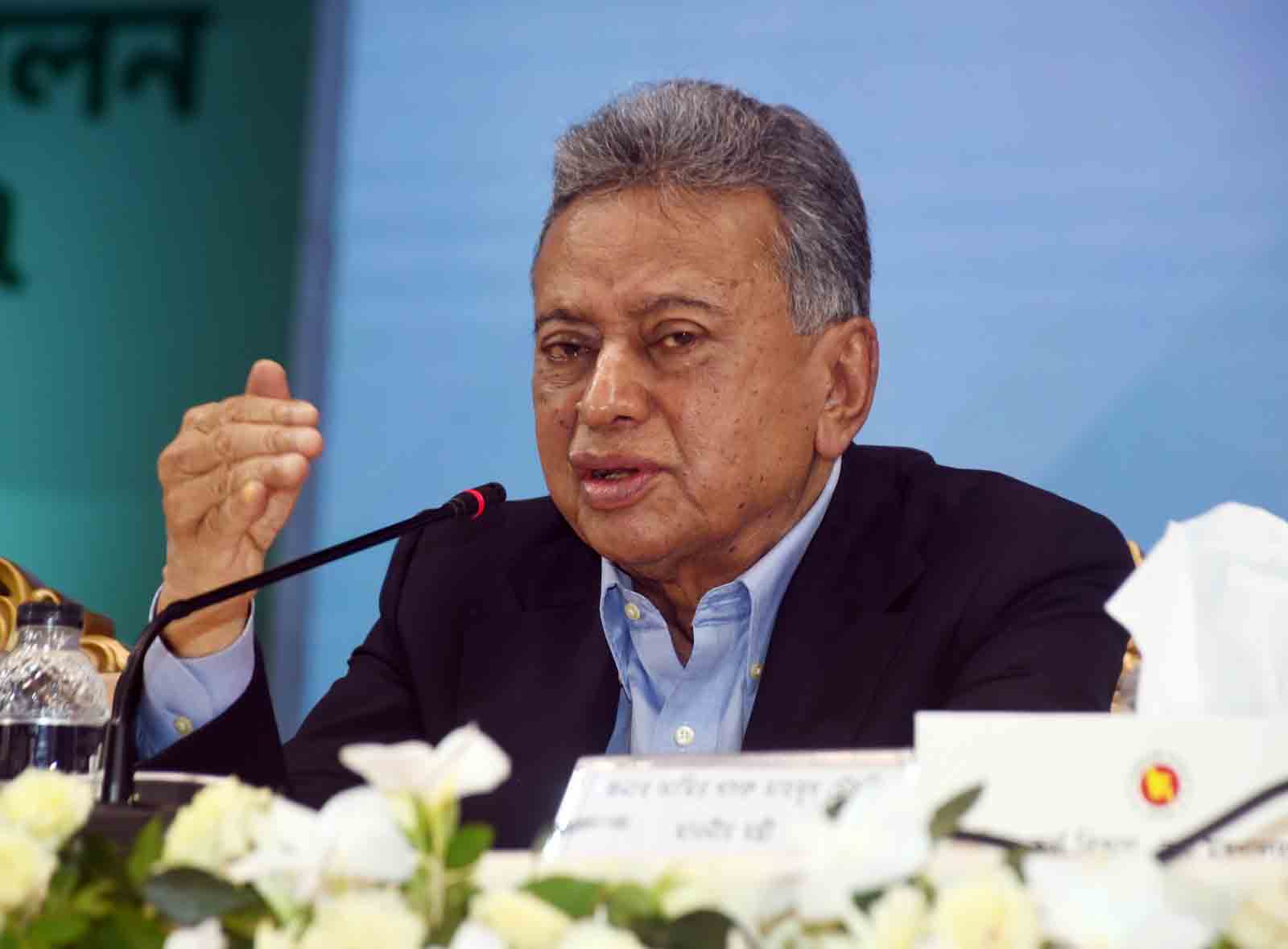
Government promotes investment-driven growth through reforms and social protection.
Finance Minister Amir Khosru Mahmud Chowdhury today said Bangladesh must gradually move away from excessive dependence on borrowings and transition towards an investment-driven economy, with regulatory reforms, private-sector participation and expanded social protection programmes playing key roles in the process.
“We have to move towards an investment-driven economy. If we continue to rely excessively on borrowings, especially from local banks, sustainable growth will be difficult to achieve,” he said.
Addressing a post-budget press conference at the Osmani Memorial Auditorium in the capital this afternoon, the minister said government borrowings from domestic banks have historically crowded out private-sector investment and limited economic dynamism.
The finance minister noted that the government has already reduced planned bank borrowings compared with the previous fiscal year and intends to further diversify financing sources.
“We are gradually moving from a debt-dependent economy towards equity and investment-driven economy,” he said.
A central pillar of the government’s strategy, he said, is a broad deregulation agenda aimed at reducing bureaucratic barriers and improving the overall investment climate.
“If we cannot implement deregulation effectively, neither local nor foreign investors will invest in Bangladesh,” he warned.
To ensure implementation, the government plans to establish a high-powered oversight mechanism and digital monitoring system to track delays and hold officials accountable.
The minister said investment reforms would be accompanied by extensive social protection programmes to ensure that economic growth remains inclusive.
Highlighting the Family Card programme, he said the initiative is designed to support vulnerable households without any political discrimination.
“We are providing services to citizens, not to political parties. The budget is for every citizen of Bangladesh,” he said.
According to the minister, a pilot phase involving around 37,000 beneficiaries has already produced encouraging results.
“We were surprised by the success of the pilot programme. The error rate was only over one percent, and we are correcting those issues before expansion,” he said.
The government plans to expand the programme significantly, eventually covering around 4.1 million women across the country in the next fiscal year.
The finance minister stressed that beneficiaries are selected through objective criteria rather than political considerations.
He also highlighted other major initiatives, including Farmer Card, universal healthcare programmes, skills-development projects and investments in the creative economy.
Referring to the creative economy initiative, the minister said the government aims to support rural artisans, musicians, performers, designers and cultural entrepreneurs by providing financing, design support, training and market access.
“Bangladesh has enormous untapped potential in culture, tourism and creative industries. We want to monetise these opportunities and bring millions of people into the economic mainstream,” he said.
The minister said creative industries would also complement tourism development and strengthen Bangladesh’s cultural presence internationally.
Reiterating the philosophy behind the budget, he said the government’s objective is to ensure that every segment of society—from farmers and workers to entrepreneurs and artists—benefits from economic growth.
“Bangladesh comes first. This budget has been designed for all citizens, regardless of background or political affiliation,” he said, adding that they have already taken decision that there would be no political appointment in the financial sector.
Information and Broadcasting Minister Zahir Uddin Swapon, Power, Energy and Mineral Resources Minister Iqbal Hassan Mahmood, Education minister Dr. A N M Ehsanul Hoque Milon, Health and Family Welfare Minister Sardar Md. Sakhawat Husain, Agriculture Minister Mohammed Aminur Rashid, State Minister for Planning Zonayed Abdur Rahim Saki, Adviser to the Prime Minister on Post, Telecommunication and Information Technology Rehan Asif Asad, Prime Minister's Adviser and PMO Spokesperson Dr Mahdi Amin, Prime Minister's Special Assistant on Investment and Capital Market Tanvir Gani, Cabinet Secretary Nasimul Gani, Principal Secretary to the Prime Minister A B M Abdus Sattar, Bangladesh Bank Governor Md Mostaqur Rahman, Finance Secretary Dr. Md Khairuzzaman Mozumder, chairman of the National Board of Revenue (NBR) Md. Abdur Rahman Khan were present at the dais.
