
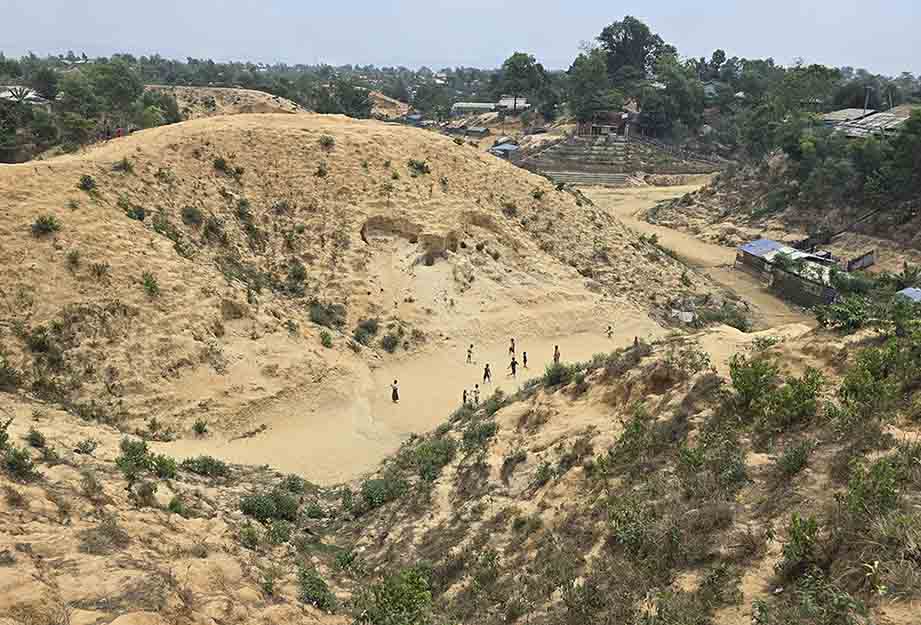
Urgent action to prevent deadly monsoon landslides
COX’S BAZAR: The Food and Agriculture Organization of the United Nations (FAO) has launched a emergency initiative to protect more than 45,000 Rohingya refugees from life-threatening landslides ahead of the monsoon season, with funding support from the Bangladesh as Humanitarian Fund.
The programme will stabilise at least 170 hectares of vaulnarable hill areas across 85 locations in refugee camps in Ukhia and Teknaf. Interventions include planting deep-rooted vegetation, constructing bamboo crib walls and contour trenching, as well as Cash-for-Work opportunities for 800 beneficiaries.
FAO officials said the measures aim to reduce immediate risks of landslides by strengthening soil stability, protecting shelters, evacuation routes and access to essential services during heavy rainfall.
FAO Representative Jiaoqun Shi warned that deforested slopes and intense monsoon patterns are increasing to vulnerable communities. He emphasised that nature-based solutions offer cost-effective protection while generating income opportunities for displaced populations.
Since 2018, FAO has stabilised more than 3,500 hectares of degraded land in Cox’s Bazar under its SAFE+ programme, demonstrating the effectiveness of ecosystem-based disaster risk reduction.
The initiative aligns with the Rohingya Joint Response Plan, prioritising slope stabilisation as a life-saving intervention. Local community leaders, including majhis and imams, will support implementation to ensure sustainability and local ownership.
With climate risks intensifying, the project highlights the growing importance of early, nature-based interventions in safeguarding lives and reducing future humanitarian crises.
