
Experts Urge Targeted Mosquito Control as Dengue Deaths Reach 364
As dengue infections and deaths in the country remain at an alarming level, the government and the two city corporations in the capital have intensified cleanliness drives, mosquito control, public awareness campaigns and preparedness for medical services to prevent the spread of the disease.
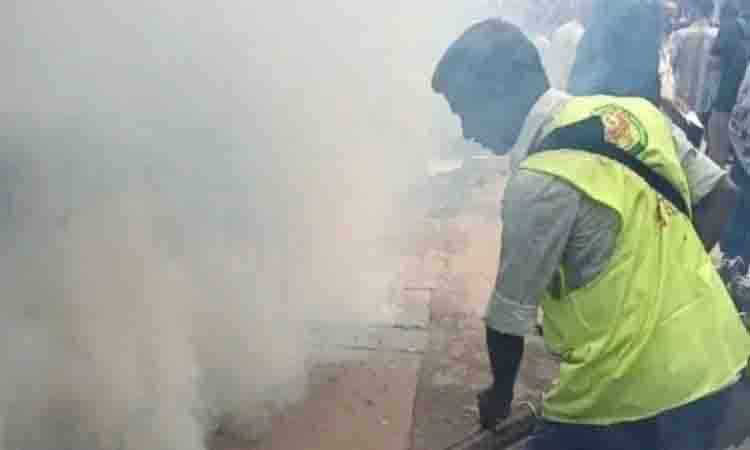
However, experts have opined that spraying insecticides or conducting cleanliness drives alone is not enough to control the dengue menace. They emphasised identifying and destroying the actual breeding grounds of Aedes mosquitoes, assessing the effectiveness of insecticides and increasing regular surveillance in high-risk areas.
According to the Directorate General of Health Services (DGHS), 116,990 dengue patients have been hospitalised in the country till October 21 this year and 364 died of the disease.
Entomologist and Professor of Zoology Department at Jahangirnagar University Dr Kabirul Bashar told BSS that the dengue situation may remain at an alarming level throughout this month and November as well.
“Although the outbreak may decline somewhat in November, it may be necessary to wait until December for significant improvement,” he said.
Prof Bashar said surveillance at the field level needs to be increased alongside continuing preventive activities to control the infection.
Noting that the first task in controlling dengue is to identify the breeding grounds of Aedes mosquitoes, he suggested regular monitoring to determine where mosquitoes are breeding, in which types of places larvae are found in greater numbers and how effective the insecticides used for mosquito control are.
Indiscriminate application of insecticides without identifying breeding grounds cannot yield the desired results, the entomologist said.
Aedes mosquitoes do not breed only in drains or along roads, he said, adding, they can breed in houses, under-construction buildings, basements and parking areas of buildings, containers left on rooftops and verandas, flowerpots, water tanks and stagnant clear water accumulated in different places.
Water accumulated in hidden areas of buildings or between two buildings can also become breeding grounds, Prof Bashar said, adding, such places often remain outside regular cleanliness drives.
“As a result, even if roads and drains are cleaned, mosquitoes can spread again from breeding grounds inside buildings,” he said.
Since taking office in February this year, the present government has taken various measures to tackle the dengue situation.
The Health and Family Welfare Ministry has announced a three-month awareness programme. Besides, around 3,000 doctors have been provided refresher training on dengue patient management. Initiatives have also been taken to ensure adequate beds, testing kits and saline at government hospitals across the country for dengue treatment.
Dhaka North City Corporation (DNCC) has intensified mosquito control and cleanliness activities in the capital. The city corporation is regularly conducting larviciding, fogging and larva destruction, and taking necessary measures after identifying mosquito breeding grounds and hotspots.
Cleanliness drives, public awareness rallies and mobile court operations to destroy Aedes mosquito larvae are also being conducted in different areas.
The DNCC has opened several mobile phone numbers for emergency health advice, information related to mosquito control and communication regarding larva testing amid the dengue situation. The numbers are 01716-063425, 01773-393276 and 01715-238754.
DNCC Administrator Md Safiqul Islam Khan told BSS that various initiatives have been taken alongside regular larviciding and fogging to control dengue.
Activities to raise public awareness are being conducted involving members of the Bangladesh National Cadet Corps (BNCC) and Bangladesh Scouts, he said, adding, views-exchange meetings were held with imams and khatibs of mosques and heads and principals of schools, colleges and madrasahs.
Noting that public awareness is the most important factor in controlling dengue, the DNCC administrator urged people not to allow water to accumulate anywhere on rooftops or verandas of their homes.
Meanwhile, Dhaka South City Corporation (DSCC) is conducting integrated cleanliness activities by dividing its 75 wards into 10 zones. The city corporation plans to continue the programme for the next three months by conducting special drives every Saturday.
In its pre-monsoon survey, 63 of the 75 wards were identified as dengue-prone. Based on the findings, mosquito control activities have been intensified in the high-risk areas.
Talking to BSS, DSCC Administrator valiant freedom fighter Md Abdus Salam said dengue has now turned into a national crisis.
“The Prime Minister has given the highest priority to dengue prevention and treatment and issued directives accordingly,” he said, adding, however, the disease cannot be prevented through government initiatives alone; people must also be aware and responsible.
Public health expert and former Chief Scientific Officer of the Institute of Epidemiology, Disease Control and Research (IEDCR) Dr Mushtaq Husain said that merely spreading smoke with fogging machines or conducting seasonal inspections and collecting fines is not enough.
“Regular measures must be taken to destroy larvae in various places, including under-construction buildings, abandoned vehicles, water accumulated on rooftops, open drums, flowerpots and broken containers,” he said.
The expert said many people in coastal areas store rainwater for long periods. In such cases, it is essential to train people and provide them with necessary materials for using safe larvicides or water purification technologies, he added.
The spread of dengue can be reduced if preventive activities are intensified immediately after rainfall, Dr Mushtaq said.
According to the World Health Organization (WHO), more than 2.2 million people in 97 countries and territories around the world were infected with dengue from January to August this year, with around 1,200 deaths.
According to the Pan American Health Organization, around 1.6 million suspected cases have been identified in different regions in America this year, with more than 500 deaths.
Although several countries, including Brazil and Colombia, continue to face pressure from infections, the number of cases in the region has declined somewhat compared to last year.
Meanwhile, dengue infections continue in various Southeast Asian countries, including Vietnam, Indonesia, Malaysia, Cambodia and Thailand.
According to data cited by the European Centre for Disease Prevention and Control, more than 1.5 million infections and over 500 deaths was reported globally in more than 90 countries up to July.
Dr Mushtaq said climate change, urbanisation, rainfall patterns and the breeding conditions of Aedes mosquitoes are contributing to the spread of dengue.
He stressed strengthening coordinated activities to ensure early identification of infected people, timely treatment of severe patients and destruction of mosquito breeding grounds to control the disease.
Prof Bashar, however, put emphasis on regular assessment of the quality of insecticides, application methods and field-level results alongside surveys to ensure the effectiveness of mosquito control activities.
Before repeatedly applying the same type of insecticide, he said, it is essential to test whether it remains effective in killing mosquitoes.
Prof Bashar said increasing information sharing between the Health Services Division and local government institutions would make it easier to identify areas at risk of infection and take effective measures.
The experts said citizen participation is essential alongside government initiatives to prevent dengue.
They observed that a coordinated approach combining cleanliness drives, science-based mosquito control, effective medical services and public awareness can play an important role in preventing the spread of dengue.
