
The supplied information says VisionSpring has screened more than 30,000 people, while the programme target is 50,000. It also says more than 24,000 received glasses against a target of 30,000. These figures have been retained as provided.
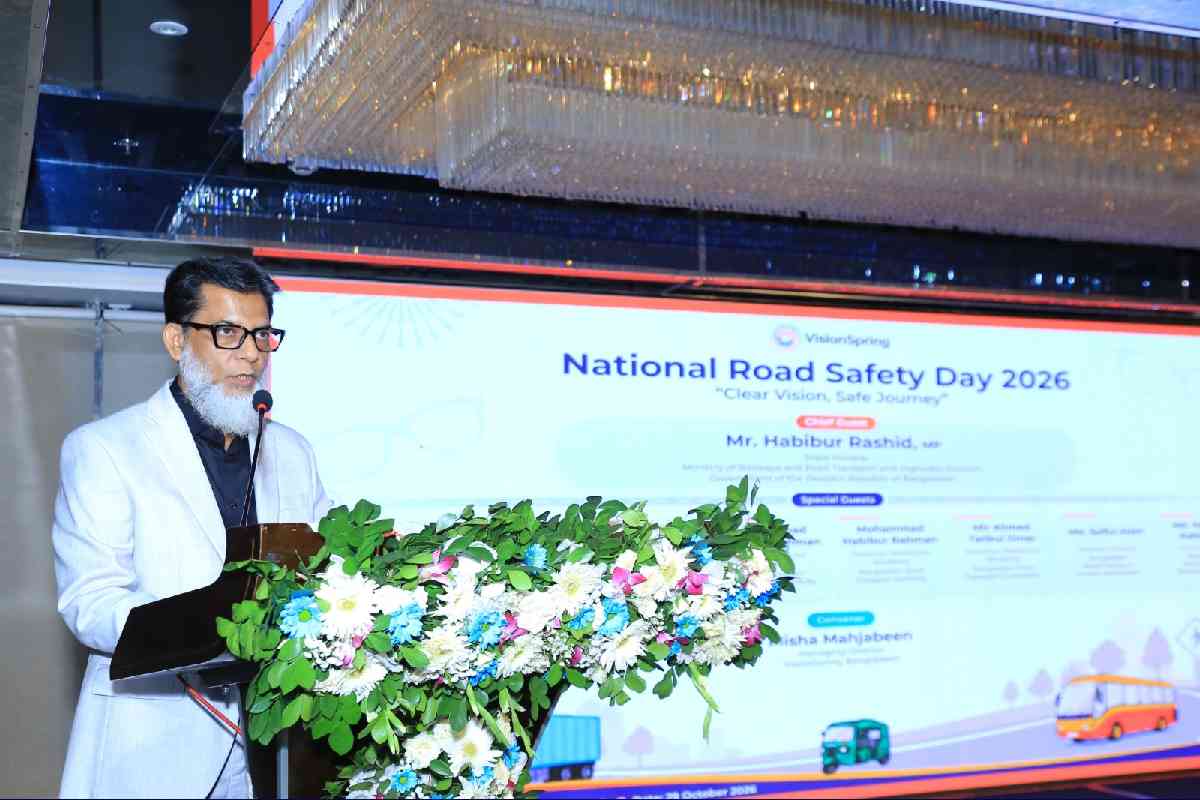
DHAKA: State Minister for Road Transport and Highways Habibur Rashid Habib has called for regular eye examinations and access to corrective glasses for professional drivers, saying clear vision is crucial to preventing road accidents and protecting passengers.
He said drivers' health and eyesight deserved as much attention as road infrastructure, law enforcement and traffic management in efforts to improve road safety.
"When a driver takes the steering wheel, the lives of hundreds of passengers depend on them. Therefore, ensuring a driver has clear vision is not just about helping one individual; it is about safeguarding the lives of countless passengers," he said.
The state minister made the remarks at a National Road Safety Day 2026 programme organised by VisionSpring Bangladesh at a city hotel under its 'See to Be Safe' initiative on Friday.
Habib, the chief guest, also called for incorporating vision screening and regular health check-ups into the driving licence issuance and renewal process.
He revealed that he had undergone an eye examination and received a pair of glasses through VisionSpring's programme, praising the organisation's efforts to address vision-related risks on the roads.
Emphasising a comprehensive approach to road safety, he said compliance with traffic laws, improved driving skills and adequate rest for drivers were equally important.
He also stressed the need for coordinated efforts involving the government, transport owners, workers' organisations and development partners to make roads safer.
Misha Mahjabeen, managing director of VisionSpring Bangladesh, said more than 20 million people in Bangladesh suffer from vision problems because of inadequate access to necessary eyeglasses, including a significant number of professional drivers.
Poor eyesight is a major road safety concern, as it can affect drivers' ability to identify hazards and respond to changing road conditions, she said.
"VisionSpring has been working in Bangladesh since 2006 and has provided reading glasses to five million people to date. Our goal is not only to improve people's vision but also to make the country's roads safer by ensuring access to eye care services for drivers," Mahjabeen said.
She called for greater integration of vision screening into the country's broader road safety initiatives.
Under its 'See to Be Safe' initiative, VisionSpring has screened more than 30,000 drivers and transport-sector workers in Bangladesh as of September 2026.
Of them, more than 24,000 people requiring vision correction have received eyeglasses through the programme, according to the organisation.
The initiative, launched with a two-year target, aims to screen 50,000 bus and truck drivers and distribute 30,000 pairs of corrective eyeglasses to those who need them.
The programme featured presentations on VisionSpring's mission and progress, followed by discussions on the importance of clear vision in preventing road accidents.
A panel discussion titled 'Promoting Road Safety Through Better Vision' brought together transport-sector leaders and road safety stakeholders, including Md Humayun Kabir Khan, general secretary of Bangladesh Road Transport Workers Federation; Md Saiful Alam, secretary general of Bangladesh Road Transport Owners Association; Mir Ahmed Tarikul Omar, chairman of Bangladesh Road Transport Corporation; Mohammad Habibur Rahman, chairman of Bangladesh Road Transport Authority; and Mohammad Mashiur Rahman, executive director of Dhaka Transport Coordination Authority.
Misha Mahjabeen also joined the discussion, moderated by Shahroz Jalil, project director of VisionSpring.
Road Transport and Highways Division Secretary Dr Mohammed Ziaul Haque and Advocate Shamsur Rahman Shimul Biswas, MP and chief coordinator of Bangladesh Road Transport Owners-Workers Coordination Council, attended as special guests.
The programme concluded with an open discussion among stakeholders and recognition of contributing organisations, with participants calling for stronger partnerships to make eye health an integral part of Bangladesh's road safety strategy.
