
Bangladesh needs 25,000 midwives, UNFPA says
Bangladesh continues to make steady progress in maternal and reproductive healthcare, but a significant shortage of trained midwives remains a major barrier to ensuring safe childbirth nationwide, according to experts and development partners.
At present, more than 11,000 licensed midwives are serving across the country. However, at least 25,000 are required to ensure adequate coverage at union-level health facilities, particularly in rural and hard-to-reach areas.
The issue was highlighted during the national observance of the International Day of the Midwife, where government officials, healthcare professionals, and development partners gathered in Dhaka to assess both progress and persistent gaps in maternal health services.
The event, held at Dhaka Nursing College, was jointly organized by the United Nations Population Fund (UNFPA) and the Bangladesh Midwifery Society on Thursday (05 May, 2026). This year’s global theme, “The world needs a million more midwives,” resonated strongly in Bangladesh’s context, where access to skilled birth attendants remains uneven.
UNFPA Representative in Bangladesh Catherine Breen Kamkong emphasized the critical role of midwives in saving lives and ensuring dignified care for mothers and newborns.
“Across Bangladesh, I have seen midwives working in some of the most challenging conditions, often alone and with limited resources, yet carrying the responsibility of two lives at once,” she said.
She stressed that increasing the number of midwives is not enough unless they are properly supported, equipped, and recognized within the health system.
Despite improvements in maternal and neonatal health indicators over the past decade, disparities remain between urban and rural healthcare access. In many remote areas, women still lack consistent access to skilled birth attendants, increasing risks during pregnancy and childbirth.
Experts say this imbalance between demand and workforce availability continues to strain the healthcare system, particularly at the primary care level.
Health sector stakeholders believe the government’s ongoing commitment to recruit additional health workers presents a key opportunity to address the shortage.
Strategic investment in midwifery education, clinical training, and rural deployment could significantly improve maternal health outcomes across underserved regions.
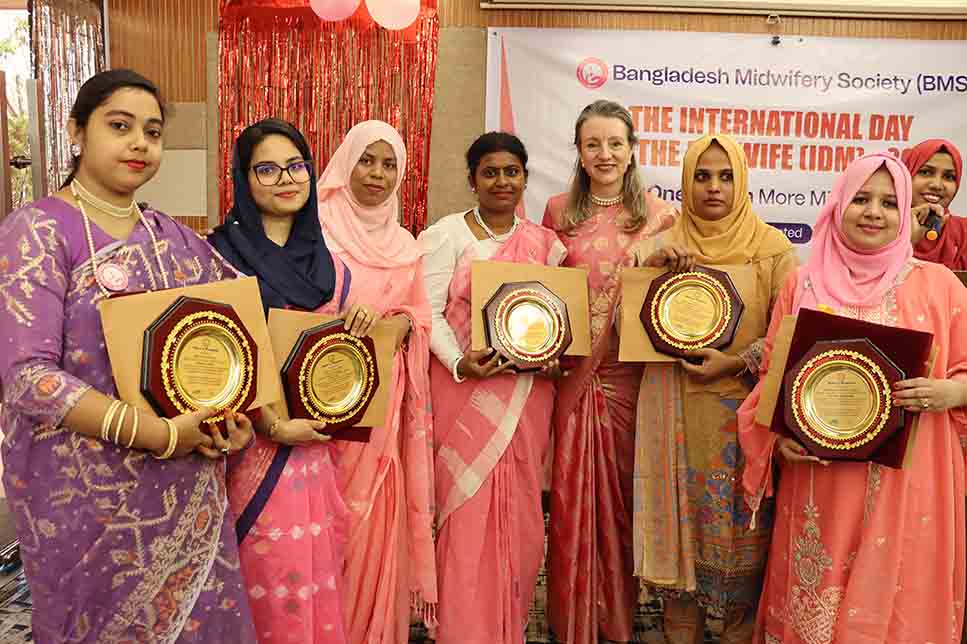
A major highlight of the event was the National Midwives Awards, which recognized five outstanding practitioners for their contributions to maternal and newborn health, particularly in remote and high-risk areas.
Their work reflects the resilience of Bangladesh’s midwifery workforce, many of whom serve as the first and often only point of contact for pregnant women in rural communities.
In addition, five early-career professionals were inducted into the Young Midwives Leadership Programme, designed to strengthen leadership skills and enhance professional development within the sector.
Experts say such initiatives are essential for building a sustainable pipeline of skilled healthcare professionals in maternal health services.
Public health analysts emphasize that addressing the midwife shortage requires a multi-layered strategy, including expanding training institutions, improving working conditions, and ensuring equitable deployment across districts.
Retention of midwives in rural postings remains a key challenge that needs policy attention.
Experts also highlight the need for greater public awareness on the importance of skilled birth attendance, as cultural practices and lack of information still discourage some families from seeking professional maternal care.
As Bangladesh works toward achieving Sustainable Development Goals related to maternal and child health, strengthening the midwifery workforce remains central.
The International Day of the Midwife observance served both as recognition and a reminder of urgent action needed to bridge the gap between demand and supply—ensuring safe, dignified childbirth for every mother in Bangladesh.
