
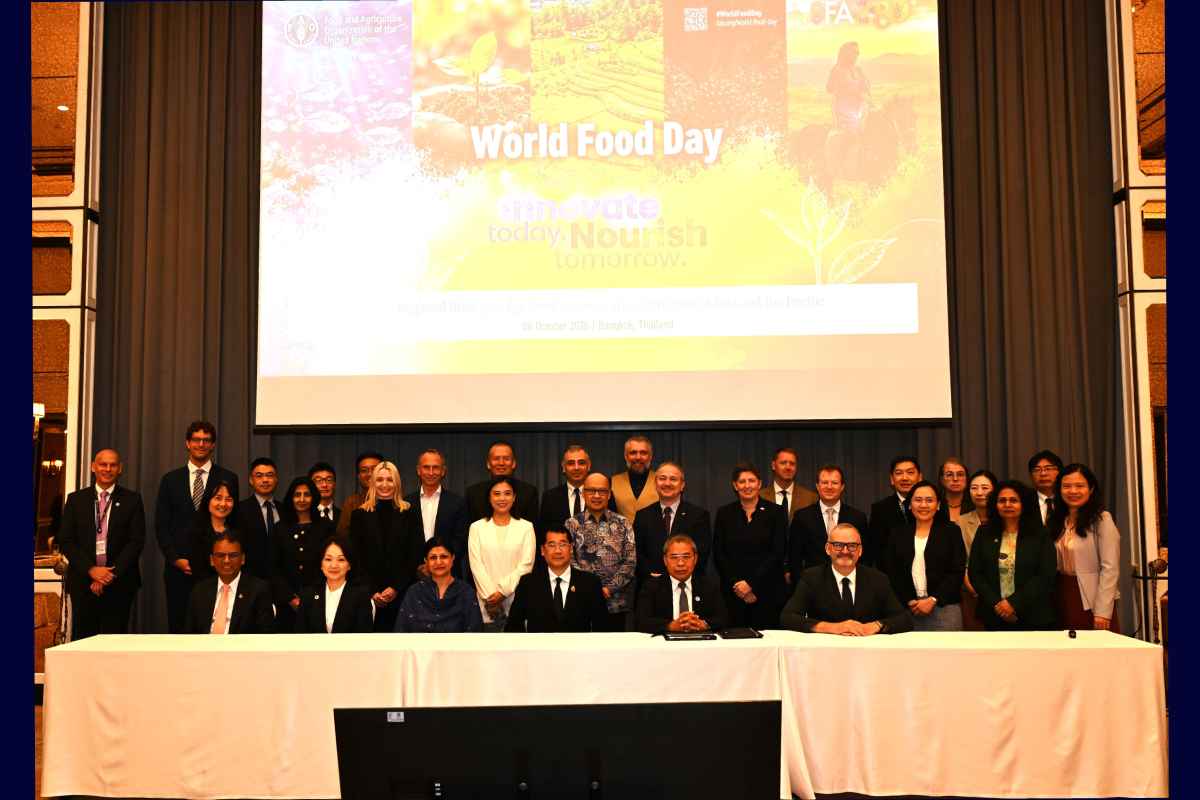
Bangladesh, Pakistan, Nepal, Mongolia and Switzerland among countries represented at FAO’s World Food Day policy dialogue in Bangkok
BANGKOK, Oct 7: Asia and the Pacific must accelerate the transformation of their agrifood systems by scaling up innovation, unlocking investment and strengthening regional partnerships to address mounting challenges to food security, nutrition, livelihoods and the environment, participants at a high-level policy dialogue said today.
The call came at a regional Policy Dialogue convened by the Food and Agriculture Organization of the United Nations (FAO) in Bangkok on the occasion of World Food Day 2026.
Held under the theme “Innovate Today. Nourish Tomorrow,” the dialogue focused on translating technological innovation and policy priorities into practical solutions while strengthening the region’s resilience to climate-related shocks and other disruptions.
“Innovation alone is not enough. Turning new ideas and technologies into impact requires partnership and investment,” said Alue Dohong, FAO Assistant Director-General and Regional Representative for Asia and the Pacific.
“Together, we can build agrifood systems that are more efficient, inclusive, resilient and sustainable, capable of nourishing people today while protecting the resources future generations depend on,” he said.
The dialogue brought together government representatives, ambassadors, development partners and other stakeholders to discuss three key dimensions of agrifood systems transformation: innovation for food security and nutrition; trade and investment; and food security, nutrition and resilience.
Participants stressed the importance of creating enabling policy environments, mobilising investment and strengthening cooperation to bring innovative solutions to scale.
The discussions also focused on ensuring that new technologies and approaches deliver tangible benefits for communities, particularly those most vulnerable to climate change and other disruptions.
A major outcome of the dialogue was a new collaboration aimed at strengthening monitoring, preparedness and anticipatory action against the impacts of El Niño.
The initiative brings together FAO, the Government of Switzerland through Swiss Development Cooperation (SDC), the International Federation of Red Cross and Red Crescent Societies (IFRC), and the Timor-Leste Red Cross.
The partnership will strengthen preparedness in Timor-Leste and the Philippines, enabling vulnerable communities to take action earlier ahead of potential El Niño-related impacts.
The initiative is expected to reach approximately 43,000 people and support more coordinated early action to protect food security and livelihoods.
The collaboration was formally marked through a ceremonial signing at the event.
The high-level dialogue featured participation from ambassadors and senior government representatives from across the region.
Bangladesh Ambassador Andalib Elias, Mongolia Ambassador Oyu Vasha, Nepal Ambassador Dhan Bahadur Oli and Pakistan Ambassador Saadia Altaf Qazi led and contributed to discussions across the three dialogue sessions.
Switzerland Ambassador Fabrice Filliez also participated, alongside Pongthai Thaiyotin, Deputy Permanent Secretary of Thailand’s Ministry of Agriculture and Cooperatives, as well as representatives of governments, development organisations and humanitarian partners.
The participation of diplomats and policymakers underscored the growing importance of regional cooperation in addressing interconnected challenges involving food security, climate change, trade, investment and sustainable livelihoods.
Ken Shimizu, FAO Deputy Regional Representative, led discussions on the next steps and brought together key messages emerging from the dialogue.
“The challenges facing agrifood systems are interconnected, and our response must be equally connected, across sectors, institutions and borders,” Shimizu said.
“Stronger partnerships and anticipatory action are essential if we are to build agrifood systems that are resilient, inclusive and fit for the future,” he added.
The dialogue concluded with a shared commitment to turning regional priorities into concrete action and strengthening partnerships to transform agrifood systems.
The participants agreed that innovation, investment and coordinated action will be critical to building food systems capable of delivering nutritious food, sustainable livelihoods and greater opportunities for future generations across Asia and the Pacific.
