
US, Japan deepen technology partnership, eye cooperation on ‘super intelligence’
WASHINGTON/TOKYO, Oct 6: The United States and Japan have agreed to deepen cooperation in strategic science and technology, including artificial intelligence, quantum technology, biotechnology, telecommunications, space and fusion energy, under their Technology Prosperity Deal.
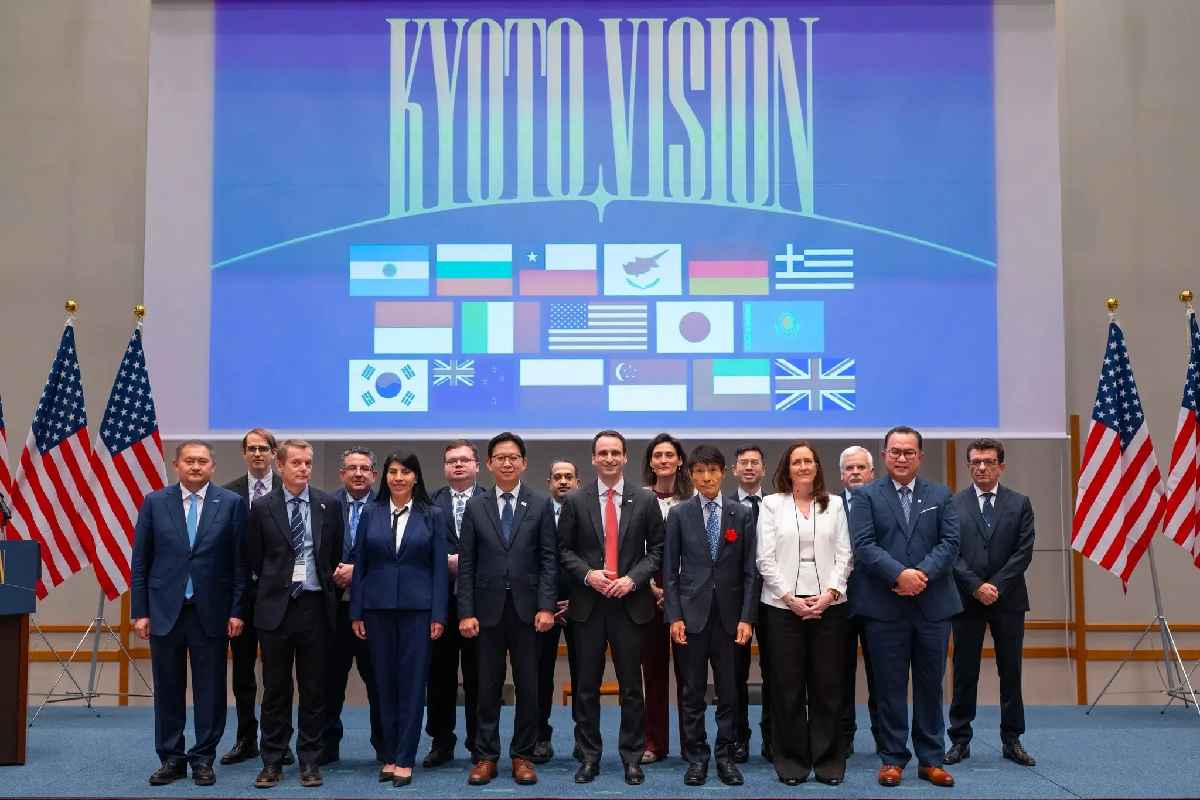
The agreement was discussed in Kyoto on October 4 by Michael Kratsios, Assistant to the US President and Director of the White House Office of Science and Technology Policy, and Toshiharu Furukawa, Japan’s Minister of State for Science and Technology Policy.
In a joint statement released Monday, the two sides said technological innovation was advancing at an unprecedented pace and stressed the need to strengthen bilateral cooperation in strategic science and technology capabilities and standards.
A key area of the new cooperation is “Super Intelligence” (SI). Washington and Tokyo agreed to enhance dialogue on SI, work towards best practices for industry standards and promote a secure ecosystem for the development and deployment of trusted SI technologies.
The two countries also committed to encouraging the adoption of trusted SI technologies and creating a pro-innovation regulatory environment across the Indo-Pacific.
The US reaffirmed a $20 million commitment announced at the 2025 APEC Summit to support such efforts, while Japan expressed its intention to match the US contribution.
The countries also highlighted progress under a $1 billion strategic partnership launched in June between the US Department of Energy and Japan’s Ministry of Education, Culture, Sports, Science and Technology and Ministry of Economy, Trade and Industry.
Under the partnership, 11 joint scientific teams have been established, involving US national laboratories and leading Japanese research institutions. Their work covers quantum information science, fusion energy, biotechnology, advanced materials, particle physics and autonomous laboratory systems.
Washington and Tokyo also agreed to expand cooperation on physical super intelligence, combining Japan’s strengths in hardware, industrial robotics and industrial data with US expertise in physical SI models.
The partnership will also cover Beyond 5G and 6G technologies, resilient telecommunications supply chains, digital connectivity across the Indo-Pacific and low-Earth-orbit satellite infrastructure.
The two sides welcomed cooperation between Japan’s Rakuten Group and US-based AST SpaceMobile on the development and deployment of LEO satellite infrastructure.
In the healthcare and pharmaceutical sectors, the countries agreed to work together to address vulnerabilities in pharmaceutical supply chains. The US Food and Drug Administration and Japan’s Pharmaceuticals and Medical Devices Agency have also established an information-sharing platform on advanced manufacturing.
Biotechnology and biomedical research will receive further attention, with US and Japanese agencies working towards collaborative research opportunities aimed at expanding the range of available therapeutics and related technologies.
The two countries are also advancing cooperation in quantum technology and fusion energy. Joint fusion research includes Japan’s JT-60SA and the US DIII-D National Fusion Facility, while public-private cooperation is supporting research into fusion fuel cycles and related technologies.
In space, Washington and Tokyo highlighted the August 30 launch of NASA’s Nancy Grace Roman Space Telescope, for which Japan provided optical components and ground-station support.
The countries also pointed to an August 31 agreement between the US Federal Aviation Administration and Japan’s National Space Policy Secretariat to align launch and re-entry regulations and improve interoperability between their commercial space transportation industries.
The United States and Japan said they would maintain close coordination and hold further consultations to advance bilateral cooperation and explore additional opportunities under the Technology Prosperity Deal.
