
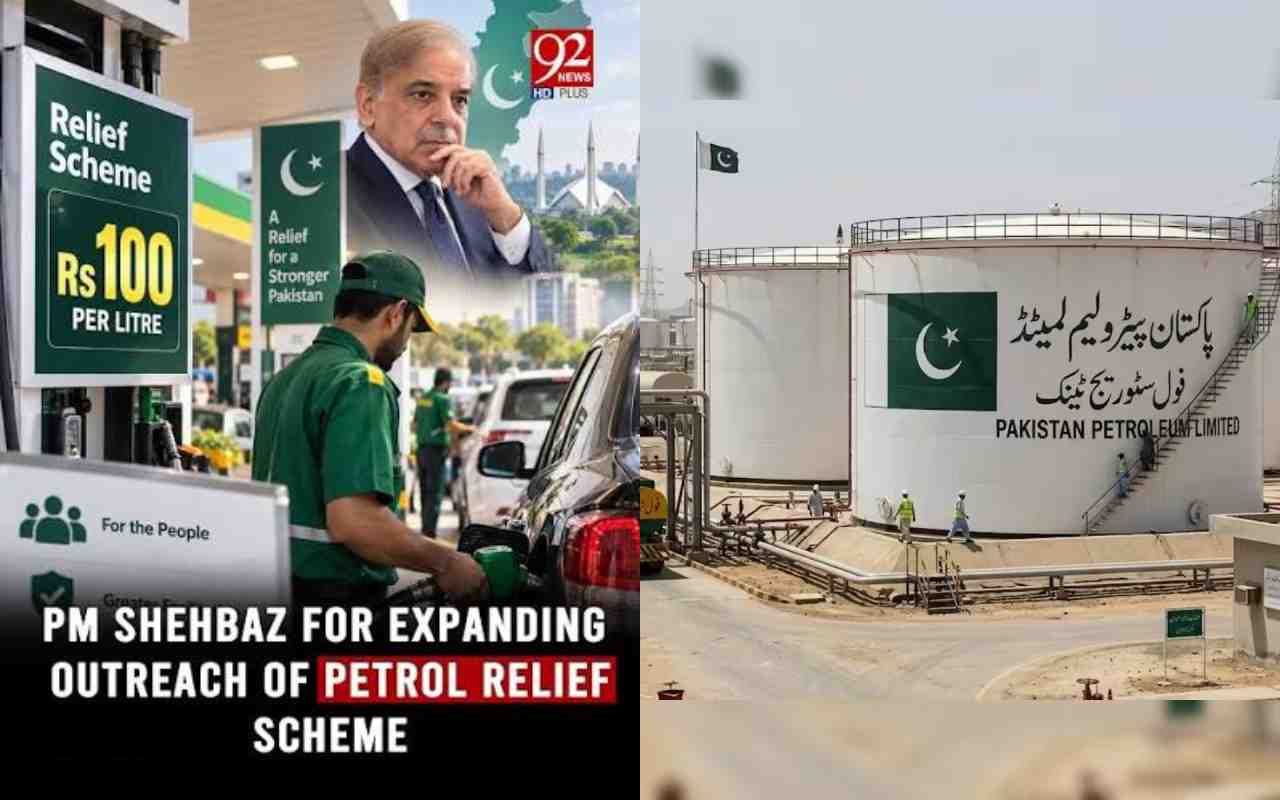
Pakistan rolls out targeted fuel relief scheme amid global oil shock
ISLAMABAD — Pakistan has introduced a targeted fuel relief programme aimed at cushioning low- and middle-income citizens from the impact of higher petrol prices amid disruptions in global energy markets linked to instability in the Middle East.
Prime Minister Muhammad Shehbaz Sharif's Fuel Relief Scheme provides a weekly relief of Rs500 to eligible users of motorcycles, Qingqis and rickshaws, while owners of cars with engines up to 800cc are entitled to fuel relief of Rs100 per litre, according to the Pakistani government.
The scheme was approved as a targeted alternative to blanket fuel subsidies, with the government saying the assistance is intended to reach consumers most exposed to rising transport and livelihood costs. The Economic Coordination Committee approved Rs75 billion for implementation of the programme.
The initiative is particularly aimed at people who rely on two- and three-wheelers for daily commuting and income generation. For many motorcycle and rickshaw users, fuel costs directly affect their ability to earn a living.
Under the initial framework, two- and three-wheelers receive Rs500 in weekly relief, while cars up to 800cc receive Rs1,000 in relief every 10 days. The government has limited the assistance to one vehicle per user or owner and is using a digital Fuel Pass System to manage the programme.
The programme is being administered through a technology-based registration and verification mechanism. Citizens register through SMS to 9771, after which eligible applicants receive digital fuel tokens that are verified at participating petrol stations before the subsidy is applied.
The government subsequently eased some of the programme's conditions following public feedback. The eligibility age for two- and three-wheelers was increased from 15 to 20 years, while the minimum five-litre purchase requirement was removed. Registration through 9771 was also made free.
According to the information provided by the Pakistani government, more than 5.8 million people registered within eight days of nationwide implementation, while around 6.1 million fuel tokens were generated and approximately 4.7 million people had already obtained subsidised fuel.
The Pakistani government has highlighted the scheme's digital architecture as a way of improving transparency and limiting duplication or misuse. The Fuel Pass System links beneficiaries, vehicles and fuel tokens, allowing transactions to be digitally verified at petrol stations.
The Ministry of Information Technology and Telecommunication has been responsible for developing and managing the digital mechanism, while the Ministry of Information and Broadcasting has supported public awareness and outreach.
The government has also described the scheme as part of a broader shift from untargeted fuel subsidies towards assistance focused on specific vulnerable groups.
Federal Petroleum Minister Ali Pervaiz Malik said targeted subsidies were intended to ensure that government support reached those who needed it most. He also said the government was taking measures to maintain uninterrupted fuel supplies during the period of market pressure.
The initiative comes as Pakistan faces the wider economic consequences of volatility in international energy markets. Government officials have said recent global developments, including pressure on fuel markets, have increased the importance of targeted support and prudent energy management.
The scheme offers a technology-driven approach to fuel subsidies by combining direct price relief with digital identification and verification, while allowing the government to modify the mechanism based on feedback from beneficiaries.
Pakistan had been working on targeted petroleum subsidies for several months before the latest rollout. A federal consultative process in March had already focused on using digital platforms, government databases and cash-transfer mechanisms to move away from broad-based subsidies towards more targeted support.
For Pakistan, the experiment could also provide a test of whether digital delivery can make fuel subsidies more targeted and transparent while protecting households and workers most exposed to sudden increases in energy costs.
