
British Council, Bengal Institute Launch Research on Sustainable Architecture
The British Council, in partnership with the Bengal Institute for Architecture, Landscapes and Settlements, has launched a new Research and Insight publication titled “Sustainable Architecture Practice”, highlighting climate-adaptive and sustainable architectural practices across Bangladesh.
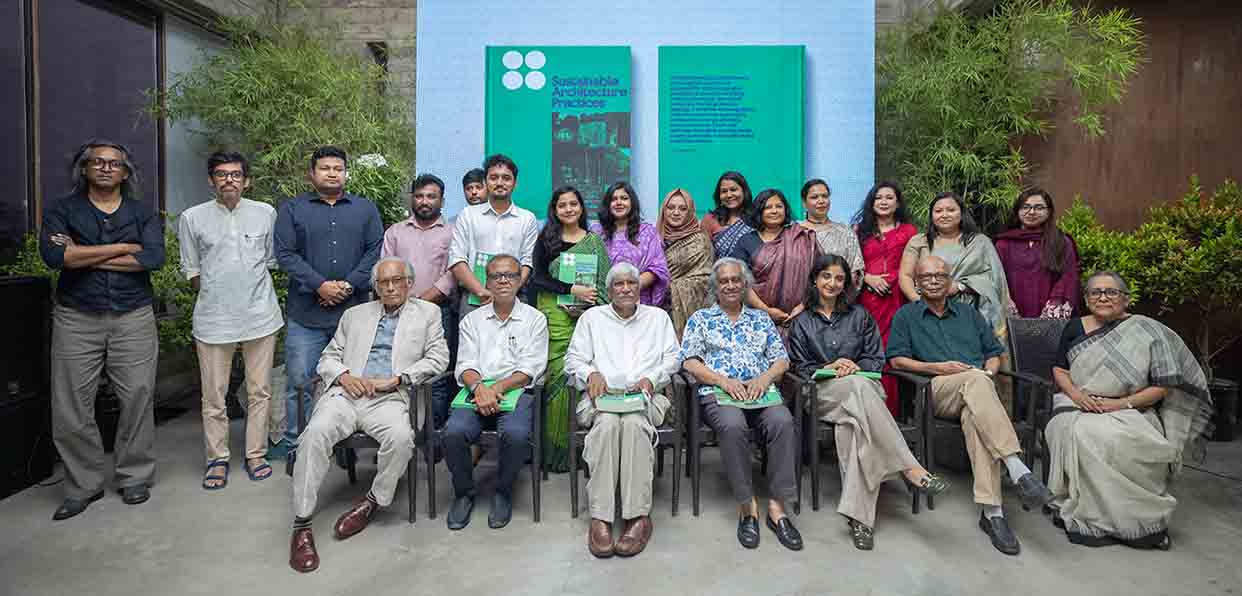
The publication was unveiled on Thursday at Bengal Shilpalay in Dhanmondi, bringing together architects, urban planners, researchers, policymakers, built environment professionals and members of the public.
The research, commissioned by the British Council and led by the Bengal Institute, is the culmination of a nationwide initiative aimed at identifying and documenting sustainable architectural practices in Bangladesh across public, private and grassroots levels. The study also provides policy recommendations to strengthen and promote the sector.
The launch event featured opening remarks by Professor Kazi Khaleed Ashraf, Director General of the Bengal Institute, alongside the screening of a short documentary produced as part of the project. Presentations highlighting key findings and case studies were delivered by Professor Atiqur Rahman, Professor Ripin Kalra and Architect Khondaker Hasibul Kabir.
Addressing the event, Professor Kazi Khaleed Ashraf said sustainability represents “a new paradigm in thinking and practice” regarding how humans interact with the Earth. He noted that many principles of what is now termed sustainable architecture have existed for centuries in traditional forms of habitation adapted to local climates, materials and social contexts.
Representatives of the British Council also spoke at the programme before the formal inauguration of the report. Maarya Rehman, Deputy Director of the British Council Bangladesh, said the organisation was proud to support the initiative, which showcases Bangladesh’s diverse and innovative approaches to sustainable architecture.
She said the collaboration reflected the strength of UK-Bangladesh partnerships in addressing climate challenges through design and innovation. According to her, the publication contributes to global discussions on climate resilience and the creative economy while amplifying locally rooted knowledge and practices.
The report documents sustainable architectural practices from 2015 to the present through a scoping study, case studies of innovative design initiatives and a policy report prepared with guidance from an advisory board specialising in sustainability and resilience in architecture.
Organisers said a series of public events, including the launch programme, will be arranged to disseminate the research findings more widely.
The initiative forms part of the British Council’s broader commitment to supporting the creative economy, promoting climate resilience and strengthening the capacity of professionals and policymakers in Bangladesh.
