
Proposed wage revision to take effect from January as labour leaders push for faster wage board decision amid industrial unrest
DHAKA, November 4: Labour leaders have called for an immediate increase in the minimum monthly wage for garment workers to Tk30,000, urging the government to announce a revised pay structure by December and implement it from January.
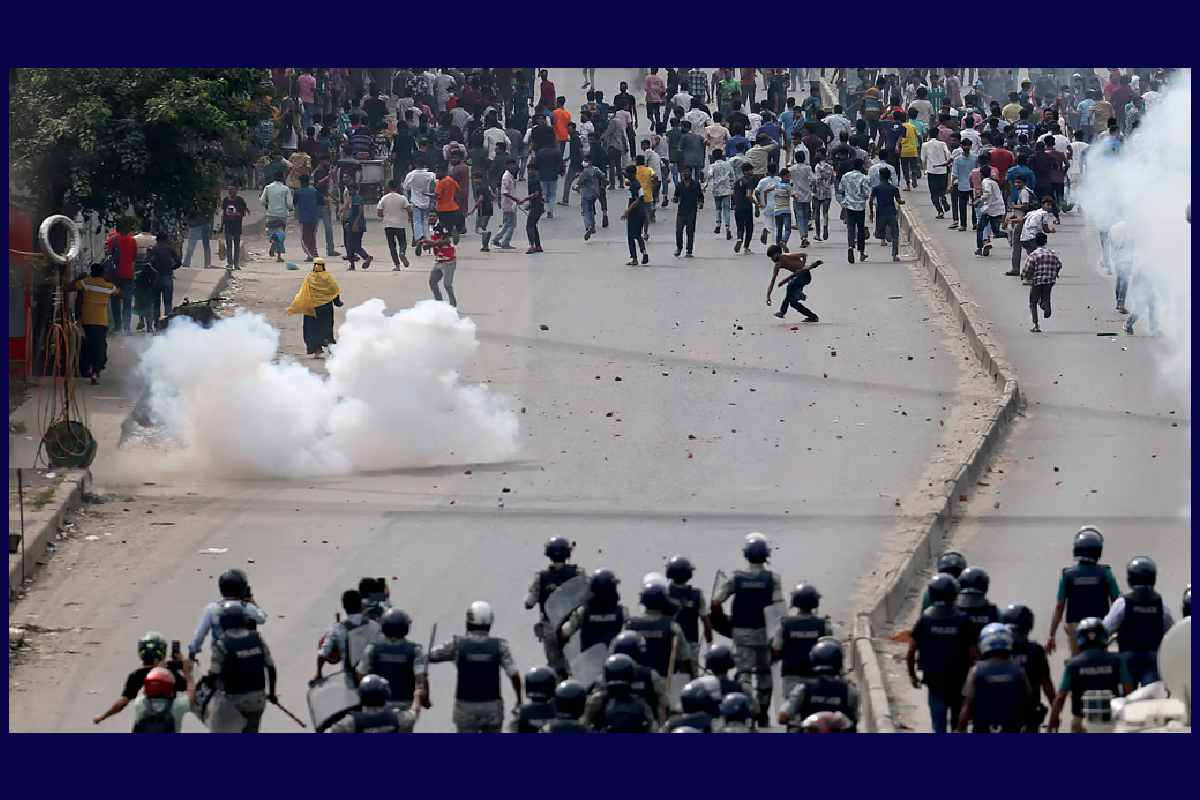
The proposal, raised at a recent meeting with the home and labour ministers at the Secretariat, is aimed at easing ongoing wage-related protests and violence in industrial areas by giving workers a clear timeline for a pay increase, according to sources familiar with the discussion.
The labour ministry has also expressed a positive stance towards expediting the wage-setting process, although opinions among garment manufacturers remain divided over the proposed timeline.
Babul Akter, workers' representative on the minimum wage board, said labour representatives wanted the new wage to be announced by December and implemented from January.
"I don't know what the owners will decide. But whatever happens, we will work to ensure that the new wage is announced by December and workers receive it from January," he told the media.
A senior labour ministry official, seeking anonymity, said the ministry had informally requested the wage board to submit its recommendations by December, if possible.
Salahuddin Shopon, president of the IndustriALL Bangladesh Council, who attended the meeting, said labour leaders had urged the wage board to hold meetings quickly to facilitate an announcement within the proposed timeframe.
"If workers receive a message that a new wage will be announced by December, it will play a positive role in normalising the situation," he said.
Earlier, Babul also urged the wage board not to delay the process under the pretext of holding meetings. He called for consecutive meetings, even at night if necessary, to ensure that the revised wage is announced by December and workers receive the increased pay from January.
However, the labour ministry has maintained that it cannot impose a deadline on the wage board, as it is an independent body.
Labour Secretary Md Abdur Rahman Tarafder said the ministry would try to ensure that the board submits its recommendations as soon as possible.
A senior leader of the Bangladesh Garment Manufacturers and Exporters Association (BGMEA), speaking on condition of anonymity, said December would be a reasonable time for announcing the revised wage, as the existing minimum wage would complete three years that month.
"However, the announcement must come from the wage board," he said.
He added that although the law allows the wage board up to six months to submit its proposal, it could reach a unanimous decision after just two meetings without violating the law.
The Bangladesh Knitwear Manufacturers and Exporters Association (BKMEA), however, expressed reservations about implementing a new wage structure by December.
Mohammad Hatem, president of BKMEA, said the industry was not in a position to implement a revised wage within such a short timeframe.
He explained that manufacturers would need sufficient time to negotiate revised prices with international buyers to accommodate the additional production costs arising from a new wage structure.
The current minimum monthly wage for garment workers is Tk12,500, introduced in December 2023. Workers have been demanding an increase to Tk30,000 amid persistent concerns over living costs and purchasing power.
Under the labour law, the minimum wage for garment workers is subject to review every three years. The existing wage structure will complete its three-year term in December, making the timing of the proposed revision particularly significant for the country's largest export-oriented industrial sector.
A timely decision could help ease labour unrest and provide greater certainty to manufacturers and international buyers. However, the final outcome will depend on the wage board's recommendations and the government's subsequent decision.
