
Govt offers support to non-operational Savar tanneries, enforces environmental compliance
The government will provide necessary technical and financial assistance to tanneries that have failed to start production after relocating to the Savar Tannery Industrial Estate, Commerce, Industries and Textiles and Jute Minister Khandakar Abdul Muktadir said today.
The government has also prioritised environmental compliance, modern waste management and international certification to enhance the competitiveness of the country's leather industry in global markets.
"No tannery that fails to comply with environmental regulations will be allowed to operate," the minister said.
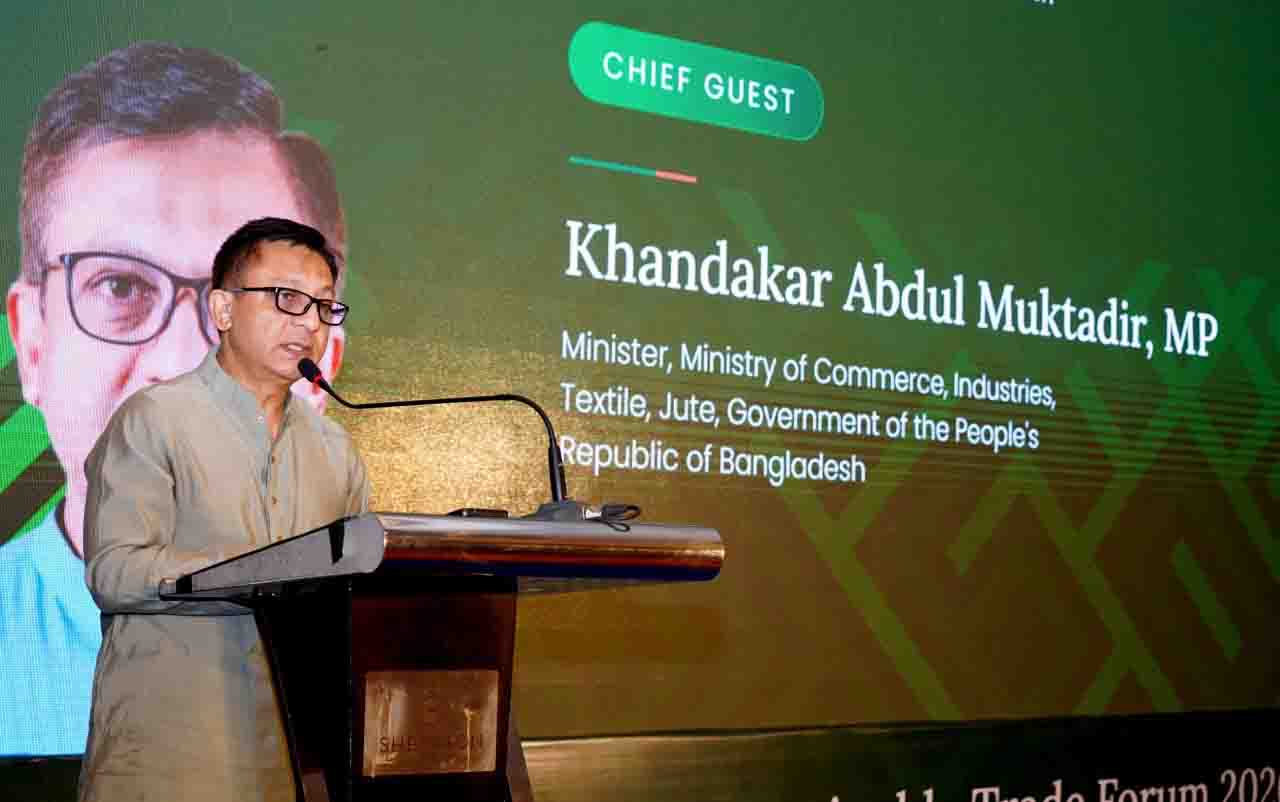
Muktadir made the remarks while speaking as the chief guest at the Bangladesh-Netherlands Sustainable Trade Forum 2026 and the inauguration of the CBI Home Textiles and Leather Programme at a hotel in the capital.
The Centre for the Promotion of Imports from Developing Countries (CBI) of the Netherlands and LightCastle Partners jointly organised the event.
The minister said Bangladesh exported leather and non-leather products worth around US$1.78 billion last year, reflecting the sector's significant export potential, said a press release.
He identified the European Union (EU) as an important and promising market for Bangladesh and said India had also emerged as one of the major buyers of Bangladeshi leather products.
He stressed the need to improve product quality, ensure environmental compliance and align production systems with international market requirements to fully tap the export potential.
Referring to the prolonged relocation of tanneries from Hazaribagh to Hemayetpur in Savar, the minister said the delay had hampered the development of the leather industry. The government is now taking effective steps to address the sector's longstanding problems.
The minister said factories occupying 50,000 square feet or more would have to install their own effluent treatment plants (ETPs). All tanneries in Savar would also have to obtain certification from the international Leather Working Group (LWG).
He said the government would not compromise on environmental standards and regulatory compliance.
The government was also working to enhance the capacity of the central effluent treatment plant (CETP) at the Savar tannery estate and install an advanced chromium recovery unit to improve waste management, he added.
Highlighting the importance of cottage, micro, small and medium enterprises (CMSMEs), the minister said the sector played a vital role in inclusive economic growth, employment generation and reducing income inequality.
He said the CMSME sector currently contributed less than one-fourth of the country's gross domestic product (GDP), while its contribution needed to reach at least 60 percent to help reduce economic disparities.
Emphasising easier access to finance for small entrepreneurs, Muktadir said complicated documentation and procedural barriers in obtaining bank loans often deprived promising entrepreneurs of institutional financing.
The government is taking initiatives to restructure the SME Foundation to ensure easier access to institutional support and credit facilities for small and medium entrepreneurs, he said.
The minister said the allocation for the SME loan refinancing programme had been increased to Tk 2,000 crore from Tk 300 crore since the present government assumed office.
He said the programme had achieved a loan recovery rate of 98 percent, demonstrating the financial discipline and repayment capacity of small and medium entrepreneurs.
Highlighting bilateral trade relations, Muktadir said Bangladesh and the Netherlands could explore greater cooperation in sustainable industrialisation, technology transfer, skills development and access to international markets.
He said the Netherlands' technological and institutional expertise could help make Bangladesh's export-oriented home textiles and leather industries more competitive.
The minister appreciated the support of the Netherlands government, CBI and development partners for the development of Bangladesh's SME and leather sectors.
He also expressed optimism that sustainable production, environment-friendly industrialisation and export diversification would strengthen Bangladesh's position in international markets.
Netherlands Ambassador to Bangladesh Joris van Bommel and CBI Managing Director Judith Arends also spoke at the programme.
Representatives from the public and private sectors, development partners, industrial entrepreneurs and other stakeholders attended the event.
