
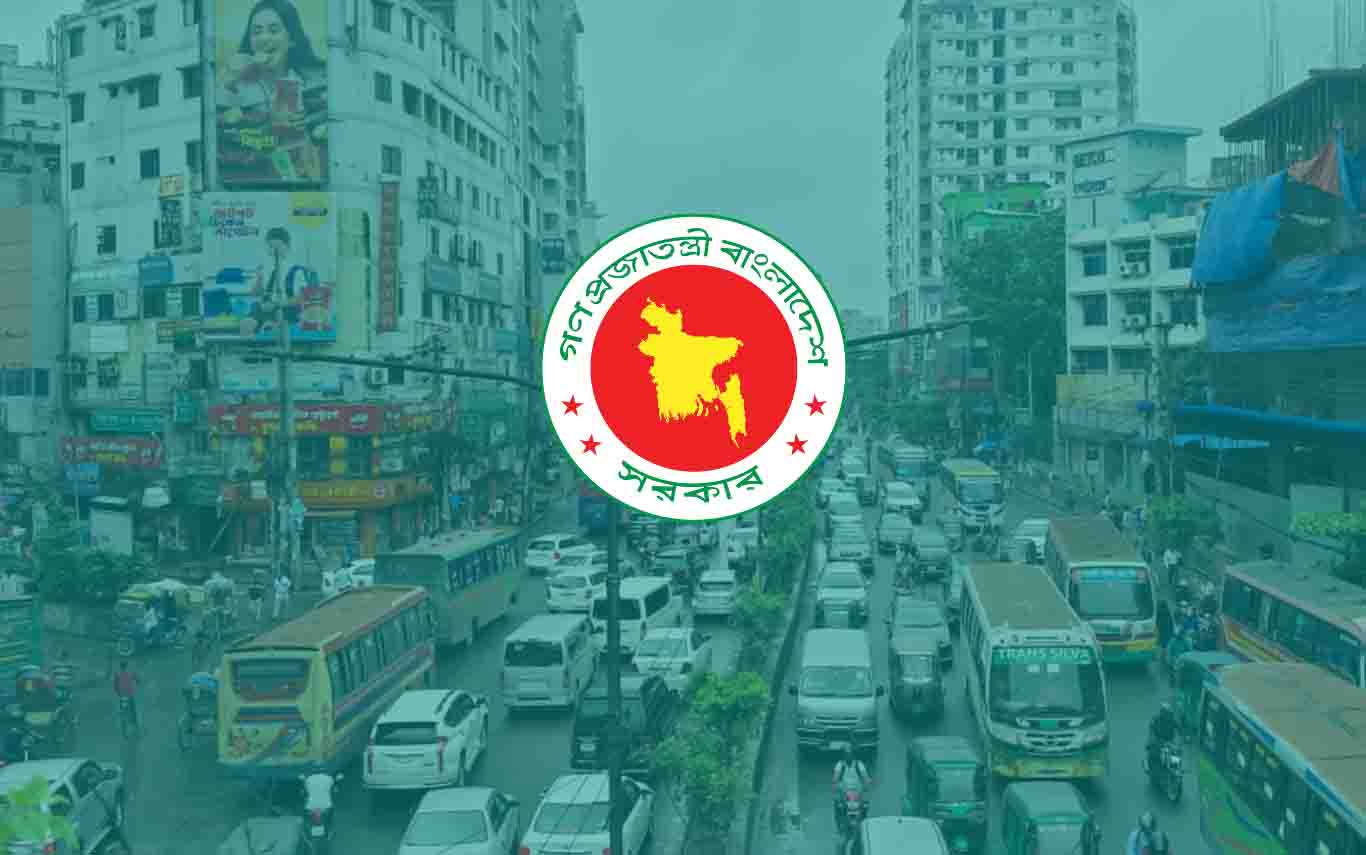
Government plans integrated, eco-friendly transport system to ease Dhaka traffic.
The government has taken a series of short- medium- and long-term initiatives to transform Dhaka into a modern, environment-friendly and integrated transport hub, aiming to ease chronic traffic congestion, restore discipline in public transport and ensure safer journeys for commuters.
Under the guidance of Prime Minister Tarique Rahman, the initiatives include introducing pink buses for women, expanding electric bus services, improving connectivity with metro rail, exploring the feasibility of monorail services in key areas and developing policies for sustainable urban transport.
The plans also focus on digital bus management, improved charging infrastructure, better passenger facilities and measures to ensure uninterrupted transport services during the monsoon.
The main objective is to reduce dependence on private vehicles and make public transport safer, affordable, reliable and environmentally sustainable.
As the country's administrative, economic and commercial hub, Dhaka accommodates millions of daily commuters. However, rapid population growth and expanding economic activities have placed enormous pressure on its transport infrastructure.
Major challenges include severe traffic congestion, unregulated bus operations, irregular passenger boarding, excessive fares, unreliable schedules, safety concerns for women and rising air pollution. Illegal parking, encroachment on footpaths and poorly planned bus stops further aggravate the situation.
The government is therefore emphasising an integrated approach, including bus route rationalisation, designated stops, scheduled services, digital monitoring, integrated ticketing and improved vehicle standards.
Professor Dr M Shamsul Hoque of the Department of Civil Engineering at Bangladesh University of Engineering and Technology (BUET) told BSS that effective coordination among relevant agencies was essential to restore discipline in the capital's transport system.
"In the short term, priority should be given to regulating bus operations, ensuring passenger boarding at designated locations, preventing illegal parking and enforcing traffic laws. In the medium term, route rationalisation and improved bus services are essential.
In the long term, metro rail, buses and other transport modes must be connected through an integrated public transport network," he said.
He said consistent implementation and accountability were more important than simply formulating plans. Safe mobility for pedestrians, women, children, elderly people and persons with disabilities should also receive priority, he added.
The introduction of pink buses is considered an important step towards safer travel for women, particularly working professionals and students who frequently face overcrowding and harassment on public transport.
State Minister for Road Transport and Highways Habibur Rashid told BSS that the government was working to make Dhaka's transport system safe, modern, environment-friendly and passenger-oriented.
"The government has introduced pink buses to ensure safe journeys for women. At the same time, monitoring and complaint resolution mechanisms are being strengthened to improve women's security in regular public transport services," he added.
Expanding electric bus operations is another major initiative to reduce air pollution. The government plans to develop adequate charging facilities at bus depots, terminals and transport hubs, alongside reliable electricity supply and improved battery management and maintenance capacity.
The possibility of establishing charging facilities near metro rail stations is also being examined, subject to passenger safety and infrastructure requirements.
Seasonal waterlogging is another challenge. The government is considering identifying flood-prone roads, improving drainage, constructing sheltered bus stops and maintaining traffic movement on major roads during the monsoon.
Road Transport and Highways Division Secretary Dr Mohammed Ziaul Haque said controlling vehicle emissions and ensuring effective fitness inspections were essential to reducing air pollution.
"Proper enforcement of existing laws, regular vehicle inspections and effective action against highly polluting vehicles are necessary to develop an environment-friendly public transport system," he said.
He added that awareness among transport owners and workers would be increased and coordination among relevant agencies strengthened.
Metro rail has opened new opportunities for improving urban mobility. However, its benefits can be maximised by ensuring efficient connections with buses, pedestrian pathways, cycling routes and other transport services.
The feasibility of introducing monorail services in important areas of the capital is also being considered. Any project would require assessments of passenger demand, proposed routes, construction costs, land availability and environmental impacts.
Ziaul Haque said reducing traffic congestion and commuting time remained a government priority, with metro rail and potential monorail expansion forming part of the broader strategy.
Digital technology is also expected to modernise public transport. Passengers could access information about bus locations, estimated arrival times, fares and routes, while authorities would be able to monitor operations and service standards.
Successful implementation will require close coordination among Dhaka's two city corporations, the Dhaka Transport Coordination Authority, Bangladesh Road Transport Authority, traffic police and other relevant agencies.
In the short term, priorities include regulating buses, establishing designated stops, controlling illegal parking and enforcing traffic laws.
Medium-term measures will focus on route rationalisation, electric bus operations and digital management. Long-term plans include integrating different transport modes, developing new corridors and assessing monorail feasibility.
Experts said consistent implementation, regular progress reviews and institutional accountability will be crucial to achieving these objectives and transforming Dhaka into a model of modern, integrated and environmentally sustainable urban transport.
