
32MW solar capacity supports factory operations, while hybrid appliances offer opportunities to cut electricity bills
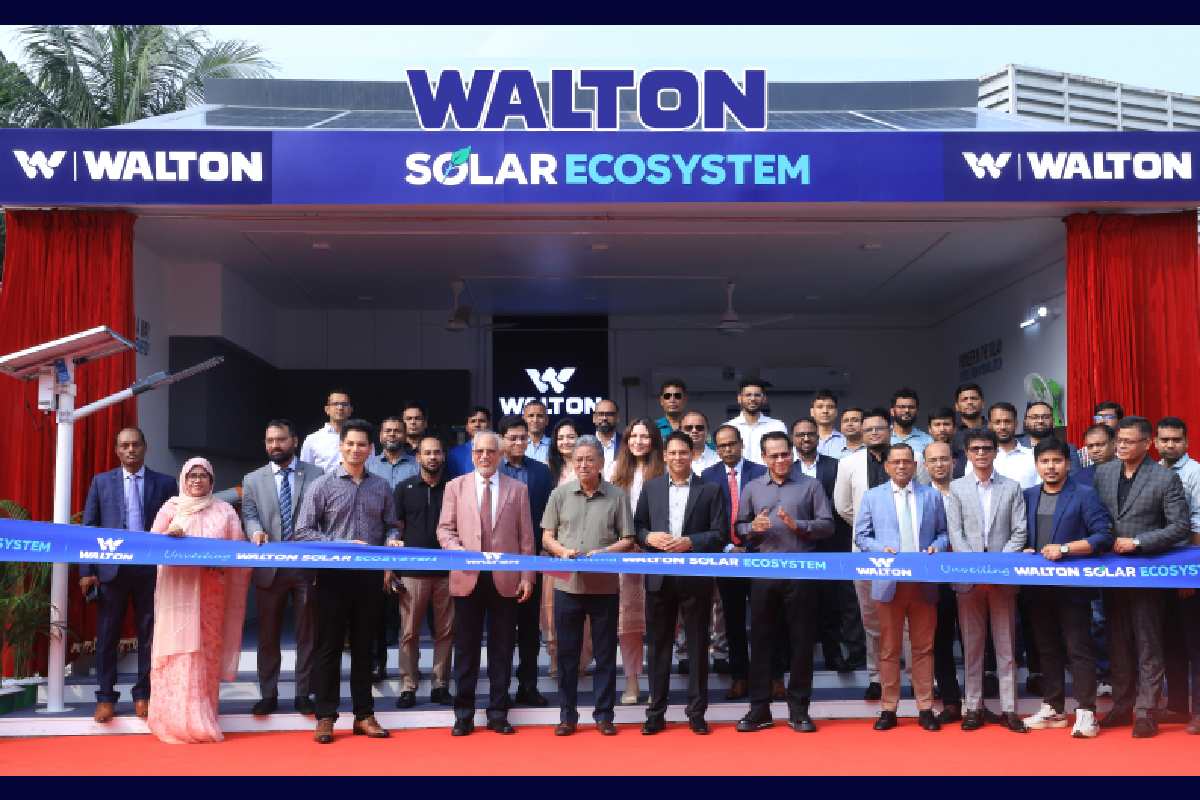
DHAKA, October 10, 2026: Finance and Planning Minister Amir Khosru Mahmud Chowdhury on Saturday inaugurated Walton’s integrated solar energy ecosystem, an initiative combining renewable power generation, energy storage, grid electricity supply and solar-powered household appliances.
The initiative brings together rooftop and floating solar power projects with solar-compatible refrigerators, air conditioners, televisions and other electrical and electronic products, as the Bangladeshi electronics manufacturer seeks to expand its renewable energy business and promote energy-efficient manufacturing.
Walton has established solar power installations with a combined generation capacity of 32 megawatts (MW) at its manufacturing facilities. The company said a substantial portion of the electricity generated is used in its factories, while around 1,150 megawatt-hours (MWh) of solar electricity is supplied annually to the national grid through net metering.
The company unveiled the ecosystem at a ceremony at its corporate office in Bashundhara, Dhaka.
Speaking at the event, the finance and planning minister said wider adoption of solar power could reduce electricity costs, dependence on imported fuels and pressure on foreign currency reserves.
“Solar power is an environmentally friendly source of electricity. What Walton is doing with solar technology is something that is expected to expand across Bangladesh,” he said.
He added that solar energy could be used not only for lighting but also to operate refrigerators, air conditioners, washing machines, ovens and other household appliances.
“We hope people across the country will increasingly adopt solar energy solutions,” he said.
A key feature of Walton’s Solar Ecosystem is its hybrid technology, which allows compatible refrigerators, air conditioners and smart televisions to operate using solar power alongside conventional grid electricity.
According to company officials, these appliances can run directly on solar electricity under sufficient sunlight conditions without requiring battery storage. When solar generation is insufficient, the system automatically draws additional electricity from the national grid.
The arrangement could help households reduce their grid electricity consumption, depending on solar availability and appliance usage.
Walton has also integrated energy storage system (ESS) technology into selected washing machines, electric cookers, ovens and other household appliances. Electricity generated during daylight hours can be stored in batteries for use later.
The company’s inverter and battery systems support charging through both solar electricity and conventional AC power, allowing users to store energy when solar generation is available and use it for household needs.
The product range includes rice cookers, microwave ovens, BLDC fans, LED bulbs and streetlights, alongside solar panels, inverters, batteries and specialised solar power cables.
Walton has also incorporated a backup power supply system into its new Takyon electric bicycle models. The company said the battery technology can allow an e-bike to function as a mobile energy storage unit for emergency power needs.
Its photovoltaic (PV) solar cables are designed to withstand ultraviolet radiation, moisture and other challenging environmental conditions, supporting reliable electricity transmission within solar installations.
Walton Hi-Tech Industries PLC Chairman S M Shamsul Alam said the initiative would help customers reduce electricity bills, expand renewable energy use and lower carbon emissions.
He said the company wanted to contribute to a greener and more self-reliant Bangladesh through its solar technology and energy-efficient products.
Vice-Chairman S M Ashraful Alam described the ecosystem as an integrated solution combining solar power generation, energy storage, grid supply and the manufacturing of solar-powered household appliances.
He said the initiative could create new business opportunities for Walton while strengthening its financial position and generating long-term value for investors in the capital market.
Managing Director S M Mahbubul Alam said the company's ambitions extended beyond manufacturing products locally.
“Our ambition goes beyond ‘Made in Bangladesh’. We want to innovate and develop advanced technologies in Bangladesh and demonstrate the country’s technological capabilities in the global market,” he said.
He added that Walton's development of renewable energy-based products could further strengthen Bangladesh's technological and manufacturing capabilities.
Following the inauguration, the finance and planning minister visited an exhibition showcasing Walton's solar technology products, including solar panels, power cables, energy storage inverters, batteries, hybrid refrigerators, air conditioners and smart televisions.
He also inspected solar-compatible washing machines, electric cookers, ovens, rice cookers, fans, LED bulbs and streetlights.
The minister expressed satisfaction with the products' energy-saving features, particularly the hybrid appliances designed to operate using solar power and conventional grid electricity.
Walton's integrated approach comes as Bangladesh seeks to diversify its energy sources and expand renewable electricity generation. The potential benefits for consumers will depend on installation costs, available sunlight, appliance efficiency, system configuration and the reliability of the supporting infrastructure.
The event was attended by Walton Hi-Tech Industries PLC Chairman S M Shamsul Alam, Vice-Chairman S M Ashraful Alam, Managing Director S M Mahbubul Alam and directors S M Rezaul Alam, S M Monjurul Alam Ovee and Tahmina Afrose Tanna.
