
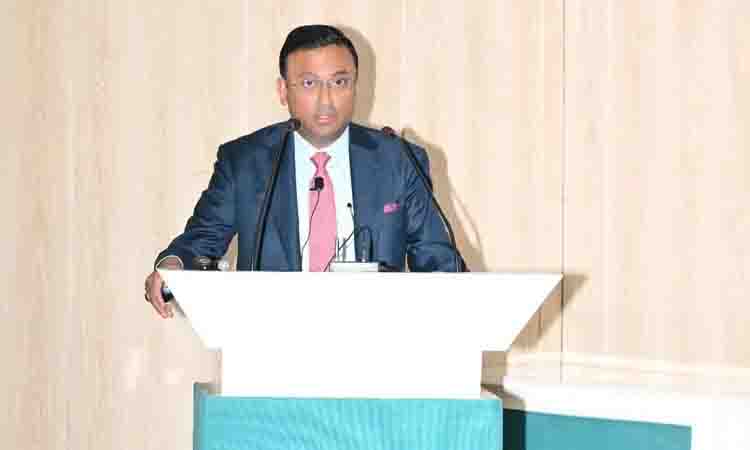
Bangladesh to pursue principled, pragmatic foreign policy: Kobir.
State Minister for Foreign Affairs Humaiun Kobir today said Bangladesh must pursue a principled, pragmatic and forward-looking foreign policy firmly anchored in the country’s national interest as he addressed a National Defence College (NDC) course.
“Bangladesh’s foreign policy must be confident without being confrontational, open without being dependent, and pragmatic without compromising our national interests,” he told the participants of the course at NDC at Mirpur.
He said the government’s “Bangladesh First” policy does not mean isolation, but rather placing the country’s interests at the centre of diplomacy while safeguarding sovereignty and expanding partnerships based on mutual respect and mutual benefit.
Kobir said the rapidly changing global environment, intensifying geopolitical competition, evolving security challenges, economic vulnerabilities, technological transformation, climate change and transnational threats demand a more strategic approach to foreign policy.
The state minister stressed the need for stronger regional connectivity, deeper economic integration and practical cooperation with neighbouring countries.
He said Bangladesh’s relations with major powers, including China, India, Japan, the United States and the European Union, should be pursued with balance and clarity.
Each of these relationships, he said, presents distinct opportunities and challenges that require careful and interest-based engagement.
Kobir also underscored the importance of protecting the rights, dignity and welfare of Bangladeshi citizens living and working abroad, saying their interests must remain an important consideration of the country’s diplomacy.
He said Bangladesh must continue expanding its international partnerships while ensuring that such relationships strengthen, rather than constrain, the country’s strategic choices.
The state minister said a national-interest-centred foreign policy would help Bangladesh navigate geopolitical shifts, protect its sovereignty and create greater opportunities for economic growth and development.
