
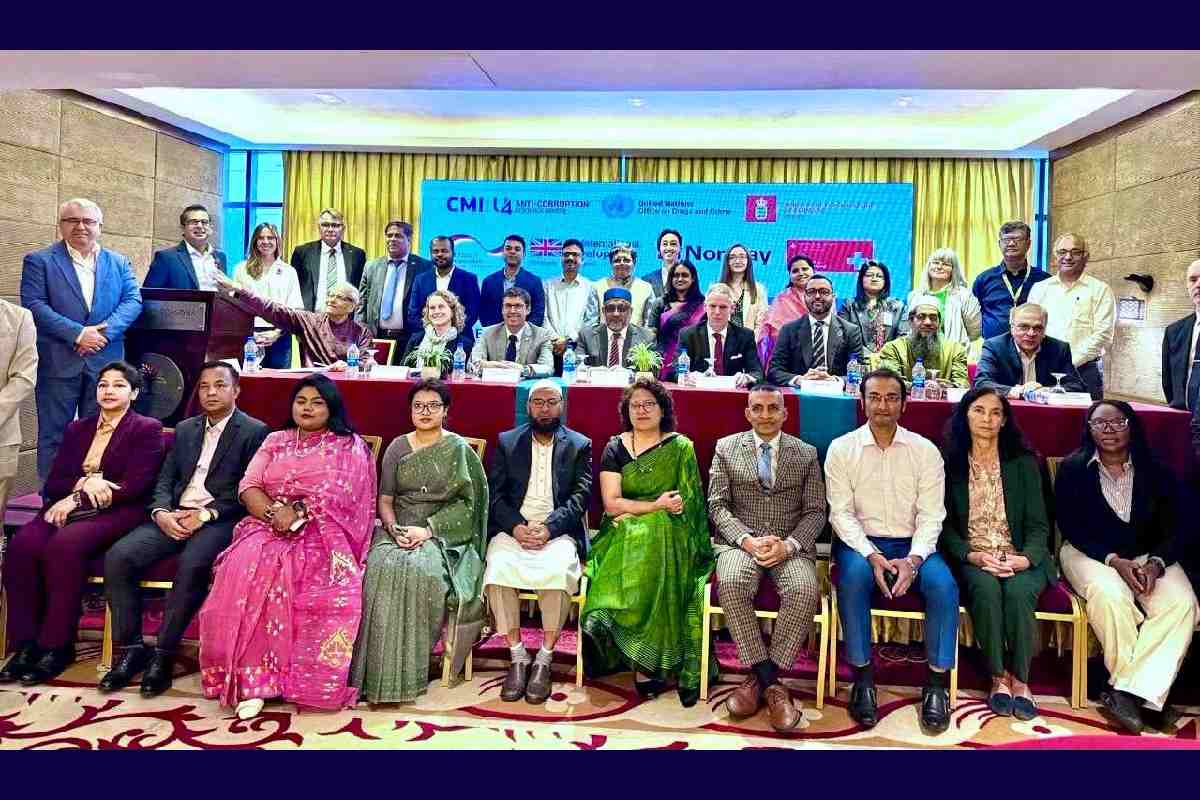
Switzerland, UNODC and partner embassies organise a Dhaka workshop to strengthen corruption measurement, governance and evidence-based reforms in Bangladesh.
DHAKA: Switzerland, in partnership with the United Nations Office on Drugs and Crime (UNODC), the U4 Anti-Corruption Resource Centre and several like-minded embassies, has organised a workshop to strengthen corruption measurement and promote evidence-based anti-corruption reforms in Bangladesh.
The workshop brought together representatives from the government and civil society to discuss how stronger data collection and statistical systems could help identify corruption trends, address information gaps and assess the effectiveness of reform initiatives over time.
The initiative was organised by the Embassy of Switzerland in collaboration with the U4 Anti-Corruption Resource Centre and UNODC, alongside the embassies of Denmark, Germany, Norway and the United Kingdom.
Speaking at the opening session on Monday, Swiss Ambassador to Bangladesh Reto Renggli emphasised the need for a broader societal shift in attitudes and mindsets to address corruption.
"Collectively, society needs a shift in attitude and in mindset to address corruption. This must start in kindergarten and classrooms," he said.
"Following rules is one thing, believing in the rules is a social precondition," the ambassador added.
The discussions highlighted the importance of reliable data, improved statistical capacity and systematic monitoring in understanding corruption patterns and identifying gaps in existing governance mechanisms.
Participants also explored how evidence-based approaches could help policymakers evaluate the impact of anti-corruption measures and make reforms more effective and sustainable.
The workshop reflects Switzerland's continued commitment to supporting good governance, transparency, accountability and evidence-based institutional reforms in Bangladesh.
The collaboration also underscores the importance of international partnerships and cooperation among government institutions, development partners and civil society in addressing corruption and strengthening public accountability.
