
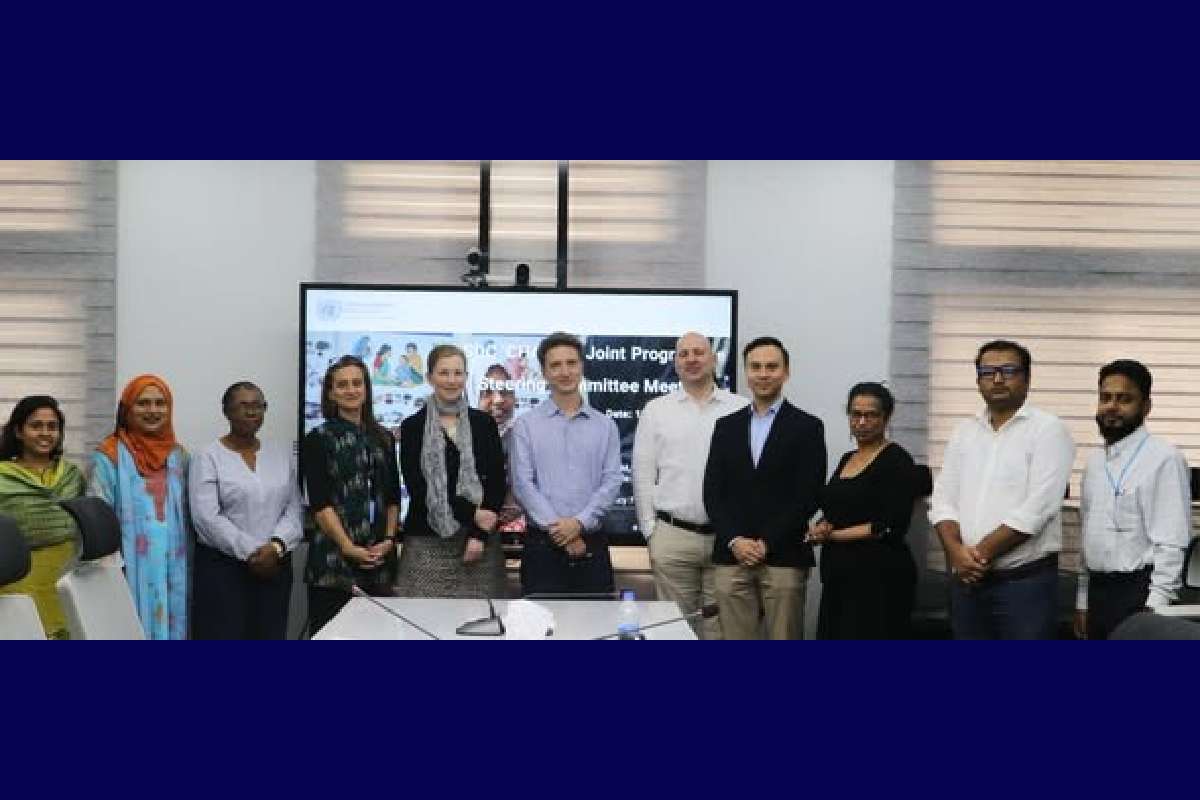
The CHANGE initiative focuses on education, food security, nutrition and protection for Rohingya refugees and host communities
Members of the Embassy of Switzerland in Bangladesh have participated in a steering committee meeting of the CHANGE Joint Programme in Cox’s Bazar, highlighting the importance of women’s leadership and locally led initiatives in supporting Rohingya refugees and affected host communities.
The meeting brought together representatives of partner agencies, including UN Women, the UN Refugee Agency (UNHCR), the World Food Programme (WFP), UNICEF and the International Organization for Migration (IOM), to discuss the programme’s implementation and priorities.
Supported by Switzerland, the initiative addresses critical needs in education, food security, nutrition and protection while seeking to strengthen resilience, self-reliance and localisation among Rohingya refugees and members of host communities.
Speaking at the meeting, Diepak Elmer, chargé d’affaires ad interim at the Swiss Embassy in Bangladesh, stressed that women’s agency and leadership must remain central to the programme.
“Rohingya women who have volunteered for years are now stepping into leadership roles. We must recognise their leadership, create space for their voices, and ensure their safety and protection,” he said.
He also emphasised that women’s priorities should shape programme design and resource allocation, according to a statement shared by the embassy.
The emphasis on localisation reflects the importance of enabling people directly affected by the humanitarian crisis to participate in decisions concerning their communities. Recognising the leadership of Rohingya women, particularly those with years of experience in volunteer work, is a key element of this approach.
The CHANGE Joint Programme brings together international partners working across several humanitarian sectors. Its focus on education, nutrition, food security and protection aims to address immediate needs while supporting longer-term resilience among refugees and host communities in Cox’s Bazar.
The meeting underscored the role of coordination among humanitarian agencies and the importance of ensuring that women’s voices and priorities are reflected in assistance programmes.
