
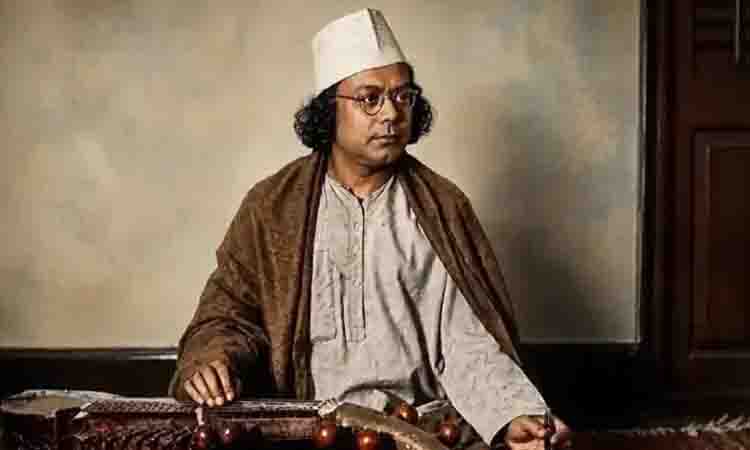
Nazrul’s historic 39-day hunger strike at Hooghly Jail in 1923 remains an iconic protest against British colonial oppression.
One of the most unforgettable and epic chapters in the life of national poet Kazi Nazrul Islam, whose struggle shook the foundations of British colonial rule, was his historic 39-day hunger strike at Hooghly Jail in 1923.
In protest against the inhuman torture, discrimination and humiliation inflicted on political prisoners by the British prison authorities, Nazrul embarked on an indefinite hunger strike, putting his own life at risk. His protest caused an unprecedented stir throughout the Indian subcontinent.
As part of the special observances of Nazrul Year (2026–2027), the fiery days at Hooghly Jail, the composition of the song ‘Ei shikol pora chhal’, the satirical song directed at Jail Superintendent Arston, and the history behind Rabindranath Tagore’s historic telegram have once again come into focus.
In 1922, the British government brought a sedition case against Nazrul for publishing his poem ‘Anandamoyeer Agamane’ in the Puja issue of the biweekly newspaper Dhumketu. He was arrested in Cumilla on 23 November that year and taken to Kolkata.
On 16 January 1923, Nazrul read out his famous ‘Deposition of a Political Prisoner’ before the court of Chief Presidency Magistrate Swinhoe in Kolkata. The judge sentenced him to one year of rigorous imprisonment.
He was initially held at Alipore Central Jail. While Nazrul was imprisoned there, in February 1923, the world-renowned poet Rabindranath Tagore dedicated his newly composed dance-drama Basanta to him and sent a copy of the book to the jail through Pabitra Gangopadhyay. This rare mark of respect from Tagore greatly strengthened the morale of the imprisoned Nazrul.

Nazrul was subsequently transferred to Hooghly Jail on 14 April 1923. From the time of his transfer, the poet and other political prisoners were subjected to severe torture and humiliation under the leadership of Jail Superintendent Arston.
Political prisoners were treated like ordinary thieves, robbers and hardened criminals. They were given poor-quality, inedible food and deprived of even the most basic human dignity. They were also kept in solitary cells with fetters on their feet and handcuffs on their wrists.
In protest against this brutality by the jail authorities and to demand the rightful dignity of political prisoners, Kazi Nazrul Islam began an indefinite hunger strike at Hooghly Jail on 14 April 1923. Several other political prisoners, including revolutionaries associated with Nalinikanta Gupta and Bhupendranath Dutta, joined the fast in solidarity with the poet.
Soon after the hunger strike began, Jail Superintendent Arston and the prison guards subjected Nazrul to brutal physical and mental torture. When they tried to force milk into him by inserting a rubber tube through his nose and mouth, the poet put up fierce resistance and refused to accept it.
As the days passed without food, the poet’s health rapidly deteriorated and his weight fell alarmingly. Yet, despite his physical suffering, Nazrul’s resolve remained unshaken. Sitting in chains inside the dark prison cell, he composed his immortal song, ‘Ei shikol pora chhal moder ei shikol pora chhal’ (These chains are but a pretence, These chains are but a pretence).
Not only that, Nazrul also composed a satirical song in the prison, mocking the tyrannical jail superintendent Arston. Set to the tune of Rabindranath Tagore’s song 'Tomari gehe palichha snehe,' it began: 'Tomari jele palichha thele, tumi dhanya dhanya he' (You keep us confined in your jail, how blessed you are!). Whenever the jail superintendent came on inspection, Nazrul and the other prisoners would greet him by singing the satirical song in unison. The performance would send the fellow prisoners into peals of laughter, while leaving the prison authorities deeply humiliated.
News of Nazrul’s hunger strike spread beyond the prison, creating intense tension, protests and concern throughout Bengal. Fierce criticism of the British government erupted in the Bengal Legislative Council. Leading figures, including Deshbandhu Chittaranjan Das, Sharat Chandra Chattopadhyay and Netaji Subhas Chandra Bose, expressed concern for the poet’s life.
Rabindranath Tagore himself was deeply distressed when he learnt of Nazrul’s hunger strike while staying in Shillong. He sent a historic telegram addressed to Nazrul at Hooghly Jail, which read: ‘Give up hunger strike, our literature claims you.’
However, the jail authorities did not deliver Tagore’s telegram to Nazrul. Instead, they returned it marked ‘Addressee Not Found’. Tagore strongly protested against this disgraceful conduct by the British government.
Deshbandhu Chittaranjan Das expressed his support for Nazrul’s hunger strike. Renowned novelist Sharat Chandra Chattopadhyay rushed to Hooghly Jail to urge the poet to end his fast. Nazrul’s mother, Zaheda Khatun, also went to the jail to meet her son. However, the jail authorities refused to allow them to see the poet, forcing them to return disappointed.

Finally, on the 39th day of the hunger strike, 22 May 1923, a large all-party public meeting was held at College Square in Kolkata under the chairmanship of Deshbandhu Chittaranjan Das. The meeting called for steps to save the poet’s life, and assurances were given on behalf of the British government that prison reforms would be undertaken and the demands of political prisoners would be met.
Subsequently, at the request of Birjasundari Devi, who had travelled from Cumilla and whom Nazrul affectionately called ‘Ma’, the poet broke his historic fast after 39 days by drinking lemon juice from her hand. By then, his weight had fallen by 13 kilogrammes due to prolonged starvation and a severe fever.
After the hunger strike ended, the British government transferred Nazrul from Hooghly Jail to Berhampore Jail on 18 June 1923, in an apparent attempt to conceal evidence of Superintendent Arston’s brutality and ease tensions at Hooghly Jail.
After serving his one-year sentence, with some remission for good conduct, Nazrul was released from Berhampore Jail on 15 December 1923.
Historians believe that Kazi Nazrul Islam’s 39-day hunger strike at Hooghly Jail was not merely an act of protest within prison walls; it was a shining milestone in the Bengali people's struggle for self-respect and freedom from British imperialism.
At this significant moment in Nazrul Year (2026–2027), the poet’s uncompromising struggle against injustice and discrimination continues to inspire people to stand tall and uphold their dignity.
