
Bangladesh Housing Sector Faces Downturn Risk as Budget Lacks Incentives, says REHAB
The real estate sector in Bangladesh may face rising costs and slowing growth as the proposed 2026–27 national budget fails to offer meaningful incentives for housing development, according to the Real Estate and Housing Association of Bangladesh (Real Estate and Housing Association of Bangladesh).
Industry leaders have warned that new taxes and duties on construction materials—particularly steel rods—could significantly increase construction costs, pushing up apartment prices and reducing affordability for homebuyers. They also fear that the sector could experience a broader slowdown, affecting employment and investment across related industries.
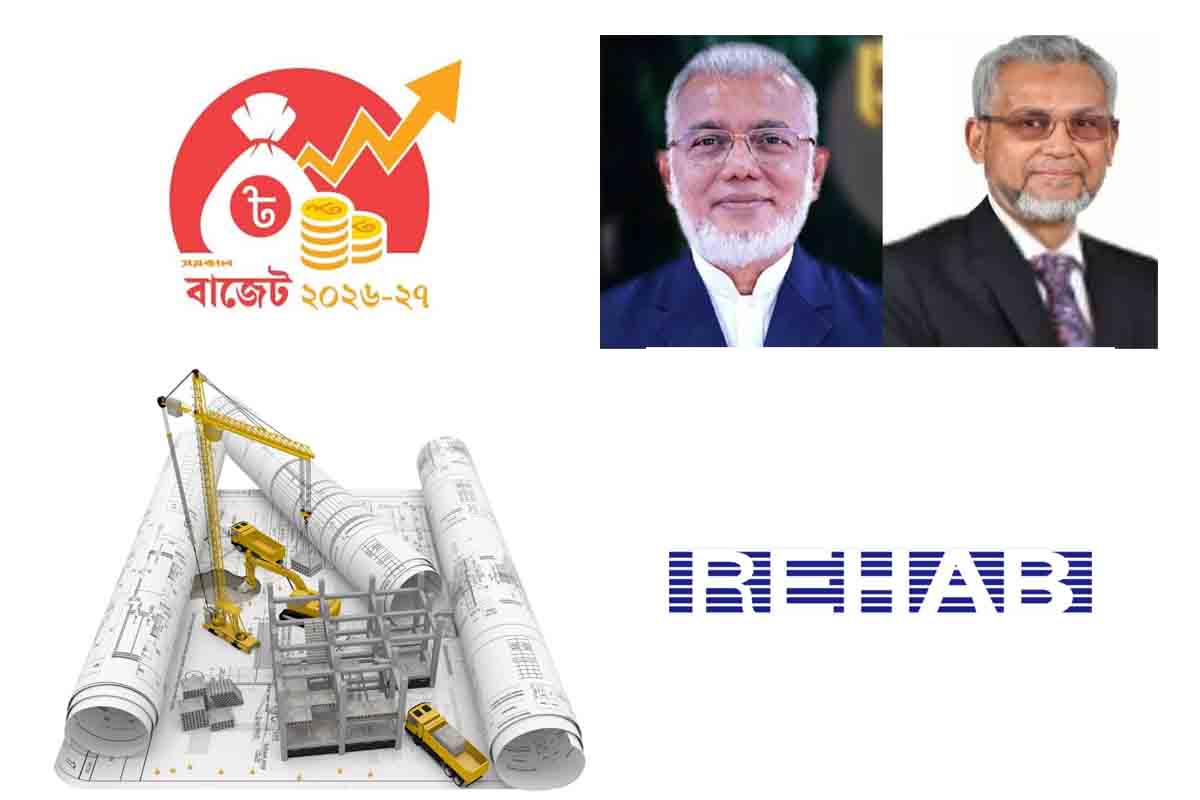
In its initial reaction to the budget, REHAB President Dr. Ali Afzal said that the housing sector has not received any significant policy support in the proposed budget. He specifically criticized the imposition of VAT on steel rods, saying it would directly raise construction costs and put additional pressure on developers and consumers.
According to REHAB, higher construction expenses combined with weak policy incentives could slow down real estate development and reduce overall market activity. Industry stakeholders warned that this situation could potentially lead to a contraction in the housing sector if not addressed.
REHAB has long demanded a reduction in property registration fees for land and apartments. The association argues that lower registration costs would increase real estate transactions, attract more investment, and ultimately boost government revenue.
However, the organization expressed disappointment that the 2026–27 budget did not reflect these long-standing demands. It urged policymakers to introduce housing-friendly taxation policies and create a more stable investment environment.
Dr. Ali Afzal emphasized that the housing sector is one of the key drivers of Bangladesh’s economy, with an estimated 269 linkage industries directly and indirectly connected to real estate. These include steel, cement, ceramics, electrical goods, furniture, and transportation.
He warned that any slowdown in real estate activity would have a cascading effect across multiple industries, potentially impacting millions of jobs and slowing broader economic growth.
Despite criticism of construction taxes, REHAB welcomed the government’s decision to allow investment of undisclosed income into productive sectors under a regulated framework.
Dr. Afzal said he had been advocating for such a mechanism through media discussions in recent weeks and described the move as a positive step toward channeling informal funds into the formal economy.
He thanked the Prime Minister, the Finance Minister, and the Chairman of the National Board of Revenue (National Board of Revenue) for introducing the initiative.
REHAB Senior Vice President Abdul Razzaq said that investment in real estate extends beyond housing construction. It stimulates demand across multiple sectors, including steel, cement, ceramics, electrical goods, furniture, and transportation, while also generating employment and improving liquidity in the economy.
The association noted that bringing undisclosed income into the formal economy could further support investment, job creation, and overall economic stability.
While supporting the initiative on undisclosed income, REHAB stressed the need for a simpler, more transparent, and investment-friendly tax system to reduce the creation of unreported money in the long term.
The association also urged the government to reconsider additional taxes on construction materials, warning that such measures could burden homebuyers and weaken sector growth.
REHAB concluded that revitalizing the housing sector is crucial for strengthening Bangladesh’s economic growth, employment generation, and long-term development stability.
