
Climate change raises child marriage risks for vulnerable girls in Bangladesh
DHAKA, October 17 — Climate-related disasters are disrupting girls’ education, deepening household poverty and increasing the risk of child marriage in Bangladesh, experts said at a dialogue in Dhaka on Saturday.
The dialogue, organised by It’s Humanity Foundation (IHF) and Ismaili CIVIC Bangladesh at the Ismaili Jamatkhana and Centre in Bashundhara, brought together climate researchers, legal experts, development professionals and gender specialists to discuss the links between climate vulnerability and child marriage.
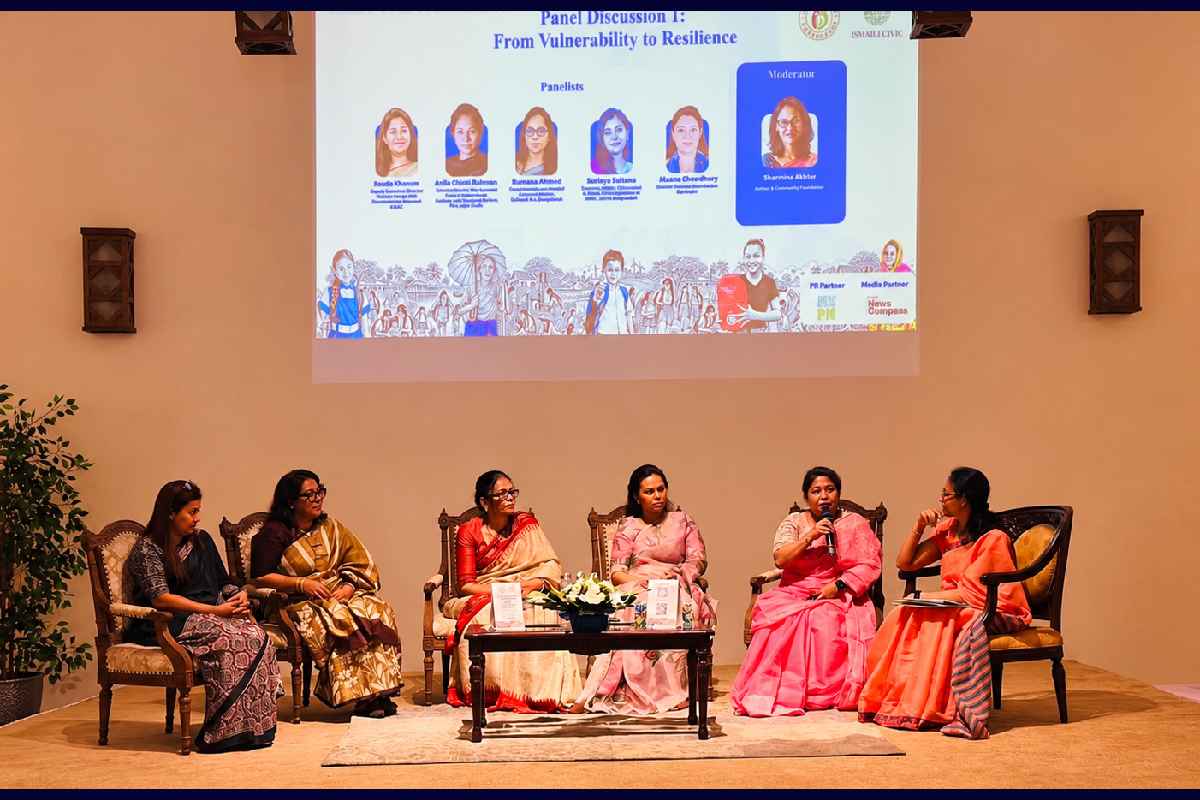
Held to mark the International Day of the Girl Child and National Girl Child Day, the event featured two panel discussions on how climate-related shocks can intensify the economic and social pressures that push girls towards early marriage.
Delivering the keynote address, Md Adnan Hossain, founder and executive director of IHF, said climate change and child marriage could not be addressed separately.
Disasters can interrupt girls’ education, reduce household incomes and increase their domestic responsibilities, reinforcing existing gender inequalities and leaving them more vulnerable to early marriage, he said.
“A storm may disrupt a family’s life. A flood may wash away a classroom. But a crisis should never be allowed to wash away a girl’s choices,” Hossain said.
The discussions highlighted the need to strengthen climate resilience beyond emergency relief, enabling families to recover from disasters without sacrificing girls’ education, safety and future opportunities.
Participants stressed the importance of stronger protection systems, improved access to education and economic opportunities, and greater participation of girls in climate action and decisions affecting their lives.
The first panel, moderated by Shamima Akhter, adviser to IHF, featured Roufa Khanum, deputy director of the Centre for Climate Change and Environmental Research (C3ER); Anita Ghazi Rahman, senior advocate at the Supreme Court of Bangladesh; Rumana Ahmed, vice-president and head of corporate affairs at Citibank NA Bangladesh; and Afsana Chowdhury, a gender equality and inclusion specialist.
The second panel, moderated by Syed Fazle Niaz, co-founder of IHF, included Advocate Fawzia Karim Firoze, senior advocate at the Supreme Court; Maimuna Zahra Fariha, head of research and gender and climate lead at BURO Bangladesh; Esrat Karim Eve, founder and executive director of AMAL Foundation; and Farah Anzum, country lead at the Global Strategic Communications Council.
Speaking at the event, Munira Ahmed Fidai, lead for Ismaili CIVIC Bangladesh, said girls should be recognised as active participants in climate resilience rather than merely as victims of climate change.
“Girls must not be seen merely as victims of climate change. They must be recognized as leaders, decision-makers and active contributors to building resilient communities,” she said.
The dialogue highlighted the intersection of climate vulnerability, poverty, gender inequality and girls’ rights, calling for coordinated efforts to prevent climate-related hardships from limiting girls’ choices and opportunities.
Established in 2010, IHF is a non-profit organisation working on poverty alleviation through education, women’s empowerment, youth skills development and emergency relief.
Ismaili CIVIC is a global volunteer initiative of the Shia Ismaili Muslim community that promotes community service and environmental sustainability.
Backpage PR supported the event as its public relations partner, while The News Compress served as the digital media partner.
