
Minister urges collective efforts to make Dhaka more livable
Road Transport and Bridges Minister Shaikh Rabiul Alam has underscored the need for collective efforts to make the capital city more livable.
"Desired development would not be possible if all responsibilities were left solely to the city corporations. City residents, political leaders and all relevant stakeholders must work together in a coordinated manner," he said.
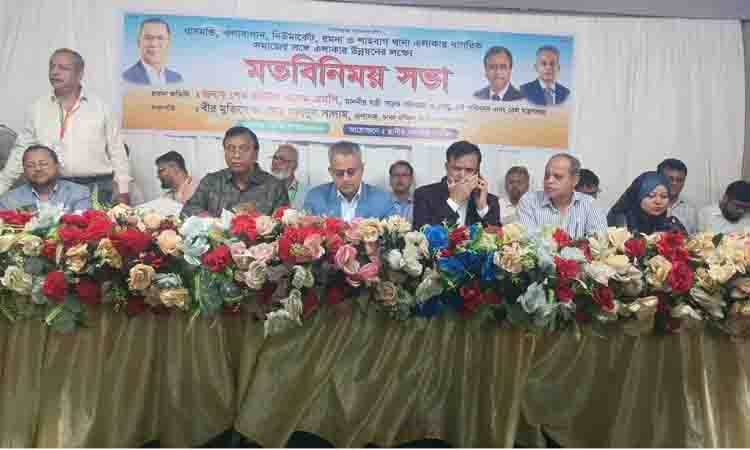
The minister was addressing a views-exchange meeting with local civic society members of Dhanmondi, Kalabagan, New Market, Ramna and Shahbagh Thana areas hosted by local civic society at a Kalabagan community centre here today. was addressing a citizens' dialogue hosted by Dhaka South City Corporation (DSCC) at a Kalabagan community centre here today.
The corporation's administrator, Md Abdus Salam, officials concerned, ward-level leaders of the BNP and its affiliated bodies and social workers also attended the meeting.
The minister said ensuring uninterrupted civic services for 35 million residents are major challenge that the two city corporations cannot address on their own.
He urged political leaders, elected representatives at the ward level, social organizations and citizens to fulfil their respective responsibilities to help ensure overall development of the capital, improve residents' comfort, maintain discipline on the roads and enhance the overall environment.
Alam said it is difficult for the Dhaka North and Dhaka South city corporations to provide all kinds of services to such a large population with their existing workforce, offices and operational capacities.
Recognizing this reality, he said that initiatives must be taken to identify and resolve the city's problems.
While the limitations of the city corporations must be understood, the accountability of the relevant institutions in ensuring civic services must also be upheld.
Calling on the participants to identify and present the specific problems of different wards at the meeting, the minister said the challenges vary from one ward to another.
In some areas, roads are in poor condition; in others, movement is obstructed, while some areas urgently need improvements in civic discipline and the environment, he said.
Therefore, instead of adopting a uniform plan for every area, problems must be addressed in light of local realities, he added.
He said ward-level leaders and local residents know the best about the actual problems in their respective areas.
Their responsibility was to identify which problems required urgent attention and which initiatives would benefit city residents as a whole, and then inform the city corporation accordingly, he said adding that then the authorities to make their plans in that way to resolve the issues.
