
Government vows inclusive healthcare, highlights cystic fibrosis challenges.
Women and Children Affairs and Social Welfare Minister Abu Zafar Md Zahid Hossain today said that the government has a fundamental responsibility to provide services to every sick person.
“The government is working to build an inclusive and humane Bangladesh where the health and quality of life of every citizen will get the highest priority,” he said.
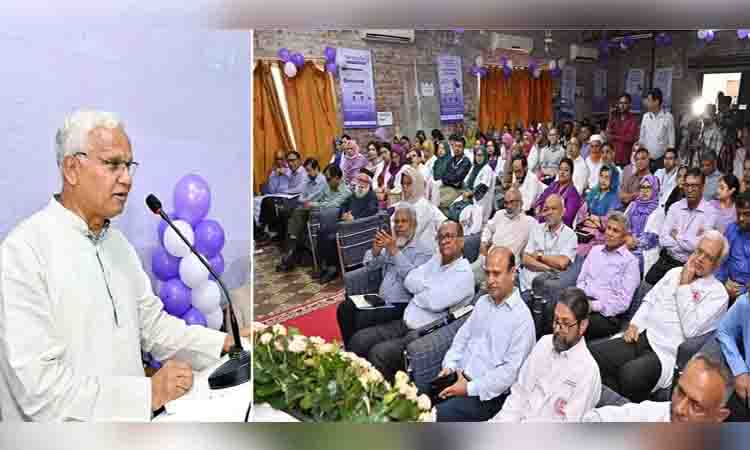
The minister was addressing a programme at the Bangladesh Shishu Hospital here to mark the ‘World Cystic Fibrosis Day 2026’, as the chief guest.
Prime Minister’s Special Assistant for Health Affairs S M Ziauddin Hayder attended the event as the special guest.
The minister said the journey of Bangladesh Shishu Hospital began under the leadership of Shaheed President Ziaur Rahman and through gradual expansion of its services it has now become one of the largest children’s hospitals in South Asia.
He expressed his sincere appreciation to the authorities and physicians concerned for introducing modern stem cell therapy for the patients suffering from serious diseases at the hospital.
The minister also said DNA laboratories meeting FBI standards would be established in every divisional city in line with international standards.
He said the laboratories would enable the rapid and accurate examination of evidence in complex cases, including murder, rape and the identification of unidentified bodies, at the regional level.
Speaking as the special guest, S M Ziauddin Hayder highlighted the government’s increased budget allocation for the health sector and called for greater emphasis on research.
He expressed the hope that the institute would play a greater role in research and in developing professional skills in the health and medical sciences.
Experts at the programme said approximately 200,000 people in 96 countries worldwide are currently affected by the potentially fatal disease cystic fibrosis (CF), but the disease can be diagnosed in only 59 percent of cases.
They said the situation is particularly concerning because only 27 percent of patients have access to life-saving modern ETI treatment. A large proportion of undiagnosed patients live in low and middle-income countries.
Inadequate diagnostic facilities and limited access to costly treatment are placing affected people in these regions at serious risk, the experts said.
Specialist physicians, researchers, officials and representatives from different levels of the medical and health sciences community associated with Bangladesh Shishu Hospital and Institute attended the programme.
