
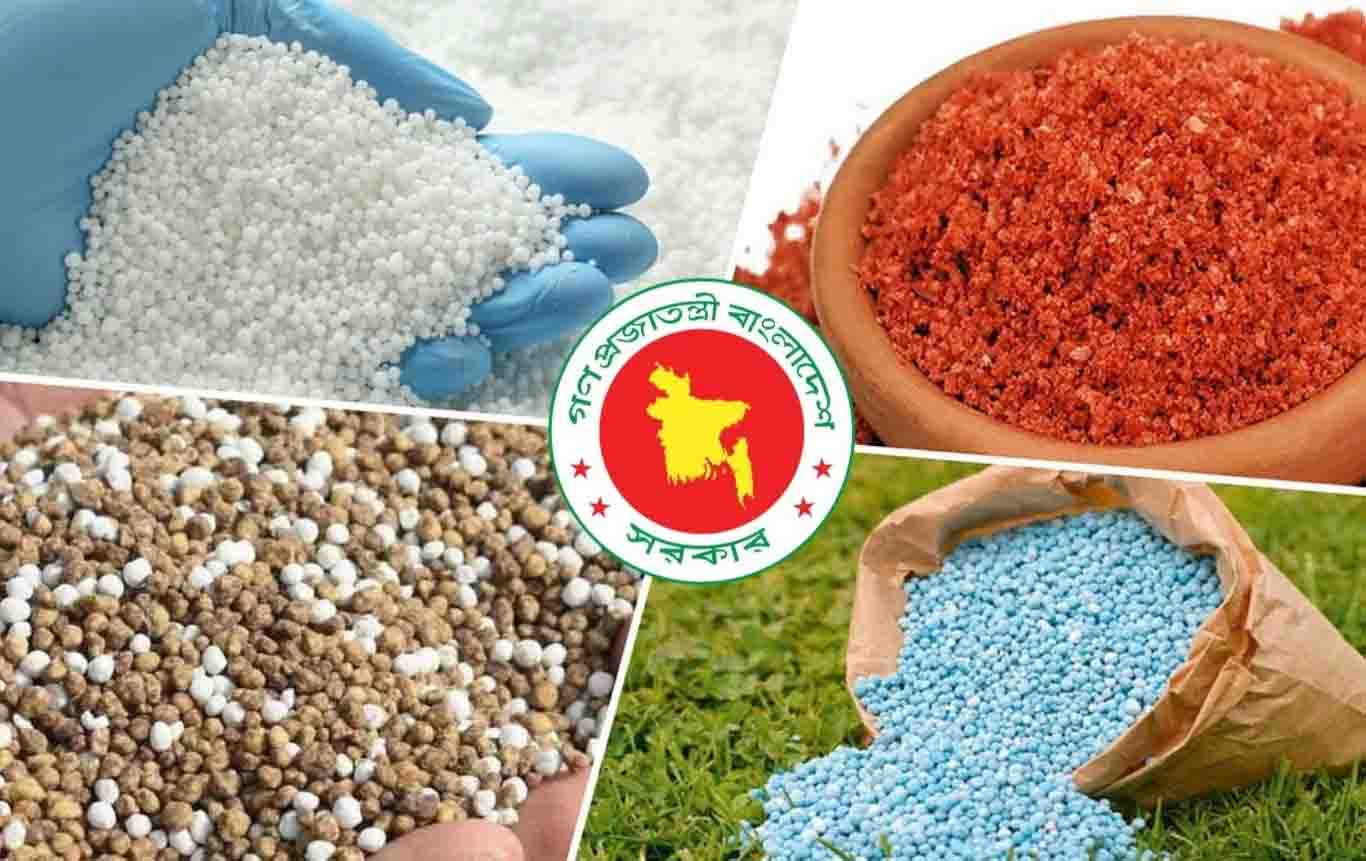
Bangladesh holds 15.84 lakh tonnes fertilizer surplus, ensures supply.
Bangladesh has an additional 15.84 lakh metric tonnes of fertilizer in stock to ensure smooth supply of fertilizer during the Rabi and Boro seasons aiming to sustain its agricultural production.
Simultaneously, considering farmers' needs and aiming to ensure timely supply of fertilizer, the government has initiated an initiative to allocate 100 percent of the required fertilizer against district-wise demand.
According to official data, the prepared supply is 51.71 lakh metric tonnes of fertilizer against the country's demand of 35.87 lakh tonnes, resulting in a surplus of about 15.84 lakh tonnes in stock.
Also, full allocations have been given to the respective districts against the demand for Urea, TSP, DAP, and MOP fertilizers for the upcoming October, according to an official document obtained by BSS.
The document detailed the allocation of fertilizers from various sources to meet the demand for October 2026.
According to the data, the total demand for TSP fertilizer across the country's 64 districts for October is 70,052 metric tonnes, and the entire amount has been allocated through Bangladesh Agricultural Development Corporation (BADC).
The demand for DAP fertilizer is 1,50,910 metric tonnes. Of the amount, Bangladesh Chemical Industries Corporation has allocated 1,000 metric tonnes and BADC has allocated 149,910 metric tonnes, meeting the full demand.
The total demand for MOP fertilizer in October is 93,654 metric tonnes, and an equivalent amount has been allocated on a district-wise basis.
The total district-wise demand for these three types of non-urea fertilizers in October stands at about 3,14,616 metric tonnes, and arrangements have been made to meet the full demand.
To ensure uninterrupted fertilizer supply, the incumbent government has maintained a steady import flow rather than relying solely on district-wise allocations.
On September 9, the Cabinet Committee on Government Purchase approved three proposals to import a total of 1,10,000 metric tonnes of MOP, DAP, and Urea fertilizers to ensure fertilizer supply for farmers. These approvals included the import of 30,000 tonnes of MOP from Belarus, 40,000 tonnes of DAP from Morocco, and 40,000 tonnes of Urea from Saudi Arabia.
Earlier in August, proposals to import a total of 3,65,000 metric tonnes of fertilizer from various countries had also been approved. Proposals were made to import Urea from Saudi Arabia and MOP from Russia.
Additionally, initiatives have been taken to form a national-level coordination and advisory committee and to establish fertilizer monitoring cells across all 64 districts to make fertilizer management more effective. As of September 9, there are 4,18,000 tonnes of Urea, 3,43,000 tonnes of TSP, 3,02,000 tonnes of DAP, and 1,78,900 tonnes of MOP in stock.
Besides, 1,28,200 tonnes of TSP, 1,14,600 tonnes of DAP, and 1,89,400 tonnes of MOP were on transit. Formation of fertilizer monitoring cells in the 64 districts was also informed in Parliament.
Under the current government, the fertilizer management system emphasises an integrated approach comprising demand assessment, district-wise allocation, advance importation, monitoring of stocks in transportation, and field-level oversight. The Comprehensive Policy on Fertiliser Dealer Appointment and Distribution 2026, gazetted on August 27, is also a part of this management framework.
A recent document from the Ministry of Agriculture highlighted the specific consideration given to the distinct requirements of all 64 districts for the upcoming month of October. Stakeholders believe that ensuring full allocation against the demand for TSP, DAP, and MOP will not only mitigate the risk of supply shortages but also improve farmers' access to fertilizer.
Fertilizer is a key input for agricultural production. Consequently, the current initiative, which involves determining district-wise demand and making advance allocations prior to the production season, alongside ensuring timely imports and adequate stocks, is viewed as a significant example of the government's proactive planning and supply management capabilities in the agricultural sector.
Allocations based on demand, advance imports, and direct field-level monitoring have emerged as the most significant changes in fertilizer management since the incumbent government assumed office. Stakeholders considered the 100 percent district-wise fertilizer allocation for October as a practical implementation of the BNP government's agriculture-friendly policies.
Md Abdur Rahim, Director General of the Department of Agricultural Extension (DAE), told BSS that demand-based planning and advance preparation are the current government's most crucial initiatives in fertilizer management.
He said it is not merely a matter of importing or stockpiling fertilizer but factors such as the specific quantity required in an area, the timing of the demand, and the logistics of delivery to farmers are being considered in an integrated manner.
Simultaneously, Rahim said, fertilizer supply and distribution activities at the field level are being closely monitored.
He said the government, prioritising the interests of farmers, will not allow any shortage of fertilizer to occur.
Officials from DAE are also regularly monitoring the fertilizer situation on the ground, he added.
When asked, Agriculture Secretary Md Salim Khan said the government had taken proactive and coordinated plans from the very beginning to ensure fertilizer availability when farmers need it.
District-wise allocations are being made based on an assessment of actual field-level demand, he said.
Salim Khan said for October, 100 percent of the required allocations for TSP, DAP, and MOP fertilizers have been ensured and there is no reason for farmers to worry about fertilizer supply this season.
He said while some initial disruptions occurred due to distribution irregularities in certain areas, the problem was quickly resolved through government intervention and administrative measures.
The agriculture secretary explained that the government's primary objective in fertilizer management is to ensure that farmers receive the proper amount of fertilizer at the right time and at a fair price.
To this end, he said, every stage-import, stockpiling, district-wise allocation, transportation, and distribution- is being monitored in a coordinated manner.
Instructions have been issued to take immediate action if any shortages or irregularities are reported, he said.
Salim Khan said that ensuring fertilizer supply has been given top priority to maintain agricultural production.
As part of the current government's agriculture-friendly policies, demand is assessed and allocations are finalised well before the production season begins, he said.
He said these government initiatives would not only boost farmers' confidence but also sustain productivity through timely fertilizer use.
Salim Khan said, "if the well-being of farmers is ensured, the agricultural sector will also remain healthy, and the nation's food security and economy will be strengthened."
He said the Ministry of Agriculture is sincerely working to protect the interests of farmers.
