
Kashmir Black Day: 79 Years On, Rights and Self-Determination Remain at Stake
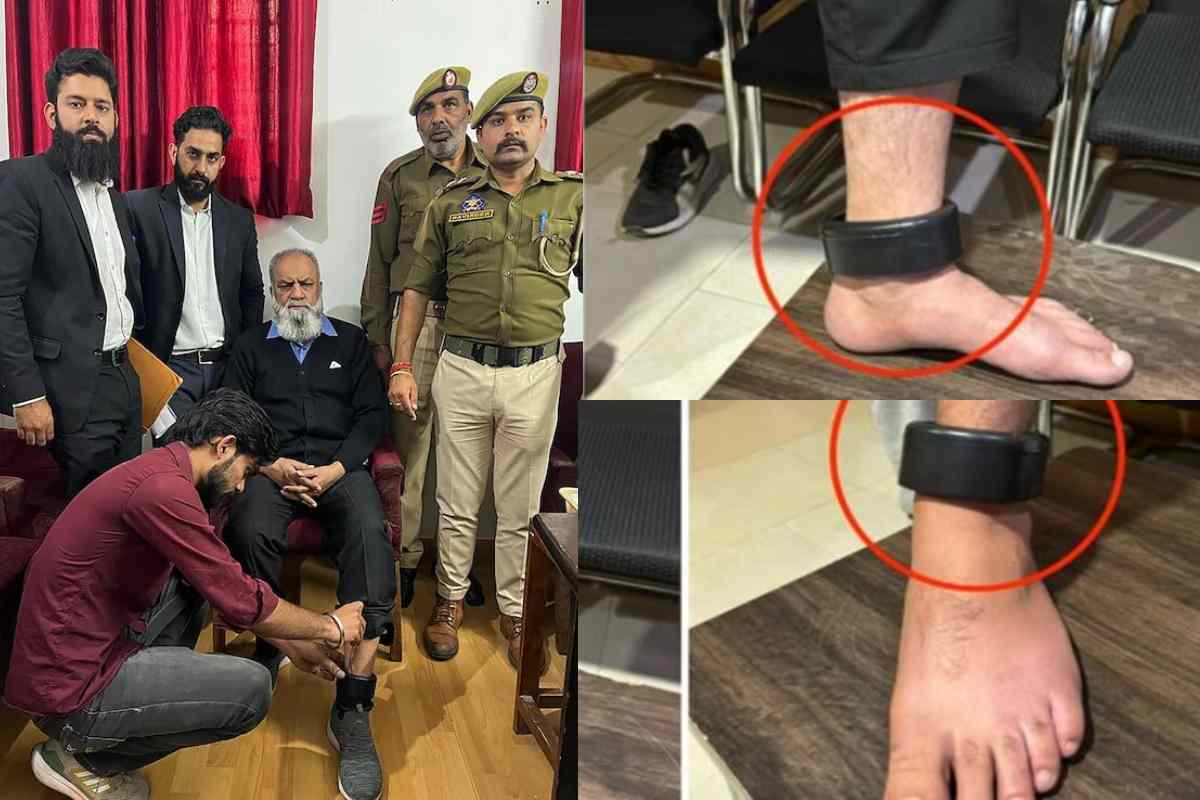
DHAKA, October 24: From GPS ankle monitors and alleged restrictions on religious gatherings to the unresolved promise of a UN-backed plebiscite, the Kashmir dispute continues to raise questions about human rights, political freedom and regional diplomacy, as October 27 marks 79 years since Indian troops arrived in Srinagar in 1947.
In advocacy materials shared for Kashmir Black Day, the International Muslim Women’s Union (IMWU) highlights the experiences of Kashmiri women and children, concerns over surveillance and freedom of expression, and the longstanding demand for self-determination. Its accounts portray a conflict whose consequences extend beyond territorial disputes, reaching into family life, education, religious practice and personal privacy.
The anniversary comes as India and Pakistan remain divided over Kashmir’s political future and the interpretation of relevant United Nations resolutions. The proposed plebiscite was never held, leaving the dispute unresolved despite decades of diplomatic engagement.
The IMWU’s materials call attention to the human cost of that impasse, arguing that a lasting peace must address not only competing political claims but also the rights, dignity and aspirations of the people living in the region.
One of the most striking themes in the IMWU materials is the expansion of surveillance into the private lives of people affected by the conflict.
In a commentary titled “The GPS Prison: When Bail Does Not Mean Freedom,” the organisation describes the experience of a man identified as Sameer, whose release after years in custody allegedly came with a GPS ankle monitor. According to the account, the device’s blinking green light became a constant reminder to his family that his movements remained subject to monitoring.
The story illustrates a wider debate over the balance between public security, judicial oversight and individual liberty. For families emerging from years of detention and uncertainty, release from custody may mark an important milestone, but restrictive monitoring conditions can complicate the return to ordinary life.
The IMWU argues that such practices raise serious questions about privacy and dignity. It also refers to Article 21 of the Indian Constitution, under which the Supreme Court has recognised the right to privacy as a fundamental right.
The precise legality of GPS monitoring, however, depends on the applicable law, judicial orders and the circumstances of individual cases. The organisation’s account does not, by itself, establish that all forms of electronic monitoring violate constitutional protections.
Nevertheless, the issue highlights a significant human rights question: how can security measures be made proportionate, accountable and consistent with fundamental freedoms?
For policymakers and human rights advocates, the challenge is to ensure that technological developments do not become a substitute for due process or a means of imposing indefinite restrictions on people who have been released from detention.
The political roots of the Kashmir dispute reach back to the final days of British rule in the subcontinent.
On October 26, 1947, Maharaja Hari Singh signed an Instrument of Accession to India. Indian troops arrived in Srinagar the following day, amid escalating violence and political turmoil. The circumstances surrounding the accession and the competing claims over Jammu and Kashmir subsequently became central to the dispute between India and Pakistan.
The United Nations became involved as the conflict developed. UN Security Council Resolution 47, adopted in April 1948, addressed the situation and outlined measures involving a ceasefire, the withdrawal and reduction of forces, and a proposed plebiscite under specified conditions.
Subsequent UN initiatives also addressed the question of determining the region’s political future. However, the proposed plebiscite was never held, and the parties have remained divided over the conditions, interpretation and implementation of the relevant resolutions.
The IMWU’s materials frame this unresolved question as a continuing denial of Kashmiris’ right to determine their own future. Pakistan has consistently supported a UN-backed plebiscite, while India rejects Pakistan’s position and maintains that Jammu and Kashmir is an integral part of India. The two countries also differ fundamentally over the applicability of earlier UN resolutions and the appropriate framework for resolving the dispute.
These competing positions underline why the issue remains difficult to resolve through diplomacy.
The anniversary therefore serves as a reminder that historical claims, national security concerns and the aspirations of the region’s population remain deeply intertwined. A sustainable settlement would require more than competing declarations of sovereignty; it would also require credible political engagement, protection of civilians and a framework capable of addressing the concerns of affected communities.
The consequences of prolonged conflict are particularly visible in the lives of Kashmiri women, whose experiences often receive less attention than military and diplomatic developments.
The IMWU materials describe mothers waiting for missing sons, widows supporting families after losing their husbands, and women attempting to preserve family and community life amid prolonged uncertainty.
Their experiences illustrate how conflict extends beyond security operations and political negotiations. Displacement, bereavement, disrupted livelihoods and the uncertainty surrounding missing relatives can place lasting emotional and economic pressure on families.
Women have also played important roles in preserving community memory and raising concerns about justice and accountability. Their voices are essential to understanding the human consequences of the dispute, particularly when political discussions focus primarily on territory, security and relations between New Delhi and Islamabad.
For any future peace initiative to be sustainable, the experiences of women and other affected groups must be considered alongside the positions of governments.
The IMWU’s advocacy places particular emphasis on dignity, justice and the ability of women to preserve their families’ welfare and cultural identity despite decades of instability.
Kashmir’s identity is shaped by a rich cultural and religious heritage, making freedom of worship and community expression important dimensions of the wider dispute.
The IMWU raises concerns about restrictions affecting Friday prayers, Muharram processions and traditional religious gatherings. Such restrictions, where imposed, can affect not only individual worshippers but also the communal practices through which religious and cultural identities are maintained.
Authorities may cite security concerns when imposing restrictions on public gatherings. However, the legitimacy and proportionality of such measures remain important questions, particularly when restrictions affect fundamental freedoms or continue for extended periods.
The broader challenge is to ensure that legitimate security considerations do not unnecessarily restrict peaceful religious practice.
For a region marked by competing political identities and a long history of conflict, protecting freedom of worship can contribute to public confidence, social cohesion and the preservation of cultural traditions.
The IMWU argues that peace should be measured not merely by the absence of violence but also by whether people can practise their faith and maintain their identity without fear.
Another concern raised in the organisation’s materials is the treatment of literature and intellectual expression.
The IMWU refers to the reported detention of scholar Shafat Maqbool Wani in connection with books in his possession and raises concerns about restrictions on publications dealing with Kashmir.
These allegations require independent verification and a careful examination of the circumstances of individual cases. Nevertheless, they point to a wider question confronting societies affected by prolonged political conflict: how can authorities address security concerns without unnecessarily constraining academic inquiry, access to information and freedom of expression?
Books, historical records and scholarly discussions play an important role in helping younger generations understand their past. When access to literature becomes contested, the consequences may extend beyond individual writers or readers to schools, universities and the wider intellectual environment.
For young Kashmiris, access to diverse historical perspectives and opportunities for open discussion can be important to developing a nuanced understanding of the region’s history.
Protecting academic freedom and ensuring transparent legal procedures would help strengthen confidence in institutions while allowing legitimate security concerns to be addressed through established legal processes.
The IMWU also draws attention to the long-term effects of conflict on children, including bereavement, disrupted education, psychological distress and uncertainty about the future.
Children growing up amid recurring violence and instability may experience consequences that continue long after individual incidents have ended. The loss of family members, interruption of schooling and reduced access to essential services can affect their development and future opportunities.
The organisation describes generations of young Kashmiris growing up with memories of insecurity while continuing to aspire to a peaceful future.
These concerns highlight the importance of safeguarding education, healthcare and psychosocial support in conflict-affected communities. Schools must be able to function safely, children should be protected from violence, and families need access to services that help them recover from trauma.
From a regional perspective, the welfare of children is not a peripheral humanitarian concern. It is central to the long-term prospects for reconciliation and stability.
A political settlement that fails to address the needs of younger generations risks leaving the consequences of conflict unresolved even after tensions subside.
Kashmir remains a sensitive issue in relations between India and Pakistan, two nuclear-armed neighbours whose bilateral tensions have wider implications for South Asian security.
The dispute has repeatedly complicated diplomatic engagement, while disagreements over sovereignty, security and political representation have made sustained progress difficult.
For Bangladesh, which maintains relations with both India and Pakistan, the wider regional interest lies in peace, stability, respect for international law and the avoidance of escalation. As a South Asian country with economic and security interests closely connected to regional stability, Bangladesh has a stake in an environment where disputes are addressed through dialogue rather than confrontation.
The anniversary also presents an opportunity for the international community to consider how diplomatic engagement can support civilian protection, humanitarian concerns and the peaceful management of longstanding disputes.
The United Nations framework remains an important part of the historical record, although its resolutions and the conditions attached to their implementation are interpreted differently by the parties. Any assessment of possible solutions must take account of these differences rather than treating the path to a settlement as straightforward.
Confidence-building measures, sustained communication and attention to the rights and welfare of affected populations could help create conditions for constructive engagement. Progress would ultimately depend on the willingness of the parties to address their disagreements through a credible political process.
As October 27 approaches, the IMWU’s materials seek to shift attention from the anniversary’s historical symbolism to the continuing experiences of people living with the consequences of the Kashmir dispute.
Its accounts of surveillance, religious restrictions, contested literature, bereaved families and children facing uncertainty present a picture of a conflict whose effects reach into the most private aspects of daily life.
The organisation’s perspective is an advocacy position, and its specific allegations should be assessed against independently verifiable evidence. But the questions it raises about privacy, due process, religious expression, education and civilian welfare remain relevant to any discussion of a durable peace.
Seventy-nine years after the events of October 1947, the challenge is not simply to remember the past but to consider what would allow future generations to live beyond its divisions.
For Kashmir, a peaceful future will require serious political engagement, protection of fundamental rights and attention to the aspirations and welfare of the people affected by the dispute.
Freedom, in this context, means more than the absence of conflict. It means the ability to live with dignity, worship without fear, access knowledge, raise children in safety and participate meaningfully in decisions about the future.
Whether those aspirations can be translated into a lasting political settlement remains one of South Asia’s most consequential diplomatic questions.
Source and data credit: This feature draws on advocacy materials and commentaries provided by the International Muslim Women’s Union (IMWU) for Kashmir Black Day, observed on October 27. Historical and legal references are presented in context; allegations and individual accounts attributed to the organisation have not been independently verified for this article.
